Flying is Safer Than DrivingEveryone has heard the statistic that you are more likely to die in an automobile accident than a plane crash being used to reassure nervous flyers, but who was first to popularize the claim? Apparently, it was Bernt Balchen, who, after accompanying Robert Byrd on his 1927 Trans-Atlantic flight, said:
Bernt Balchen wrote:
"The truth is that I do not get that 'thriller' stuff of the people who talk about flying. I never get any 'thrills' out of flying. It is no different to me from driving a motor car, except that personally I prefer flying. I think it is safer."
(Source:
Newspapers.com)
Now, it is a reasonable question to ask how we can know this was the source of the claim when so many different people would go on to make it at different times. For example, a brief
news article about a new Air Corps pilot in 1918 bears the headline "Says Flying Safer than Driving Auto". Or take a 1909
newspaper article, that under the headline "Is flying safer than driving?", quite ironically begins with "it may be premature, and there is a strong inclination to knock on wood as we write it" before observing that the recent
Rheims air meet had only a single accident, while the first ever race at the Indianapolis Speedway saw two or three fatalities on the first day of the event. (
In actuality, two drivers, a mechanic and two spectators would be killed during the races there.) The answer is because of exposure. As noted in the
original post in this thread, the old-bold pilots quote was printed in the Piper Cub owner's manual - an aircraft that need it not be reminded was extremely popular - a similar situation was the case with Mr. Balchen's claim. While it is hard to illustrate without having actual access to them, it is clear from the search results on Newspapers.com that this story was widely reproduced in papers across the United States. All of them bore the same headline of "Flying Safer Than Driving".
However, there's an important qualifier here: When was the assertion
first backed up with actual statistical evidence? For example, a 1938
newspaper article is based on nothing more than the author's own personal experience. In a 1953
newspaper article, a pilot "insist[s] that flying was easily twice as safe [as driving]", but supports it by showing the safe flying characteristics of the Piper Super Cub he is flying, not any sort of academic study.
Furthermore, it was being made before the
postwar drop off in "deaths per passenger-mile". This brings up an counterintuitive possibility: The research into aviation safety was brought about by the claim and not the other way around. In other words, when initially proposed, the fact was unsubstantiated. It suggests that, in some cases, the motivation for the supposition was a less than fully honest attempt to promote aviation. (Reference the rationale for the NTSB an independent agency and the "decades-long"
debate over the incompatibility of the FAA's dual mandate to both promote and regulate aviation.)
Hangar QueenThe earliest mention of "hangar queen" that could be located was a
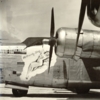
picture caption in the 3 November 1942 edition of the
Scranton Times, which describes a B-17 named "Wild Wimpy". (The name does not appear on the
B-17 Nose Art Name Directory, but it is noted as being at a "flying station somewhere in England" and being sketched by Clayton Knight.) Referencing the discussion in a
previous post, the term appears in quotation marks and is followed by an explanation in a
newspaper article in the 7 March 1943 edition of the
Sioux City Journal. It may have gained notoriety from an
article written by Ernie Pyle that was published in various newspapers only four days later.
Hot ShipUnfortunately, researching this phrase is difficult due to overlap with vehicles of the naval variety, but in an aviation context it goes back at least to 18 July 1943, when an
article in the
Fort-Worth Star Telegram described how the B-26 "live[d] down" its "hot ship" reputation.
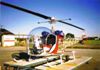
Helicopters are "Unnatural"Often stated as something along the lines of "helicopters don't actually fly. They're just so ugly that the Earth repels them" and, as noted in a
forum post, is strongly associated with the similar truism that "helicopters don't fly, they beat the ground into submission". It seems this sentiment is often attributed to an article by Harry Reasoner on page 13 of the November 1973 issue of
Approach, the magazine of the Naval Aviation Safety Center, in which he relates:
Harry Reasoner wrote:
THE THING is, helicopters are different from planes. An airplane by its nature wants to fly, and if not interfered with too strongly by unusual events or by a deliberately incompetent pilot, it will fly. A helicopter does not want to fly. It is maintained in the air by a variety-of-forces and controls working in opposition to each other; and if there is any disturbance in the delicate balance, the helicopter stops flying immediately and disastrously. There is no such thing as a gliding helicopter.
(Source: "Twenty-Five Years... and Still Holding!,"
Approach, November 1973,
13.)
For example, the
introduction to an article presented at an FAA conference in 1989 begins by paraphrasing Mr. Reasoner's piece before ending with the "beat the ground into submission anecdote. However, the problem is that neither of these quotes appear in his commentary. (However, the popularity of the adage is correctly confirmed in an
article by Flight Safety Australia, which notes that Mr. Reasoner was "renowned for his way with words" before observing that "[t]wo paragraphs he wrote on helicopters in 1973 have hovered for many years on the internet".) The earliest substantiated use of the phrase is from an
newspaper article in the 2 June 1985 edition of the
Muncie Star. A
potential prior mention from an article in a 1979 "Symposium on Mountain Logging" cannot be completely confirmed as the full article is not viewable online, but it seems plausible.
As a final note, at least one book
associates the "so ugly the earth repels them" quote with a "collection of parts" quote that strongly resembles the "rivets flying in close formation" quote mentioned in a
previous post.
Meowing on GuardThis is
another one that turned out to be surprisingly easy to research - and not just because it's something that developed during the Internet age. It just so happens that the question has already been asked and answered in an
Aviation Stack Exchange thread. It was apparently inspired by a skit in the movie Super Troopers. Now, this does not explictly confirm when it first started happening in aviation, but it does give us a lower bound: 2001. However, if the dates of various forum postings about it are any indication, it really started getting going around 2019-2020.
[2][3] The same post gives us an explanation for this as well: a sequel to the movie, which again apparently included a similar skit, was released in 2018. It seems what was occasional from 2001 to 2018 really got going when the second movie reinforced it.
There's a further caveat in that while specifically
meowing on guard is recent development, misusing guard as a whole is not. A
forum post and
AOPA article, both dating to 2017, mention this "buffoonery" (and notably do
not mention "meowing", further confirming the post-2018 popularity). The former source even offers "
work work work" or "GUUARRDDD!" as pre-meow examples of taunting.
A
2021 incident over the South China Sea somewhat raised the practice's profile. (It is worth mentioning as it can be seen as a merging of the trope with the famous Cold War-era pranks that happened between Tu-95 crews and intercepting U.S. fighters.) It is likely "meowing on guard" will receive a further boost in popularity given a recent stories by
ABC and
NBC that are making the rounds on places such as
r/aviation,
r/flying and
r/ATC.


 Login
Login Register
 FAQ
FAQ Search