Stephan Wilkinson wrote:
Probably a questions best answered by somebody who has actually painted a warbird.
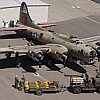
I'm writing an article on the history of camouflage for Military History magazine and am wondering what the actual weight of the camo paint on, say a P-51-size aircraft and a B-17-size aircraft was. (It would of course be something less than simply the weight of a gallon of paint times the number of gallons required, since all the solvents would evaporate away, if that can be calculated; probably the only way to do that would be to weigh the airplane immediately before painting and again afterward.)
Would it have been enough to make any difference in the aircraft's performance? Probably not, which would lead me to assume that the USAAF stopped camouflaging its WWII airplanes when they had complete air superiority and camo no longer was needed, and painting an airplane was just another bit of work and expense that had no real point. (Except for Navy aircraft, corrosion protection probably wasn't a consideration on airplanes that weren't intended to last that long anyway.)
Any thoughts?
There were a couple areas of paint that changed with time.
Though the war Alum internal parts were protected with Zinc Chromate Primer. Often some parts were anodized as well.
To save time and costs Alum parts made from Alclad, which was a thin layer of pure alum rolled onto the top and bottom the stronger alum alloy base in large sheets, were left un-primered. Often where holes were punched and the edges might have Zinc Chromate paint brushed on to those edges that expose the alloy.
This was done more to save time but could also save some weight.
Late in the war some returned to the primer as corrosion became a concern and I think they realized they had the upper hand on production.
On the P-51 they added a filler to smooth the wing so even after they dropped the camo they still painted at least part of the wing to cover the filler material.
Todays paint are formulated quite a bit different than back in the day. Many top coats are chemically activated rather than just a compound that the solvent evaporates out of. The same square footage covered in paint now compared to WWII would be heavier.


 Login
Login Register
 FAQ
FAQ Search