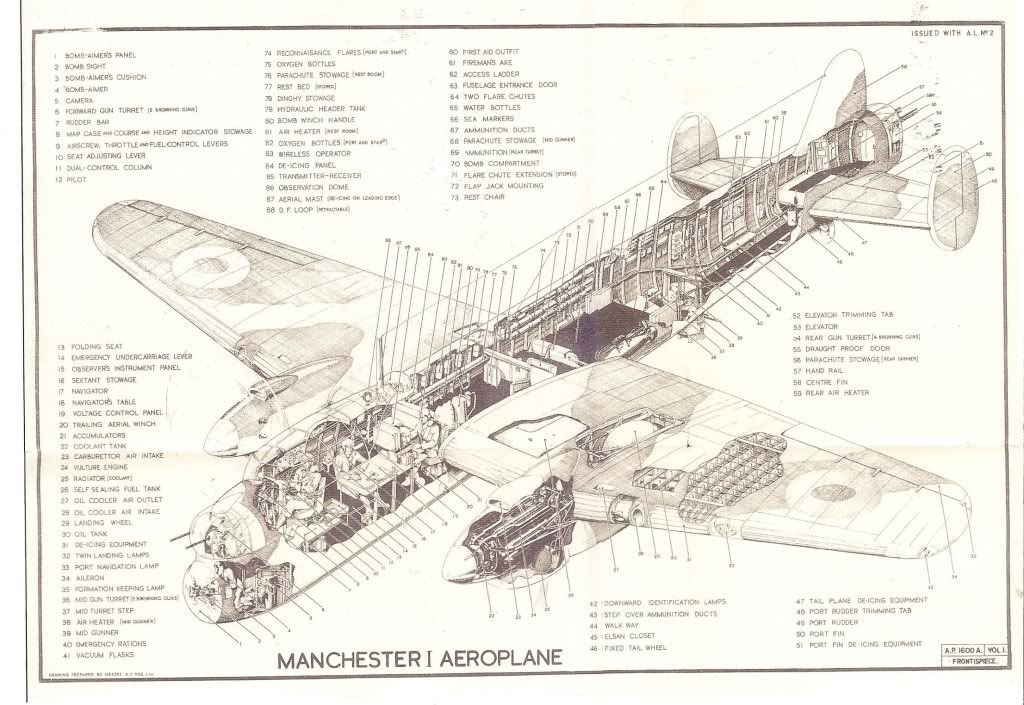
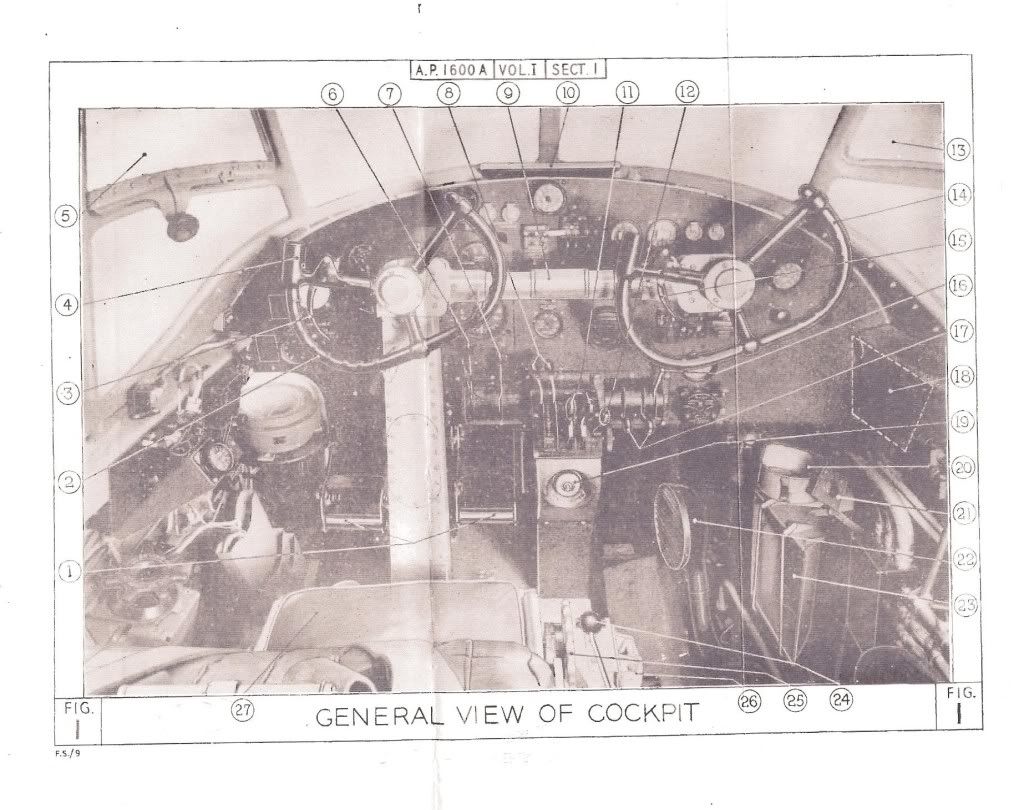
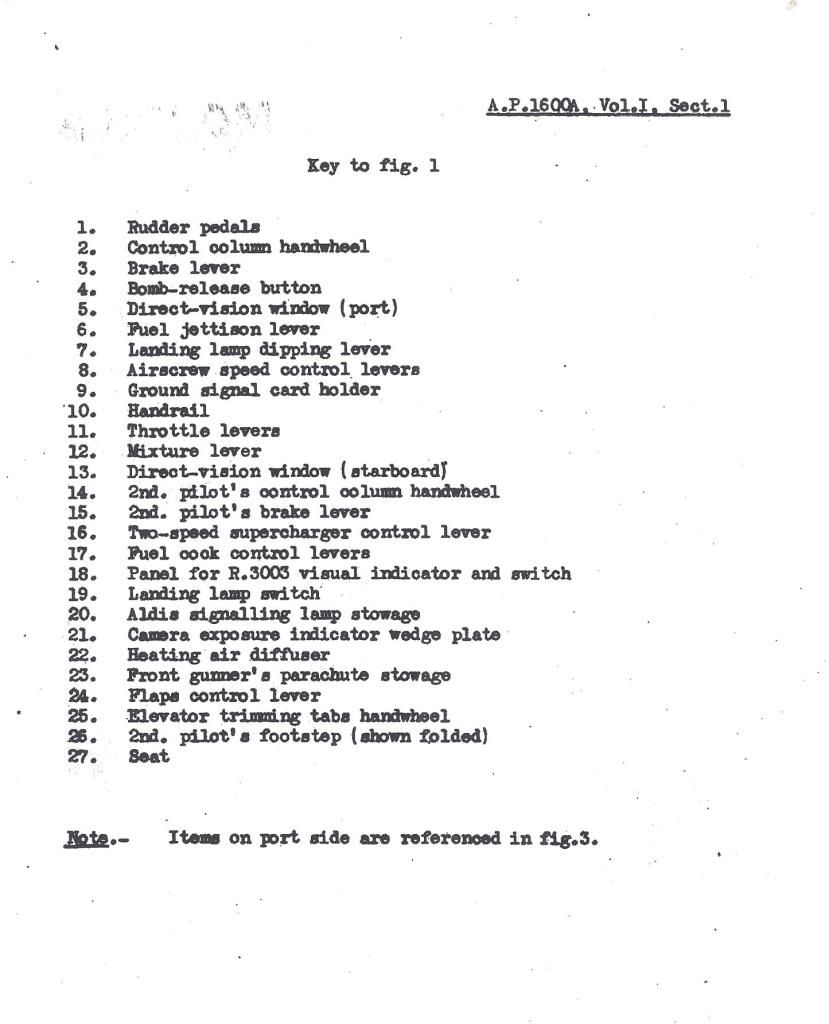
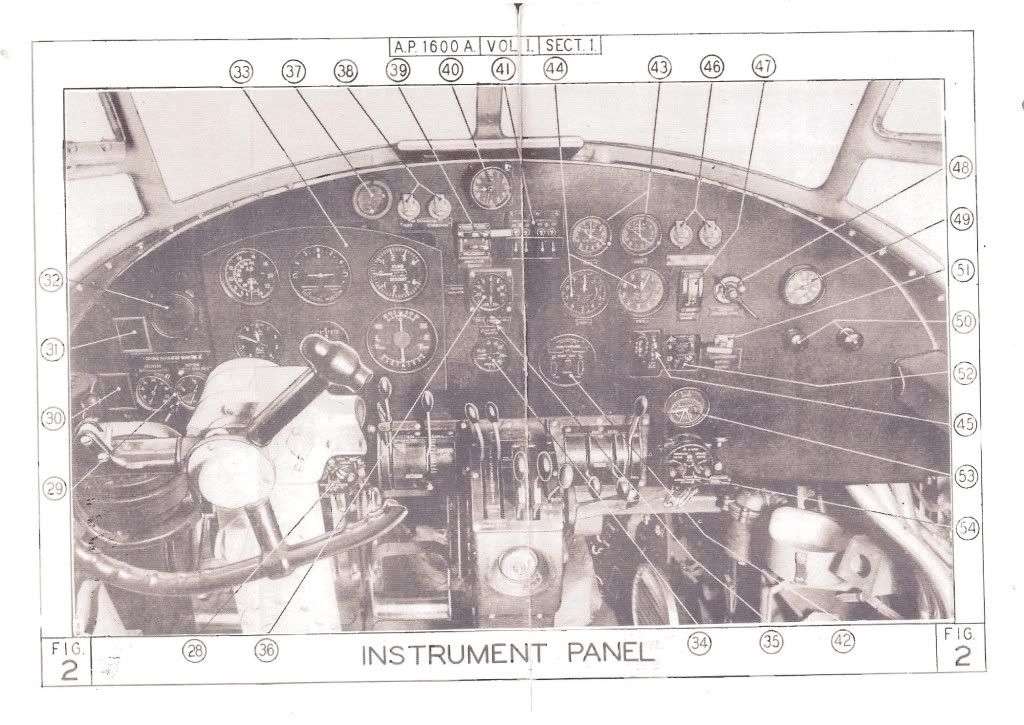
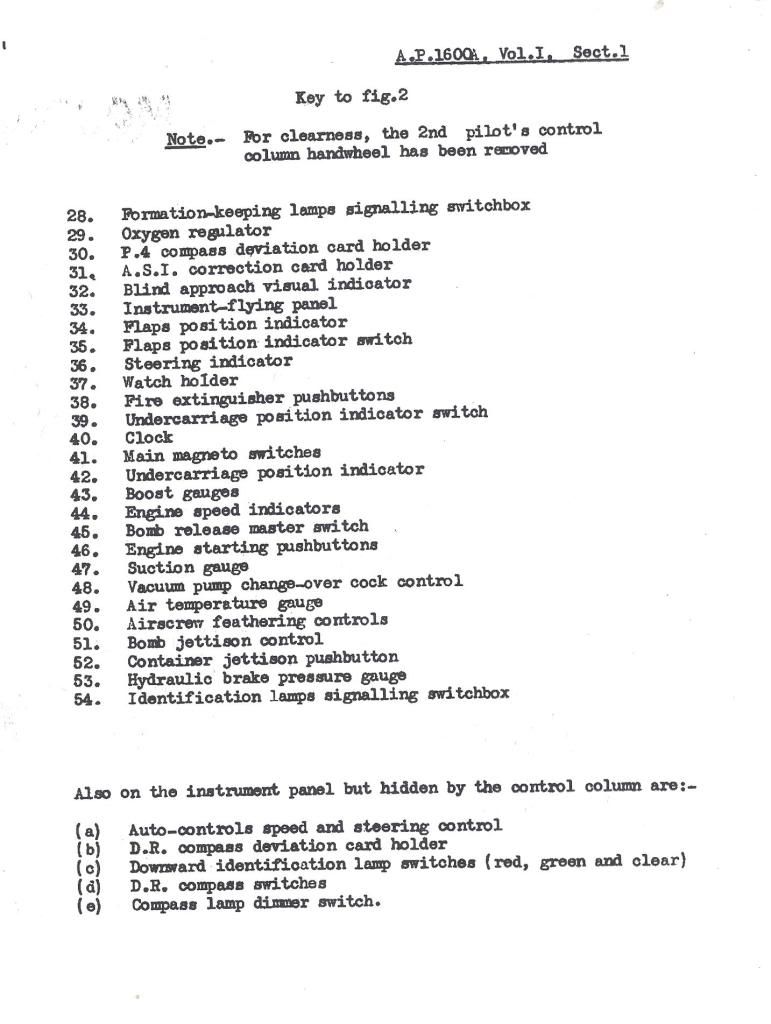
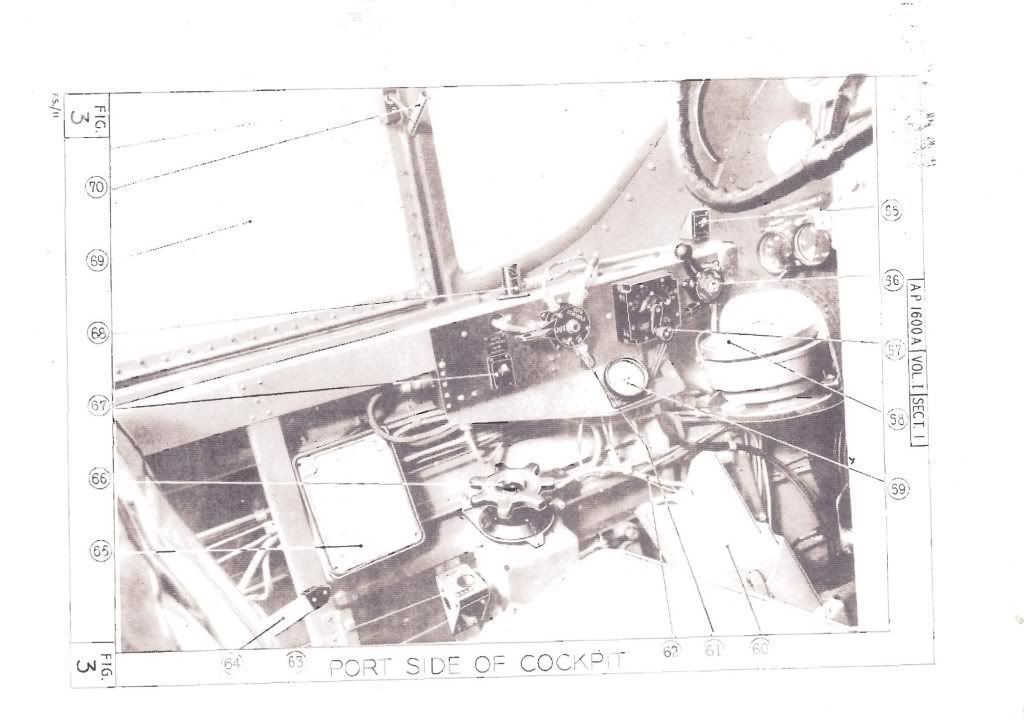
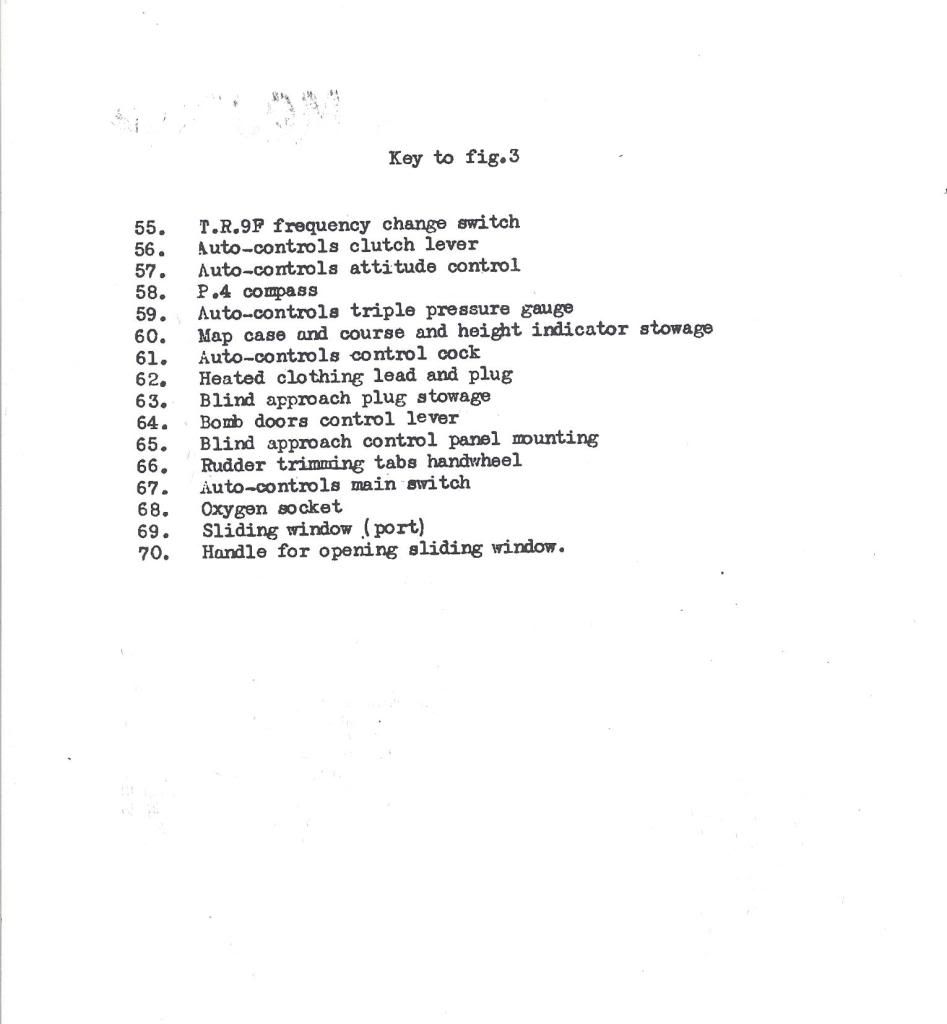
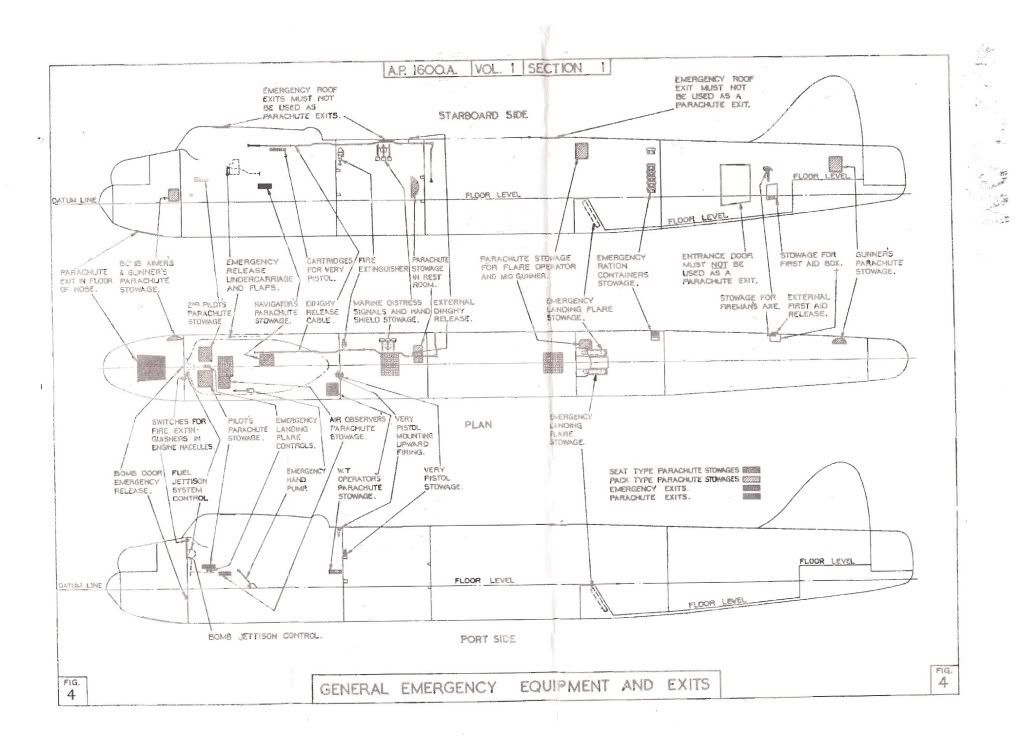
Having urgent work to do, I decided to try and find out about the dual control on the Manchester, instead.

As usual, I wasn't able to find the main answer. Interestingly, though while I didn't, I did find the original spec. had only
four crew, including only one pilot.
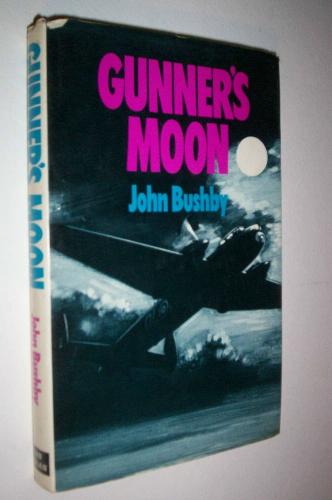
This was from the book "Avro Manchester: The Legend Behind the Lancaster" by Robert Kirby -excellent, and recommended.
The original spec required that the aircraft was able to carry torpedoes, be catapult launched at full load (a Manchester was tested with an arrestor hook later), and carry troops as well! All that explains the long, low open bomb bay and unobstructed fuselage area. The kicker was a requirement as well for dive bombing (withdrawn after the design was frozen) with the flaps to act as dive brakes!
As is well known, the Lancaster was 'a Manchester with four Merlins'; however what I was reminded of was that the Manchester shook out a lot of airframe design bugs, such as the turret, nose configuration (bomb-aimer and front gunner positions) tail structure and a lot more. So the Lancaster was a proven, debugged airframe brought to a set of proven, debugged set of engines - a valuable 'gift' from the Manchester, designers and crews to the Lancaster's success.
Kirby makes an interesting comparison that I'm sure our US readers might find illuminating:
Quote:
Comparison with a near contemporary
American bomber, the Martin B-26 Marauder,
is also instructive.
While the Manchester specification was
issued in 1936 and that to which the Maraud-
er was designed as late as January 1939, the
two appeared in service at a similar time.
Manchester operations and delivery of the
first four Marauders to the USAAC both took
place in February 1941. The two aircraft had
comparable engine power in the two Rolls-
Royce Vulture engines at l,780hp each and
the Pratt & Whitney R-2400 Double Wasp at
1,850hp apiece.
As initially designed operating weights
were also similar at 26,043 Ib for the Man-
chester and 27,200 Ib for the Marauder. Here
the similarities end and these statistics hold
the key to the respective failure and success
of the two types in service. Whereas the Vul-
ture was underdeveloped and unreliable, the
Double Wasp was not only developed and
thoroughly reliable, but a robust radial.
The contrast in the aircraft is even more
stark. Whereas the Marauder was a compar-
atively diminutive aircraft with an initial span
of 65ft and length of 56ft, the Manchester was
much larger, spanning 90ft lin and having a
length of 69ft 4/i in. In keeping with their size
the Marauder initially operated at an all up
weight of only 27,200 Ib, whereas the RAF
were soon attempting to operate the Man-
Chester at 45,000 Ib. Even when latterly some
semblance of reliability was available in the
Vulture, the Manchester thus had a weight
penalty approaching 18,000 Ib in comparison
to its lighter near-contemporary.
Thought that would be of interest.


 Login
Login Register
 FAQ
FAQ Search