Quote:
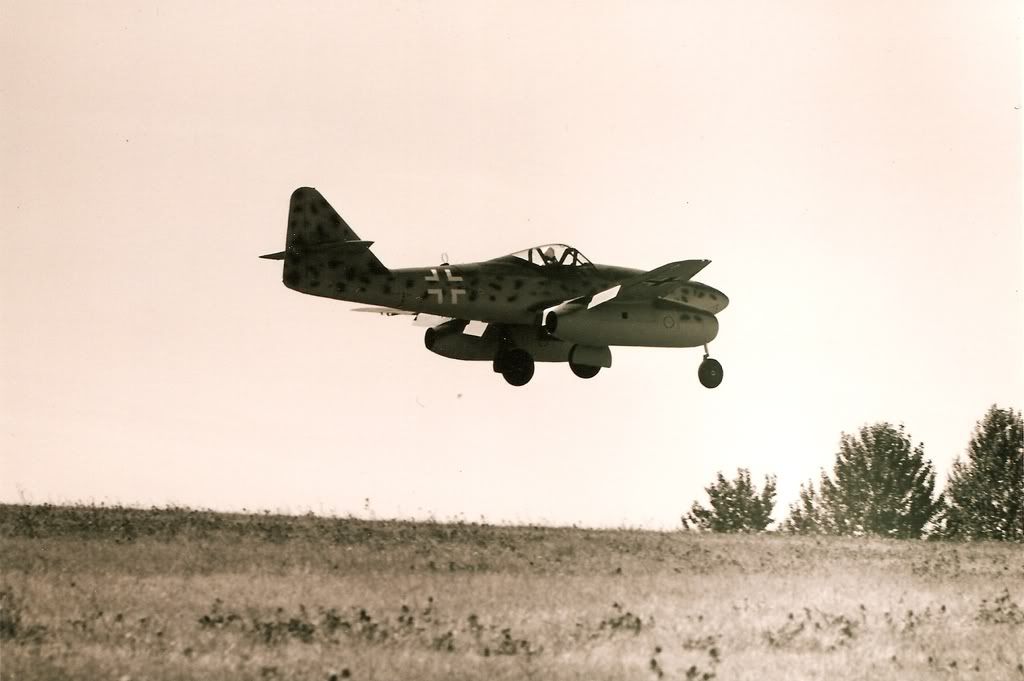
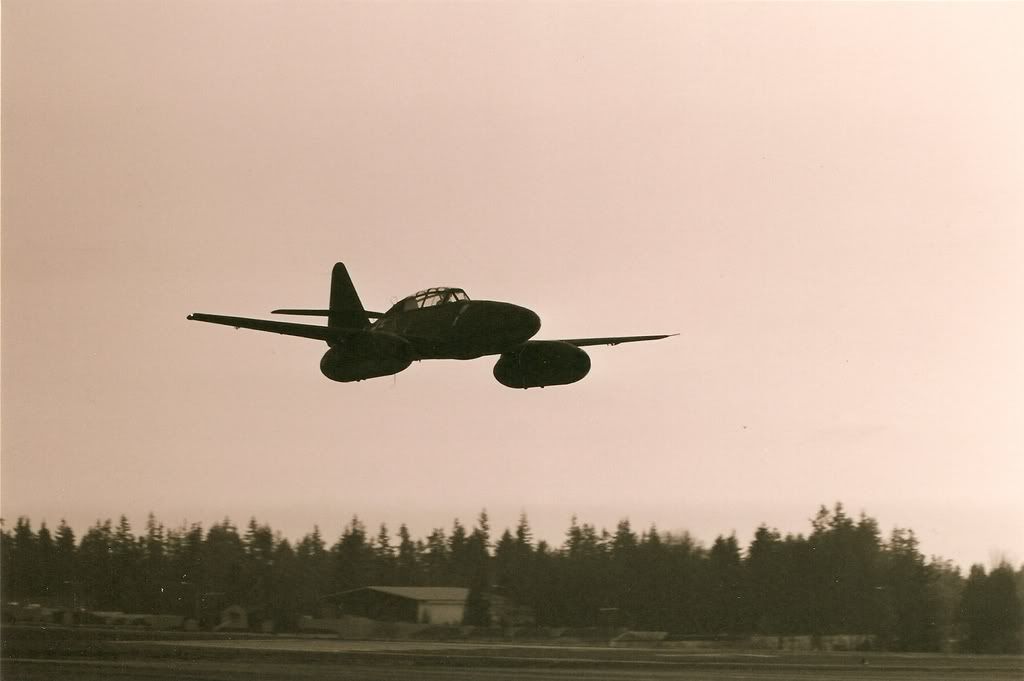
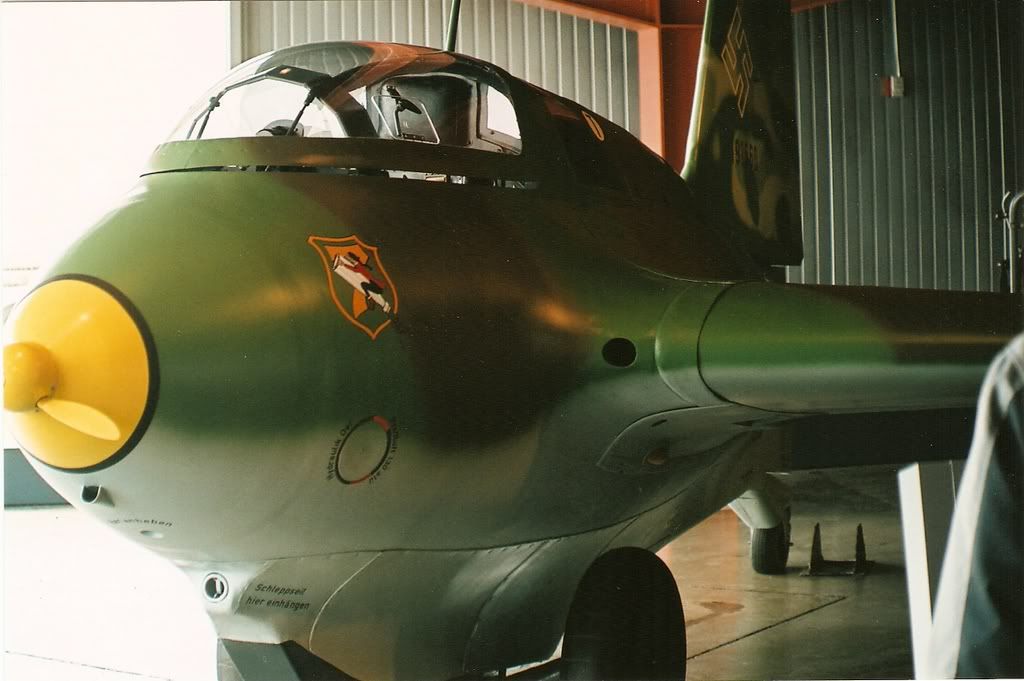
To all of you that count rivets and check the cell structure of data plates I apologize that this is not an actual WWII built ME 262, however how many of you have seen an actual WWII built ME 262 fly let alone a static 262? I have only seen two static WWII built ME 262's, and I am proud to say that I had a small roll in restoring the Willow Grove ME 262. I am proud of what was accomplished at the ME262 Project as I am also very sure that ANYONE who has drilled, bucked, cut, wired or has had 5606 running down their arm until it came out their belt line is proud of their aircraft be it data plate build or pulled from the ocean and restored to grand champion condition at Oshkosh. So PLEASE stop splitting hairs that is not the point of enjoying the "War birds" we are lucky that ANY of them are around. Support one and all in their venture because it's getting more and more expensive to operate and maintain these beasts.
262flightcrew,
As someone who might be included in your bracket of people
"who that count rivets and check the cell structure of data plates" there is no need to apologise that the ME262 Project aircraft are not actual WW2 built examples.
I think what that project has achieved is outstanding, and I understand through the use of the Willow Grove example that the "recreated" airframes are near 100% accurate, other than the compromise required for alternative engines.
The ME262 Project, and similar projects to return extinct types to air are playing an important heritage role in allowing us to see these rare types back in the air without threatening the loss of an original historical artefact that in some cases may be too rare, too difficult to repair to airworthiness or find suitable parts, or simply non-existant.
This "template and production" approach probably started with Herb Tischler's F3F's and his own early role in your project, and has encouraged other similar "reproduction" or "recreation" projects using an original airframe as a template.
I, and others like me, complain when the warbird "industry" makes false claims, ie new build aircraft being described as "original", when they are obviously not,
I much prefer the approach taken by those who have built the "reproduction" , F3F's, Yak 9's, Me262's, 190's and Oscars to admit and celebrate the creation of accurate "reproductions" or "recreations" than to claim they are rebuilds from an original smouldering dataplate and left hand wheel nut.
There are many recent "rebuilds" & "restorations" in the Warbirds market where little of the aircraft is from the identified airframe, or indeed most the airframe is from modern metal, such as recent build P40's and Spitfires? I would prefer to call many of them "reproductions" or "recreations" rather than "restorations", but would be happy to have any of them in any case, and still admire the outcomes.
(and I do realise an issue of certification/design liability etc can arise if the aircraft is not considered a "restoration" of an existing airframe and instead is to be considered construction of a "new" example or even "new" design, so I sympathise with the issues)
The effort, skills and accuracy of those producing these aircraft is not diminished by the label "recreation" or "reproduction" only the truth in its provenance is affected.
While the Warbird operators, rebuilders and owners are entitled to do what they wish with their own aircraft, many "warbirds" are also important historical and heritage artifacts for future generations, and are worthy of honesty and integrity in the recording of their true provenance, and those without any should not try to fabricate it.
In the Art and Antiques world the act of passing a "copy" off as an "original" is quite rightly described as fraud or forgery, and while I dont think that is the intent or motivation of warbird restorers, it risks the same attitudes.
While complex machinery like warbirds will always have parts being replaced through wear and maintenance I dont support the argument of
"the old broom with a new head and handle" being applied to a packing crate of 2007 aluminium sheet, a jig and some templates as creating an "original 1940's wartime service, original factory built airframe, previously flown by a veteran", that cheapens the worth of the true "original" examples, and the historical and heritage respect they deserve.
Eventually the market will reflect "originality" versus "reproduction" or "recreation", most likely in the area of museum acquisitions or specialist collectors such as Paul Allen etc, but for most warbird operators, it will probably remain a judgement of price, looks, performance and maintainability.
I think eventually enthusiasts will also recognise original manufacturing and operational provenance over workshop "recreations" without necessarily diminishing the enjoyment of the "recreation" in anycase.
I dont think that will cause workshops to stop being able to profitably undertake these "recreations" or for their resale values to drop, just for the different attributes to be considered by various buyers and sellers.
And I hope workshops continue to add to the quantity, quality and variety of warbirds even through "recreations" as it forms a valid preservation activity in its own right, its just deserving of a more honest description of the outcomes.
In the longer term the more original and historic aircraft have the risk of being grounded or "recreated" to keep them in the air in anycase, and with the available stock of "restorable wrecks" and "hangar queens" drying up, "recreated" airframes will represent more of more of the airworthy population, and I think they have an important role to play in maintaining the warbird movement and airworthy examples of many rare types.
regards
Mark Pilkington



 Login
Login Register
 FAQ
FAQ Search





 .
. 
 To all of you that count rivets and check the cell structure of data plates I apologize that this is not an actual WWII built ME 262, however how many of you have seen an actual WWII built ME 262 fly let alone a static 262? I have only seen two static WWII built ME 262's, and I am proud to say that I had a small roll in restoring the Willow Grove ME 262. I am proud of what was accomplished at the ME262 Project as I am also very sure that ANYONE who has drilled, bucked, cut, wired or has had 5606 running down their arm until it came out their belt line is proud of their aircraft be it data plate build or pulled from the ocean and restored to grand champion condition at Oshkosh. So PLEASE stop splitting hairs that is not the point of enjoying the "War birds" we are lucky that ANY of them are around. Support one and all in their venture because it's getting more and more expensive to operate and maintain these beasts.