Warbird Information Exchange

DISCLAIMER: The views expressed on this site are the responsibility of the poster and do not reflect the views of the management.
It is currently Fri Apr 03, 2026 6:03 pm

All times are UTC - 5 hours


Classic Wings Magazine WWII Naval Aviation Research Pacific Luftwaffe Resource Center
When Hollywood Ruled The Skies - Volumes 1 through 4 by Bruce Oriss


Post new topic Reply to topic  [ 73 posts ]  Go to page Previous  1, 2, 3, 4, 5  Next
Author Message
 Post subject: Re: Gliders
PostPosted: Sat Jan 19, 2008 7:04 pm 
Offline
User avatar

Joined: Tue May 04, 2004 11:52 pm
Posts: 393
Location: North Georgia
Forgotten Field wrote:
The training gliders were of all sorts. Laister Kauffman, Pratt and Read, Piper, Taylorcraft, Aeronca and a few others made training gliders.


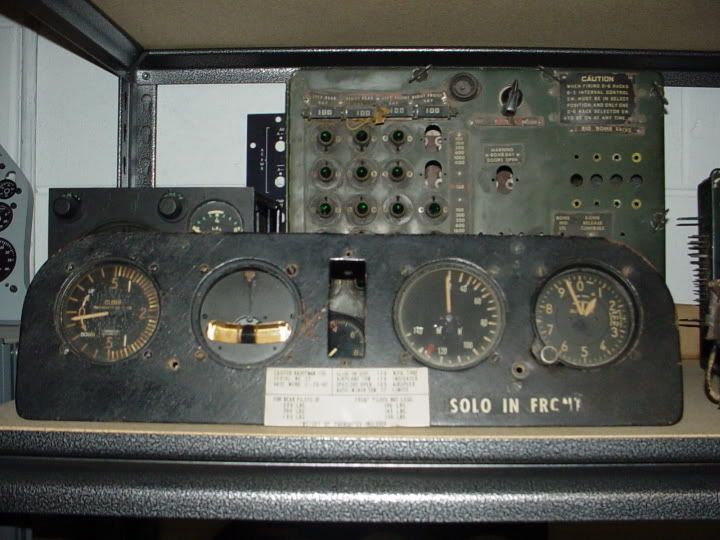
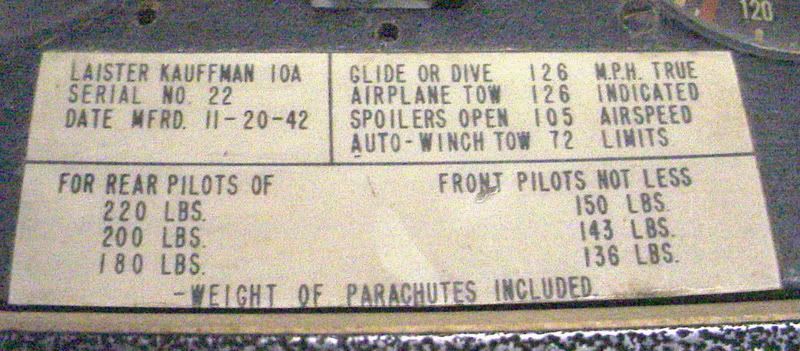
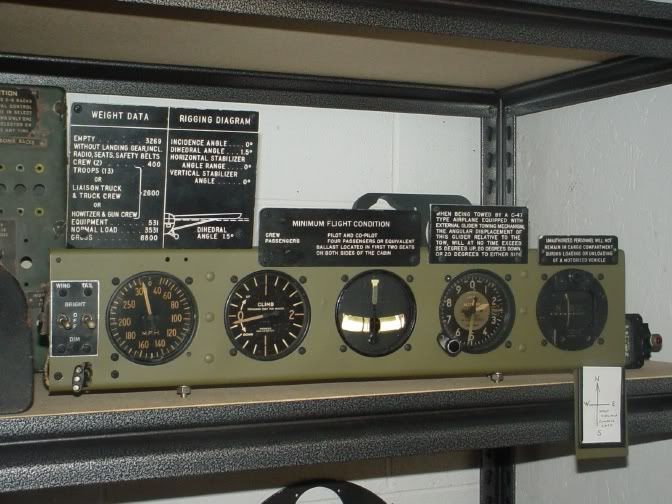
Here's my LK-10 (trainer) and CG-4A panels for anyone who might be interested :wink:

Image
Image

Image

_________________
~Trevor McIntyre
http://www.TrevorMcIntyre.com


Top
 Profile  
 
 Post subject:
PostPosted: Sun Jan 20, 2008 6:49 am 
Offline
2000+ Post Club
2000+ Post Club

Joined: Fri Sep 21, 2007 6:25 pm
Posts: 2760
What an immense project! I hope they can do it, but I just don't see how they can unless they get a sponsor on the level of a Paul Allen type to dump the money into.

Maybe I missed this, but are they going to use a real CG-4 or make a new-build replica? I sure hope they don't use a real one because I don't think it will stand up to the kind of abuse it will undoubtedly endure. This statement, especially scares me: "We hope to conduct a glider “snatch”, where the Waco glider is pulled from a standing stop to 120 mph in only 7 seconds! " Now correct me if I'm wrong, but weren't the Waco's built to only endure one landing? Assuming, if they could pull off this reenactment accurately and safely, I just don't see how they could do all of those repeat performances, with an authentic Waco. Perhaps they are going to rebuild a stronger, more modified version? That will be interesting to see how they get the FAA to buy off on that. Again, think LOTS and LOTS of money!

I wish them luck, although I'm realistically not optimistic on its success.


Top
 Profile  
 
 Post subject:
PostPosted: Sun Jan 20, 2008 7:45 am 
Offline
3000+ Post Club
3000+ Post Club
User avatar

Joined: Fri Mar 02, 2007 6:52 pm
Posts: 3418
Location: Wichita Falls, Texas, USA
Actually, the original Wacos were designed to survive at multiple assault landings. There are images out there where the gliders were lined up on the landing fields after Normandy and Market Garden for "Glider Snatch" operations so they could be returned to the UK, repaired, refurbished, and reused.

Also, I believe the CG-4s used in training were built somewhat stronger to last longer, so I would think they'd use those plans if possible to give the aircraft more life if not built it with modern materials that would last much longer and be much stronger without betraying the basic nature of the aircraft.


Top
 Profile  
 
 Post subject: Reality
PostPosted: Sun Jan 20, 2008 8:52 am 
Offline
1000+ Posts!
1000+ Posts!

Joined: Thu May 27, 2004 8:06 pm
Posts: 1664
Location: Baltimore MD
The CG-4 wing was built very well. There is an inner and outer panel, with a very heavvy mating surface between, and of course the lift struts which pull tension during flight when lift forces are in effect. The way it was constructed with a box spar, built-up ribs, and plywood covering is very similar to the way a Fairchild Cornell wing is built, only heavier and stronger. I wouldn't want to go directly to snatch operations without doing some serious inspections after flying it for a while, as the wing is full of glue joints that will bend and torque in flight. But I wouldn't hesitate to fly it regularly with the usual inspections recommended in the manual's. I think this project has real potential, but not without about 10 dedicated very skilled wood airplane builders working all at once. The WACO (and the other 15 manufacturer's license-built versions, all called CG-4) was a very successful airplane in its time- I think it's biggest downfall was that most of the pilot's who flew in the thing had less than 80 hours total time, and the delivery of the aircraft to their landing zones was poor. In the Sicily operation, high winds blew them off course, and the tow planes released them too early. In Normandy, dark night combined with the hedgerows and telephone poles planted by the Germans didn't help. Operation Dragoon, the landing in Southern France went very well for gliders. Operation Market Garden put too many Gliders into too few landing zones. Operation Varsity over the Rhine River went very well- most gliders did well. All the Glider operations in China went well, but very good planning took place before their use as they were considered a critical part of logistics there and could not be replaced.

_________________
REMEMBER THE SERGEANT PILOTS!


Top
 Profile  
 
 Post subject:
PostPosted: Sun Jan 20, 2008 9:24 am 
Offline
3000+ Post Club
3000+ Post Club
User avatar

Joined: Sun Feb 12, 2006 9:58 pm
Posts: 3282
Location: Nelson City, Texas
I wish this operation good luck and hope to see the completed project. To all the nay sayers remember when a couple of guys took a Cadallac full of tools out to the western US to fly out a B-29. People said that couldn't be done either. I admire the spirit of both parties. Wish we had more like em.


Top
 Profile  
 
 Post subject:
PostPosted: Sun Jan 20, 2008 10:28 am 
Offline
User avatar

Joined: Sat Jul 21, 2007 10:34 pm
Posts: 261
Location: Midwest
The likely greatest challenge to a project as this (after money and labor) would be material availability. Unlike metal aircraft which by and large have a ready supply of modern alternative materials (if not exact duplicate) and can have special runs made as the aluminum companies are used to that sort of behavior from the aircraft industry, the gliders incorporated a lot of speciality wood that is simply not available or cost prohibitive. The plywood in particular is of concern. There are all sorts of thickness used in that design. Waco used 3 ply 1/64" (that's .005" per veneer sheet! :shock: ), 5 ply 3/64" and on and on. Some of these sheets were special length/width combinations....12' long sheets or 6' widths. While this poses no issue for a static display, an airworthy version would be forced to step up the thicknesses and add many scarf splices. All adding weight, compromising the original design, and adding labor. You simply cannot special order plywood...especially mahogany.
Most all other materials needed can be had ....hardware, tubing, fabric, pyralene, instruments, cables, wheels, even spruce....but that special plywood.


Top
 Profile  
 
 Post subject: Alternatives
PostPosted: Sun Jan 20, 2008 11:12 am 
Offline
1000+ Posts!
1000+ Posts!

Joined: Thu May 27, 2004 8:06 pm
Posts: 1664
Location: Baltimore MD
I think this project would move along a lot faster if they had somebody who knew what they were doing with Composites. The wing is not a complicated shape, and I think they would find it more cost effective to make one out of carbon that doesn't grow on trees...

_________________
REMEMBER THE SERGEANT PILOTS!


Top
 Profile  
 
 Post subject: carbon
PostPosted: Sun Jan 20, 2008 12:46 pm 
Offline
Probationary Member

Joined: Wed Jun 21, 2006 7:53 pm
Posts: 3803
Location: Aspen, CO
To me, building a WWII glider out of composites would be abut as attractive as putting an electric engine in a P-51.

_________________
Bill Greenwood
Spitfire N308WK


Top
 Profile  
 
 Post subject:
PostPosted: Sun Jan 20, 2008 12:54 pm 
Offline
3000+ Post Club
3000+ Post Club
User avatar

Joined: Fri Mar 02, 2007 6:52 pm
Posts: 3418
Location: Wichita Falls, Texas, USA
Why is that Bill? None of the wood in the CG-4s were really exposed as it is. Most were either painted or covered, and what wasn't could be redone in wood and still result a significant reduction in total cost and maintenance of the aircraft wouldn't it?

You're a warbird owner Bill, I'm sure you've made occasional compromises to keep the Spitfire's maintenance practical since some parts and systems just don't exist anymore so you replace them with off-the-shelf items that are more reliable and cost less to maintain and/or replace. That's what's being suggested here with composites. Use them to make the operation more practical and cost-effective. :)


Top
 Profile  
 
 Post subject: I'm getting a woody
PostPosted: Sun Jan 20, 2008 2:56 pm 
Offline
1000+ Posts!
1000+ Posts!

Joined: Thu May 27, 2004 8:06 pm
Posts: 1664
Location: Baltimore MD
I love wood in airplanes, structural and otherwise. But with the CG-4A, I would be very concerned about maintaining the wood in the wings to the point that it might not be cost effective to operate a wooden wing. The tail and vertical would be buildable with wood with modern materials without a problem. The four sections of wings would be a headache of gigantic proportions. Add to that the fact that you would have to hangar a 84 foot wingspan wooden-winged airplane wherever it went. I choked at $50 a night inside a hangar when I got weathered in at Reading last year. I can't imagine a bill for a CG-4A. I'd want composite wings, everything else conventional construction (except maybe the main cabin section floor, which is where the Jeep would go) so it could go more places.

Hey, the wooden wings aren't the only complicated problem. Look at the tight radiuses of the tubing joints on the airplane. Speaking to somebody who did the welding on one, I was told that some very special welding techniques were needed to do those joints. Would you fly in a cockpit that had two hard points and two aluminum locks to hold you to the fuselage and wings?

The original design was a good one, but there might need to be some modern engineering upgrades along the way. So all of this just boils down to what makes airplanes really fly- 50's and 100's... And I'd rather see a full scale, durable replica built as original as possible fly than none flying at all.

_________________
REMEMBER THE SERGEANT PILOTS!


Top
 Profile  
 
 Post subject: carbon
PostPosted: Sun Jan 20, 2008 3:07 pm 
Offline
Probationary Member

Joined: Wed Jun 21, 2006 7:53 pm
Posts: 3803
Location: Aspen, CO
CAP, I am probably just old fashioned. I don't know much about the construction, or even if they are to rebuild an original or do a replica from scratch. I wish them success.

_________________
Bill Greenwood
Spitfire N308WK


Top
 Profile  
 
 Post subject: Re: Alternatives
PostPosted: Sun Jan 20, 2008 5:51 pm 
Offline
Been here a long time

Joined: Sun May 02, 2004 1:16 am
Posts: 11332
Forgotten Field wrote:
I think this project would move along a lot faster if they had somebody who knew what they were doing with Composites. The wing is not a complicated shape, and I think they would find it more cost effective to make one out of carbon that doesn't grow on trees...
Wood is cheaper. With the Airbus A380 and Boeing 787 in production as well as the sporting goods applications, carbon fiber is in high demand. How do you plan to integrate the carbon/epoxy construction and the wood, or do you plan to make the entire wing out of carbon/epoxy? Redesigning anything out of carbon/epoxy is not as simple as making "black aluminum" or in this case "black spruce/mahogany/birch." Carbon is very stiff, wood is not. That causes high stresses at the glue joints due to differential strain.


Top
 Profile  
 
 Post subject:
PostPosted: Sun Jan 20, 2008 7:53 pm 
Offline
1000+ Posts!
1000+ Posts!
User avatar

Joined: Thu Feb 23, 2006 1:06 am
Posts: 1059
Location: Virginia
A certain 68 foot span wood-winged biplane has been doing a lot of flying the last few years. According to the web site, it required a total of 330 feet of wooden box spars to be constructed... http://www.vimy.org/vimyinfo/buildingth ... artii.html


-

_________________
http://www.biplanerides1.com/


Top
 Profile  
 
 Post subject:
PostPosted: Sun Jan 20, 2008 11:04 pm 
Offline

Joined: Sun Mar 27, 2005 7:21 pm
Posts: 731
Location: Belleville, Michigan
I notice YANKs museum was building a CG-4 frame out of new material.

_________________
Michael Luther
Michigan Flight Museum's
Air Show Director
THUNDER OVER MICHIGAN


Top
 Profile  
 
 Post subject:
PostPosted: Sun Jan 20, 2008 11:48 pm 
Offline
Long Time Member
Long Time Member
User avatar

Joined: Tue May 11, 2004 5:42 pm
Posts: 6884
Location: The Goldfields, Victoria, Australia
It's a great project, and I hope they manage to ~hem~ pull it off (in seven seconds or less...) :D

Wood seems to be a scary material for many aircraft builders today, although wheels up's post does delineate some of the very real issues that exist.

Wood remains an excellent material for building aircraft out of, just like every other aircraft construction method, provided you do it properly. It's also one of the few renewable resources we have for the job, and as is often said, it's natures' own composite.

Any modern reproduction or restoration will have to contain some compromises or changes for safety and modern airworthy requirements, but as bdk has shown, you'd probably buy in more re-engineering with a modern composite or substitution as the problems you'd avoid.

I'm talking to restorers building a static DH Mosquito in airworthy and original standards, and we should all be aware of Glynn Powell's work in NZ building new-wood Mosquitoes to fly. (I'm also supporting a project to build a 1914 biplane trainer - of wood, but that's another story.)

Image

It's difficult and expensive, but it's not impossible. And the Mosquito wasn't the most advanced Wooden aircraft by any means. de Havilland Albatross anyone?

Image

Interior:
Image

Image

Yes, the entire main structure, fuselage and wings of the Albatross, a four engine, pre-war airliner was wood. The same wooden sandwich construction of ply-balsa-ply as the later Mosquito. The reverse cycle air cooling of the inverted V engines was innovative as well. It wasn't a perfect design; but it worked perfectly well once they'd got the teething problems out of the way. Show an experienced woodworker a photo of the Albatross and they often won't believe it's wood.

If the challenges of building a wooden aircraft as well as you can seem to encourage replication with modern materials, then you are probably in the wrong game, surely. It's not easy or cheap either way, and a look-alike won't have the merit of authenticity. Why not just make whooshing noises and run around on the ground? :D You'd be home for beer or tea earlier, and it's a lot cheaper!

I'm no restorer, but I am very familiar with talking to restorers who run a mile at the mention of wooden construction, and then other rebuilders who have this method as their bread and butter. It can be done.

Just a few thoughts.

_________________
James K

"Switch on the underwater landing lights"
Emilio Largo, Thunderball.

www.VintageAeroWriter.com


Top
 Profile  
 
Display posts from previous:  Sort by  
Post new topic Reply to topic  [ 73 posts ]  Go to page Previous  1, 2, 3, 4, 5  Next

All times are UTC - 5 hours


Who is online

Users browsing this forum: No registered users and 104 guests


You cannot post new topics in this forum
You cannot reply to topics in this forum
You cannot edit your posts in this forum
You cannot delete your posts in this forum
You cannot post attachments in this forum

Search for:
Jump to:  
Powered by phpBB® Forum Software © phpBB Group