Warbird Information Exchange

DISCLAIMER: The views expressed on this site are the responsibility of the poster and do not reflect the views of the management.
It is currently Thu Apr 09, 2026 9:56 pm

All times are UTC - 5 hours


Classic Wings Magazine WWII Naval Aviation Research Pacific Luftwaffe Resource Center
When Hollywood Ruled The Skies - Volumes 1 through 4 by Bruce Oriss


Post new topic Reply to topic  [ 11 posts ] 
Author Message
PostPosted: Sat Dec 15, 2007 7:55 pm 
Offline
3000+ Post Club
3000+ Post Club

Joined: Fri Jun 24, 2005 7:26 pm
Posts: 4974
Location: PA
Hello all,

I guess this question is for all you artists out there. I've been thinking for years rather I should get involved with drawing and painting airplanes. I kinda like the paintings stan stokes does.

Usually a self taught type of person can I learn how to draw on my own?

Also what type of technique does Stan Stoke use for his art work? I am sure he has years of practice but generally how long would it take to leanr to draw and paint them?

Where should I start?

Thanks,
Nathan

_________________
Shop the Airplane Bunker At
www.warbirdbunker.com


Top
 Profile  
 
 Post subject:
PostPosted: Sun Dec 16, 2007 5:05 pm 
Offline
User avatar

Joined: Sun Aug 06, 2006 7:14 pm
Posts: 466
Location: Cincinnati, OH, USA
An excellent beginner's book for aspiring artists is "Drawing on the Right Side of the Brain", which covers many of the basics. I would get your feet wet with it and, if you find that it is something you are really interested in applying yourself to, find a good art class and go for it. Generally, you need to learn to draw before you can paint. WHAT you draw is less important than how you draw it. Subject matter is irrelevant when you are talking about painting and drawing. Certainly, each subject has its technical aspects...a knowledge of anatomy is important when drawing people (or animals), a knowledge of botany when drawing flora, and a knowledge of history when drawing airplanes. But all of that takes a back seat to a knowledge of light and shadow and color and perspective.

Anyone can learn to draw, but like any other skill, it takes a great deal of time and effort to attain a respectable degree of mastery over it. If you want to compete with Stan Stokes, you have a lot of work ahead of you. He has spent decades honing his craft. (He paints in acrylics, but I'm pretty sure he can use a variety of media very competently)

There are many good web-based forums where artists meet to share their work and ideas and critique eachother...wetcanvas.com and conceptart.com are two nice ones. Above all, though, you simply need to pencil to paper and do it.

And for goodness sake, don't do it to get rich. You'd make money faster recycling bottlecaps...

_________________
What is red, furry and on your six?
Image


Top
 Profile  
 
 Post subject:
PostPosted: Mon Dec 17, 2007 2:50 am 
Offline
1000+ Posts!
1000+ Posts!
User avatar

Joined: Wed Sep 12, 2007 5:27 am
Posts: 1531
Location: Serbia
Hi Nathan,

by opinion of the many this source is threaten as excellent for digital art technique:

http://www.letletlet-warplanes.com/foru ... topic=74.0

But you have for sure many on line tutorials about the digital and classic way of art.

_________________
Owner: http://www.letletlet-warplanes.com
Owner: http://www.letletlet-warplanes.com/forum
Owner: http://www.sreckobradic.com
Email: srecko.warplane@gmail.com
Skype: sreckobradic
Facebook http://www.facebook.com/pages/LetLetLet ... 8234397758


Top
 Profile  
 
 Post subject:
PostPosted: Mon Dec 17, 2007 11:15 am 
Offline
1000+ Posts!
1000+ Posts!
User avatar

Joined: Wed May 05, 2004 8:03 pm
Posts: 1081
Location: Hamilton, Ontario, Canada
Hi Nathan--

Very pleased to hear you're intending to give avart a try. I'll echo Fritz' remarks about light, colour and perspective; in avart the latter of these is uniquely important (I've seen a good few otherwise fine pieces completely messed-up by wayward perspective drawing).

There are a couple theories out there on how best to plot the outline of an airplane (or whatever) from your chosen viewpoint; I opt for a simpler approach (not having an engineering/mathematical cell in my entire brain!) and just start with a pencil drawing, which I keep erasing and refining until it looks right to my eye, then transfer via carbon paper to the panel itself. (I work mostly in acrylics on hardboard panels. The carbon paper transfer wouldn't work very well on stretched canvas).

I'd also echo the comment about putting pencil to paper: that's definitely the way to start, you'll learn perspective/draughtsmanship and the interplay of light and shadow, then you can add the colour aspect later. When you're ready to tackle that, the key thing is to OBSERVE. Take note, for instance, that a "bright yellow" Harvard, to the eye, isn't! Most of the airframe will range in hue from a dull orange to almost white. Red is even trickier, especially if it's glossy; you'll get everything from maroon to pink or even mauve depending on lighting. Cast shadows aren't black, either (and BTW some artists advocate not using black paint, mixing the shadows from other colours. Keith Ferris notably does this. His famous 75-foot-wide B-17 mural at NASM, for instance, was done entirely with red, yellow, blue and white).

Get in touch, too, with as many brush-wielders as you can--from hobbyists like myself to professionals such as WIX's own Wade Meyers (hey, how come I'm posting to this thread before Wade?). Check avart websites...tons of contacts (and some online gallery work for inspiration) available there. ASAA is the big one of course, along with GAvA in the UK. In Canada we have the Canadian Aviation Artists' Association; I belong to that group. I think the current URL is:

http://www.aviationartists.ca/

...there are at least a couple P-40s (mine) in the online gallery there; I know how fond you are of the Hawk series...

Keep us posted on your progress!

Cheers

Steve T


Top
 Profile  
 
 Post subject:
PostPosted: Mon Dec 17, 2007 5:51 pm 
Offline
1000+ Posts!
1000+ Posts!
User avatar

Joined: Mon Jun 14, 2004 8:41 pm
Posts: 1488
Location: North Texas
Nathan: While I'm not an artist and I didn't stay at a HollerDay NoSleep last month, I do have about 12,000 hours of manual and computer aided drafting and design time. About the hardest thing I know of trying to learn is figuring out perspective and how it changes they way one draws the object. About the best way that I found to conquer basic perspective understaning was to get some orthographic paper and use that to learn to sketch simple shapes at the fixed angles. Once you can sketch those shapes quickly and reasonbly accurately (ie they look right for the rotation and inclination) it's just applying the principles to whatever rotation and inclination angles you choose for your drawing subject. Depending on what you are drawing, perspective can make or break an otherwise good drawing or painting.

Something else that will help you no matter what, is keep a sketch book or pad and some mechanical or drafting lead holders with 4-6H leads in your breifcase or gear bag so you can grab it and doodle and sketch whenever you have a little down time at lunch, or the Dr's office or the like. It's like anything else, the more you work on the skills, the better you get. I suck big ones when it comes to artistic drawing, but I do a mean set of engineering prints....

Have fun and we want to see some of your work when you feel like it.


Top
 Profile  
 
 Post subject:
PostPosted: Mon Dec 17, 2007 6:43 pm 
Offline
1000+ Posts!
1000+ Posts!
User avatar

Joined: Wed Jan 18, 2006 12:38 pm
Posts: 1275
Location: Virginia Beach, VA
I am fairly certain Wade Meyers offers a book on his type of perspective geometry drawing (at least I think that's what it's called off the top of my head) that might be of help to you.

Zack

_________________
Volunteer Coordinator/Curator - Military Aviation Museum - Virginia Beach, VA
"America's Flying Museum"
http://www.militaryaviationmuseum.org


Top
 Profile  
 
 Post subject:
PostPosted: Mon Dec 17, 2007 7:19 pm 
Offline

Joined: Sat Aug 27, 2005 6:44 pm
Posts: 28
Location: Waterford, MI
Nathan,
I've been an artist all my life and have a 4 year art degree. I've been a graphic artist for most of my working life but always kept up my fine arts skills at home which was a good thing.

I also agree that you must refine your drawing skills before you dive into other media like acrylic, oil or even watercolor (the most difficult of them all). I went to my first airshow August 1985 and brought my sketchpad and pencils with me. It was there I did my first very rough drawings on site. Yes, they are crude and a bit embarrassing but I loved drawing the airplanes so much, I kept refining it. From then on, every airshow I attended, I brought my sketchpad, pencils and camera. It was fun to draw right at the airshows and many times, I'd actually get a critique from the pilot or aircrew and they were very helpful to me. I also took many photos (so many planes, so little time!).

So to start, go to airshows with your sketchpad and try to go both days if you can. And bring your digital if you have one so you can take photos of any plane that interests you. And I too echo the other excellent suggestions on this thread. If you have models, draw them too. Practice on any images you have (airshow programs, books, calendars). Don't let the professional artist's paintings intimidate you (at the beginning it did to me) and relax and enjoy. The more you apply yourself to it, the more progress you'll see.

I wish you success and the same continued joy I've had with it!
Linda Terentiak
Yankee Air Museum
www.flyingcolorsart.org

_________________
"Freedom Is Not Free"


Top
 Profile  
 
 Post subject:
PostPosted: Tue Dec 18, 2007 2:29 am 
Offline
1000+ Posts!
1000+ Posts!
User avatar

Joined: Wed Sep 12, 2007 5:27 am
Posts: 1531
Location: Serbia
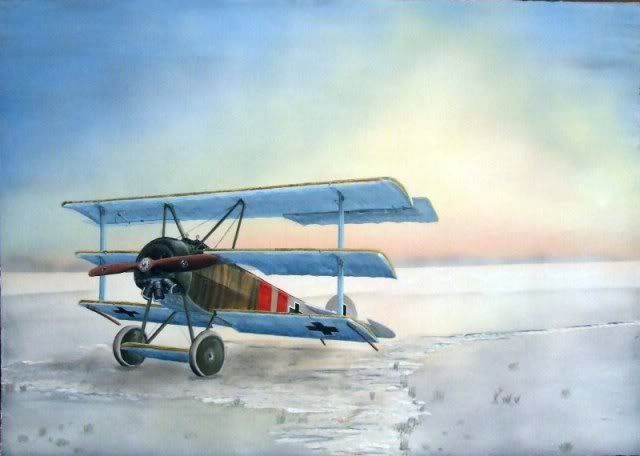
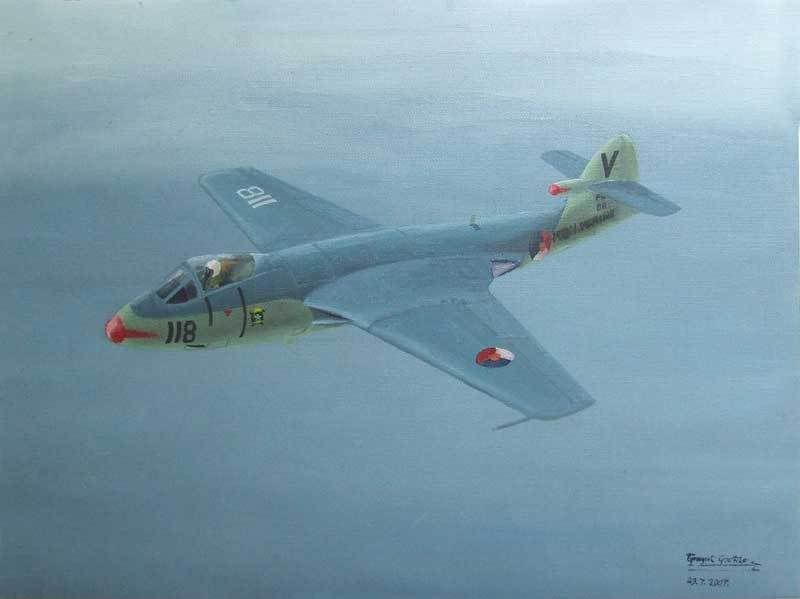
Well- I did not spot corectly your interest. For sure that if you are interesting in classic art you should start with pencil drawings. After that step by step you should go into the painting with colors. Best books for this are written by Andrew Loomins and I warmly recomend it to every one interesting in the art. Long time ago when I start with art I did not know for this great man and I am learn it directly from other artist. I do not represent my classic art works but here you are two of my classic paintings.

Image

Image

_________________
Owner: http://www.letletlet-warplanes.com
Owner: http://www.letletlet-warplanes.com/forum
Owner: http://www.sreckobradic.com
Email: srecko.warplane@gmail.com
Skype: sreckobradic
Facebook http://www.facebook.com/pages/LetLetLet ... 8234397758


Top
 Profile  
 
 Post subject:
PostPosted: Thu Dec 27, 2007 10:31 pm 
Offline

Joined: Sun Nov 07, 2004 3:38 pm
Posts: 642
Hi,
There have been a few other art posts here so I ask my good friend Warbirdnerd to post a couple of my doodles. Its in the off topic area

Thanks Mike

_________________
IF YOU CAN FIND IT WE CAN FIX IT


Top
 Profile  
 
 Post subject:
PostPosted: Fri Dec 28, 2007 10:10 am 
Offline
1000+ Posts!
1000+ Posts!
User avatar

Joined: Thu Apr 28, 2005 10:01 am
Posts: 1126
Location: Post-Confederate People's Republic of Alabamastan, Suh!
How did I miss this thread??? :roll: :shock: :) :wink: :P :shock: 8) :lol:


Yes, a good basis in drawing is essential. Like many artists, I've taken many formal 'art' classes and was blessed with excellent instructors.

You can read everything there is out there about tone, hue, value, line, edges, composition, etc, but then again I can read the pilot's manual for the F-15E, but you don't want to be along for my first flight - assuming I could even get it out of the chocks! :lol:

Assuming you are serious about it, like flying AF jets by far the best and most efficient path to success is formal training and experience and practice - except with art maybe a single-minded devotion to self-study if classes are not an option - the "self-taught" route is possible, but good classes will shave years off your learning curve. "Self-taught artist" is a misnomer anyway ... you didn't make up the information on your own, you just took a lot longer to learn what's been known by others for hundreds of years!

That being said, these days there are many DVD and book 'courses' on any level ... start with drawing. As others have mentioned above, this is your first goal - I can't stress drawing enough. Then apply that "foundation" to working in color, which is something most of us take years to learn. I took formal classes as I said, but it was only after about 8-9 years of working in color that I felt like I was to the point of controlling it on my canvas rather than the other way around.


Right off the bat - here's some excellent sources that *I* like. Some may be harder to find, but they're out there:

Mastering Composition, by Ian Roberts
(A brand-new book - excellent - he also offers a long DVD on his site on the same subject - the book is sort of a follow-up to the long DVD. Composition has broken more representational art than almost any other thing, especially 'aviation art'. Problem is many 'aviation artists' are after accuracy first, and 'art' a distant second. WAY wrong approach - and it will show in the form of amateurish paintings.)

Painting the Visual Impression, by Richard Whitney
(Full of wisdom, but it's like that F-15E manual ... takes a while to understand everything in there.)

Alla Prima, Everything I Know about Painting, by Richard Schmid
(One of America's greatest living artists ... another book full of wisdom.)

Air Combat Paintings, the Aviation Art of Robert Taylor
In five volumes (so far), Taylor's approach to 'aviation art' is art first, aviation a close second. Not a zero-sum game, as Taylor shows. If you can, try and find his books in hardback ... lot bigger paintings to study. Also, Taylor's personally-written narratives in each book are very in-depth about the subjects and his creation process.

Books on landscapes, like those covering The Hudson River School ... check out Frederic Church's (American, d.1900) work, for example. I'd love to see what guys like Church would have done as "aviation artists".

Study the work of John Singer Sargent ... a master of the portrait, though he mostly gave that subject up later in his career, Sargent was a master of the art of "painting", period - no matter what he painted. His approach was like all the great masters - simply paint the object as it presents itself; don't worry about "what it is", per se ... see the forest ... the trees will work themselves out.


Web sources:

http://asaa-avart.org (American Society of Aviation Artists)
(Probably the biggest influence on my art so far ... their crits of my earlier work were bone-jarring, but I deserved it, and I listened. The annual Forums at 'aviation' venues are excellent fun.)

http://www.ehangar.com
('The' online home for aviation artists and collectors. Well-run and you'll find a lot of like-minds here. I'm one of the forum moderators on eHangar, but the 'well-run' part isn't my doing! :lol: )

http://www.hyperscale.com
(Serious scale modeling site - good source of reference materials and contacts for same ... I've made a lot of friends here over the years. In the last few years, WIX has also become a great source of history and discussion for me.).


Magazines:

Art of the West
(US magazine that is full of beautiful landscapes and figurative art ... one of my primary sources of inspiration - after all, the airplanes are only one small part of 'aviation art'. Look at Robert Taylor and other leading aviation artists ... they place their planes in beautiful complementary settings.

The Artist's Magazine
(US based, with good tips)

International Artist
(very good magazine covering the full spectrum of art)

Hope some of this helps ... there's much more, but the above will get you going. :wink:

Wade

_________________
Website: http://www.wademeyersart.com
Facebook: http://www.facebook.com/Wade.Meyers.Studios

Image


Top
 Profile  
 
 Post subject:
PostPosted: Fri Dec 28, 2007 12:43 pm 
Offline

Joined: Sun Nov 07, 2004 3:38 pm
Posts: 642
Hi
I've never had any formal training I just draw what I see. My drawings are done with a papermate ball point pen I think you get a better contrast over pencil and less chance of smearing.

Thanks Mike

_________________
IF YOU CAN FIND IT WE CAN FIX IT


Top
 Profile  
 
Display posts from previous:  Sort by  
Post new topic Reply to topic  [ 11 posts ] 

All times are UTC - 5 hours


Who is online

Users browsing this forum: ALOHADAVE, Google [Bot], Google Adsense [Bot] and 99 guests


You cannot post new topics in this forum
You cannot reply to topics in this forum
You cannot edit your posts in this forum
You cannot delete your posts in this forum
You cannot post attachments in this forum

Search for:
Jump to:  
Powered by phpBB® Forum Software © phpBB Group