FG1D Pilot wrote:
The Germans knew what Quick Change meant. The Brits were using labor union ideals.
Excellent post. However, while I'd be the last to disagree that British aircraft are 'labour intensive' that had nothing to do with 'labo(u)r union ideals' or similar in the inter war period.
A look at the history of the British 1920s and 30s aviation business, which was in a marginal position through most of that time, quickly reveals way staff were laid off with a days notice, and no pay, or expected to shift around the country off their own bat. Working conditions were often appalling in today's terms and highly dangerous, both for chronic and acute risks. Generally, the workforces weren't unionised (I can't think of
any, but I don't claim expertise...) and labour was as cheap as the employer wished to pay. Not that it was easy running the business either, with few, small contracts given out and a remarkably ineffective and slow contracting system.
To make a massive generalisation, Britain essentially 'handbuilt' aircraft in the interwar period, and there were very few actual production lines as we'd understand them today. Henry Ford wasn't recognised as a model.

Labour was cheap, production numbers were low, the Empire was essentially a closed market for British product, and skilled workers were highly regarded (but not well paid or protected). There was no incentive for efficiency or mass-production until the advent of the mass Spitfire factory at Castle Bromwich.
R J Mitchell designed a hand-built one-off in Spitfire K5054. Thankfully Joe Smith was able to turn that into a produceable aircraft, but production and serviceability (gun access on the underside of the wing?!) were always the losers in the required compromises. Hawker's was a bit better, but wouldn't be held up as great exemplars today.
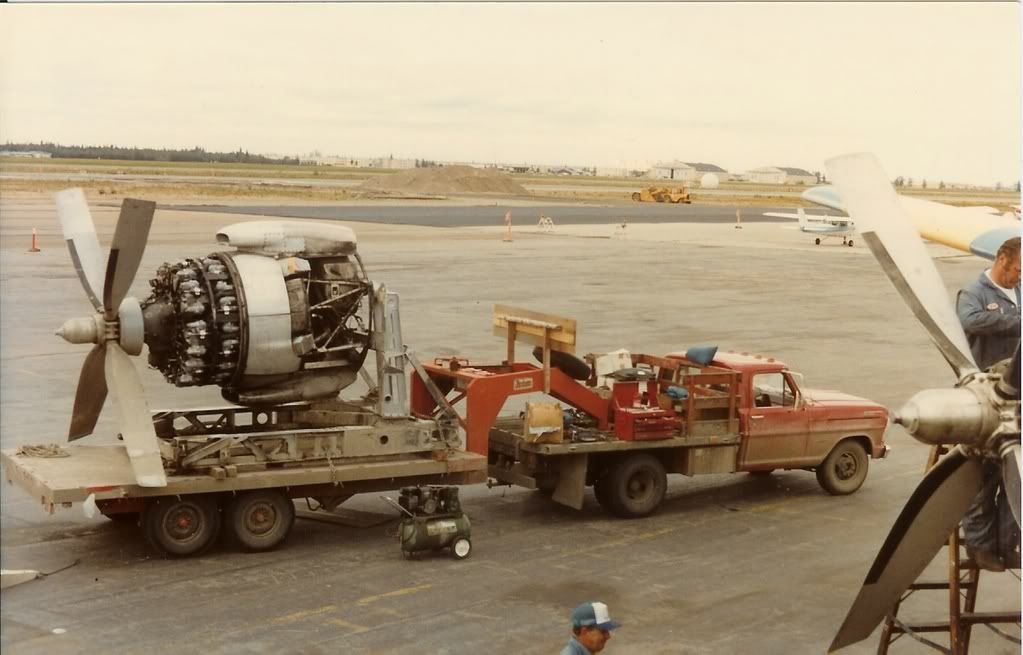
The Merlin Power Egg was used in the Beaufighter II as well as the Lancaster and the Miles M-20.
http://en.wikipedia.org/wiki/Miles_M.20


 Login
Login Register
 FAQ
FAQ Search