Piston-engine APUs
Sun Apr 08, 2012 2:28 pm
I know that the B-29 had an on-board APU (as does anybody who knows about Kee Bird...), and I know that the original Lockheed C-130 was considered remarkable for its day because it was equipped with a turbine APU so it could stay powered up on the ground and could start its own engines at unprepared fields, etc.
Question: did any large airplanes either before or after the B-29 and before the C-130 have APUs? They'd have been four-cycle gasoline engines, I assume.
Question: did any large airplanes either before or after the B-29 and before the C-130 have APUs? They'd have been four-cycle gasoline engines, I assume.
Re: Piston-engine APUs
Sun Apr 08, 2012 2:41 pm
The P-3 Orion has an apu, but I don't know if the aircraft predates the C-130.
ps: it was a gas turbine and onboard. I always loved lighting it off because it meant a/c was just seconds away! That was HUGE in SE Asia and the like.
ps: it was a gas turbine and onboard. I always loved lighting it off because it meant a/c was just seconds away! That was HUGE in SE Asia and the like.
Re: Piston-engine APUs
Sun Apr 08, 2012 2:52 pm
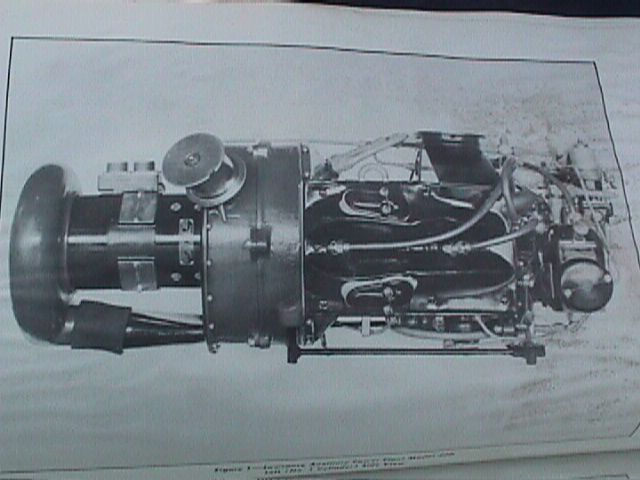
The B-24 had a two cylinder putt-putt apu, since the KC-97/377 were developments of the B-29 I'd imagine they'd need the same Lawrance R-75 APU to handle electrical items on the ground. Not sure if the B-36 had an onboard or not. The P-3 was a development of the L-188 ELECTRA program of the late 50's and the C-130 prototype flew in 1952/53.
Re: Piston-engine APUs
Sun Apr 08, 2012 3:01 pm
The B-17 Flying Fortress was equipped with an APU that was powered by a single-cylinder two-stroke piston engine and produced +28 VDC. If there was enough battery voltage available, the engine would be started electrically. If the batteries were too weak, there was a pull-cord available. The APU was mounted in the waist compartment, on the left side of the fuselage, directly across from the aft boarding door. We used to start Chuckie with the "putt-putt" from time to time. Many B-17 APU engines were made by Homelite and McCullough (yes, the chainsaw manufacturers -- plenty of experience with small engines).
We have the remains of a B-29 APU at VFM. It's a V-twin piston engine. I don't know if it's a two-stroke or a four-stroke, or who made it.
We have the remains of a B-29 APU at VFM. It's a V-twin piston engine. I don't know if it's a two-stroke or a four-stroke, or who made it.
Re: Piston-engine APUs
Sun Apr 08, 2012 4:35 pm
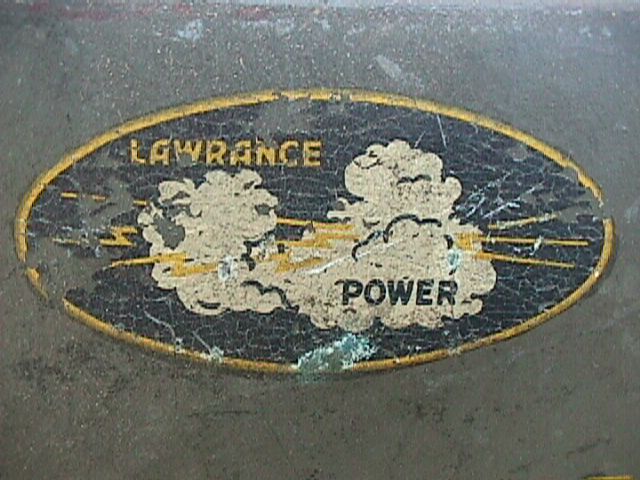
Thought the B-29 used the 5 cylinder R-75 LAWRANCE radial with a hard charging 37 H.P.
Re: Piston-engine APUs
Sun Apr 08, 2012 5:14 pm
You could be right. I just saw some casual reference to it as a "10 hp" and a "two-cylinder," though it was on a small-engines-enthusiasts forum populated by people who seem to be hugely knowledgeable about arcane vintage small engines...
Re: Piston-engine APUs
Sun Apr 08, 2012 9:20 pm
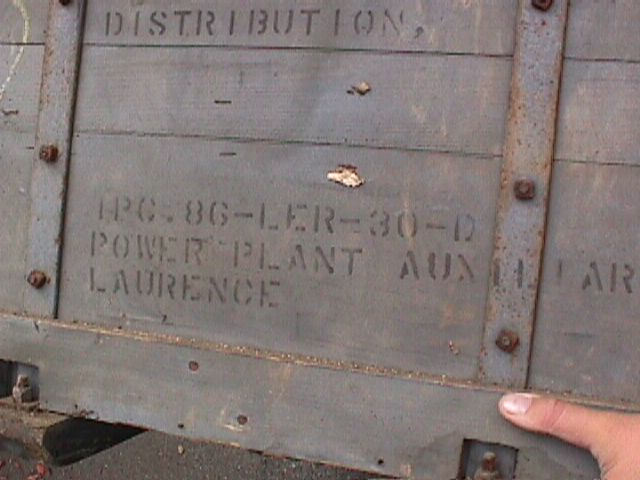
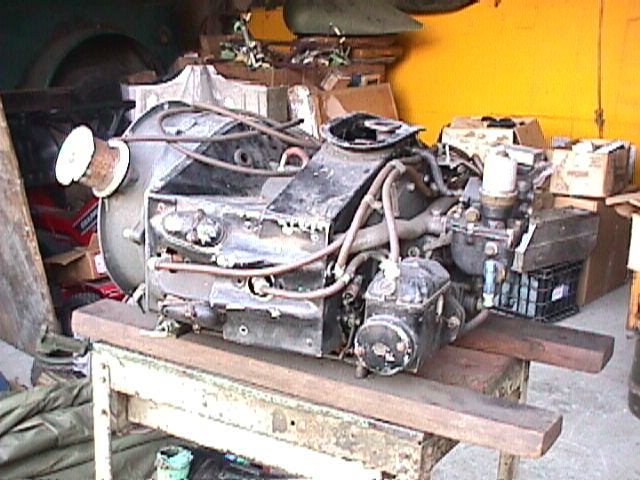
I really like these things, but I don't know much about them. The only written documentation I have found on the V-twin and opposed twin APU's is in the Martin PBM Mariner parts book. It shows one of these, illustrated below, used as the APU. They are about 10 HP. I have other APU's including Lawrance and Ranger, which are V-twins or opposed, but I don't know what they were used in. The other type Lawrance and Ranger items I have are AAF marked ones, so were used in WWII, but I have no idea in what. When I did have own the Lawrance 5 Cylinder Radial, I met an old airline maintenance guy who said they were used in the DC-6 as the APU. I have never met anybody who said the radial Lawrance was a WWII APU, and my understanding is it was made just after WWII. If anybody has more information on which airframe used what APU, I'd be interested to see the documentation. I'm also looking for AAF tech orders on the Anderson A-2 APU or any other two-cylinder WWII APU. BTW, I have a few of these USN D-2 APU's NOS in the crate for sale.
http://www.forgottenfield.com/amg/powerplant/3505.html
http://www.forgottenfield.com/amg/powerplant/3505.html
Re: Piston-engine APUs
Sun Apr 08, 2012 9:59 pm
As we used to say in the early 70's 'FARM OFF!  ' And all this time I was under the impression that the radial WAS the APU on B-29's


' And all this time I was under the impression that the radial WAS the APU on B-29's
Re: Piston-engine APUs
Sun Apr 08, 2012 11:02 pm
I have to correct myself after I checked some notes. I did meet a guy who worked at Hawkins and Powers back in the day. He told me the 5 cylinder Lawrance was original equipment in the Privateers. I intended to keep it, but when I listed a bunch of stuff to raise money to buy the new digs, it was one of the first things to sell. I wish I had more time to do research on it before it left my care. I'd still like to find a manual on it to learn more about it.
The documentation in the PBM-5 parts manual I have only lists the APU's in the photos as the model 1-A. There is no other information on any of the items associated with it, as it is listed as Government Furnished Equipment (GFE). There is a manual in each of the little suitcases that come in the crate; the suitcase has enough stuff to do a top-end overhaul. The Bristol, Lawrance, and Ranger AAF ones in my collection are totally different from the ones in the photo. But I was lucky enough to pick up spare parts suitcases for those at a swap meet a few years ago- totally different from the USN ones dimensionally as well as parts-wise. Here's a photo of a complete D-2 APU:

The documentation in the PBM-5 parts manual I have only lists the APU's in the photos as the model 1-A. There is no other information on any of the items associated with it, as it is listed as Government Furnished Equipment (GFE). There is a manual in each of the little suitcases that come in the crate; the suitcase has enough stuff to do a top-end overhaul. The Bristol, Lawrance, and Ranger AAF ones in my collection are totally different from the ones in the photo. But I was lucky enough to pick up spare parts suitcases for those at a swap meet a few years ago- totally different from the USN ones dimensionally as well as parts-wise. Here's a photo of a complete D-2 APU:
Re: Piston-engine APUs
Mon Apr 09, 2012 2:50 am
I understand that the PBY Catalina had a small putt-putt APU that could double as a bilge pump.
Re: Piston-engine APUs
Mon Apr 09, 2012 3:44 pm
The C-124 had two: one in each outboard nacelle just aft of the powerplant firewall. It was a V-2, 4 cycle engine with its own oil supply.
Re: Piston-engine APUs
Mon Apr 09, 2012 3:50 pm
Solar Turbines International built the APU used on the sleek, racy and graceful KC-97L StratoTanker and air bruising machine.
Re: Piston-engine APUs
Mon Apr 09, 2012 7:58 pm
Interesting as SOLAR makes the APU used in the 737-700/800/900 (and on the MD-95/717) the old standby GARRETT GTCP 85 just didn't have enough grunt any more I guess. And the P&W APU on the 787 provides electrical power only as the pressurization system and engine start and wing anti ice is all all electric as are the wheel brakes.
Re: Piston-engine APUs
Mon Apr 09, 2012 11:15 pm
The PBY did have a little APU under the engineers seat. The C-119 has one of the little V-bangers up behind the cockpit on A deck.
Re: Piston-engine APUs
Tue Apr 10, 2012 12:59 am
Think we can push the first APUs to pre-W.W.II. Thinking about it, you'd expect the large flying boats, having to operate independantly, to have them. So starting with the 1930s design the Short Sunderland - From Wiki:
Then going before that, I suspected the Shorts C Class 'Empire' 'boats would have them, and there's this neat link:
http://www.youtube.com/watch?v=s63hoxHlEx8
With this (My emphasis):
There we are heading into Wireless and Radio specific power units of the 1930s, rather than APUs that we'd expect today. However while none of these have APUs for things like air conditioning, the first air conditioning and cooling units I've found date to 1919 in the Vickers Commercial for cooling the cabin for ambulance work - earlier than we'd expect, I'd say.
Regards,
A small manually started auxiliary petrol engine, which was fitted into the leading edge of the right wing, powered a bilge and a fuel pump for clearing water and other fluids from the fuselage bilges and for refuelling. Generally, the aircraft were reasonably water tight, and two people manually operating a wobble pump could transfer fuel faster than the auxiliary pump.
Then going before that, I suspected the Shorts C Class 'Empire' 'boats would have them, and there's this neat link:
http://www.youtube.com/watch?v=s63hoxHlEx8
With this (My emphasis):
Finally another tiny engine, the Marconi-Stanley M5 the ID plate of which states that is was built by Stanley Engineering Co Ltd Egham for Marconi's Wireless Telegraph Company.
Again initial evidence for a likely application of this unit was circumstantial with a previous owner stating that it had been acquired by a relative when last of the Armstrong Whitworth Ensign airliner fleet was scrapped in Hamble. A report on Stanley Engineering's stand at the 1938 British Industries Fair in 'Flight' magazine confirms that the Ensign did indeed have a Stanley engine "for W/T", as did the Atalanta, Albatross and Shorts Empire flying boats, but does not give a description or type number.
Fortunately there exists on line 'Flying Empires', a meticulous history of the Empire flying boats which details the wireless equipment, leased from Marconi's WT Co., including a Marconi-Stanley 5M petrol motor with exhaust pipe and fuel tank self-contained in a fire proof box. The wireless equipment was normally driven by an electric motor-generator set (type FB/G1) but under emergency conditions (for example on the water with low batteries and no main engines running) the box would be opened, the motor-generator coupled to the engine by a hand operated clutch and the exhaust pipe dangled out of an opening panel in the windscreen -- perhaps not surprising the set was described as 'very noisy' in operation!
The flying boat and airliner installations don't seem to be the beginning of the Marconi-Stanley story, another Flight article from 1934 shows a similar unit employed as a GPU running the externally mounted 'windmill' generator of a Bristol Bulldog aircraft via a flexible 'speedo cable' type drive. How and when Stanley Engineering came to be involved with Marconi is not known -- the company was perhaps better known for producing a range of invalid carriages under the Argson brand name, motorised versions of which employed Villiers engines.
There we are heading into Wireless and Radio specific power units of the 1930s, rather than APUs that we'd expect today. However while none of these have APUs for things like air conditioning, the first air conditioning and cooling units I've found date to 1919 in the Vickers Commercial for cooling the cabin for ambulance work - earlier than we'd expect, I'd say.
Regards,