This is the place where the majority of the warbird (aircraft that have survived military service) discussions will take place. Specialized forums may be added in the new future
Post a reply

water submerged ww 1 & 2 boom booms stability, how safe??

Fri Dec 24, 2010 12:20 am

watched a great documentary on nat. geo. channel tonight.... diving ww 2 wrecks in truk lagoon. i've seen countless footage dating back to the 70's with divers manuevering through stacks of live bombs, torpedos, a piece of silt could spell chain reaction explosions. this "still "live ordinance" is not going to sit for ever. will nature desolve it?? or will it eventually explode as to stability after a big blowfish farts on it?? salt water is nasty on aircraft, but more dangerous with ordinance & surviving the dive.

Re: water submerged ww 1 & 2 boom booms stability, how safe??

Fri Dec 24, 2010 12:52 am

Wouldn't it have to be armed to go off?

Re: water submerged ww 1 & 2 boom booms stability, how safe??

Fri Dec 24, 2010 9:01 am

I got a couple of theorys on it from hearing stuff from my dad but since I am seeing him in a couple of hrs, I will ask the "expert" so the correct answer is given unless someone finds out in the meantime.

Btw, dad was in the EOD in the USAF and he is still tinkering with it today in his retirement :)

Re: water submerged ww 1 & 2 boom booms stability, how safe??

Fri Dec 24, 2010 9:14 am

Here is an interesting article on a sunken US ammunition ship in the Thames Estuary, UK.

Re: water submerged ww 1 & 2 boom booms stability, how safe??

Fri Dec 24, 2010 9:15 am

Ok I called him for a quick answer. He said that "he would not deem it safe". That US ordnance would be still good today as it was made back then. He did not give the particulars on how "Stable" it would be and what it would take to set it off. He noted that Japan used a chemical fuze and could explode at any time even when new.

Dad lurks on WIX so maybe he will post up more.

Re: water submerged ww 1 & 2 boom booms stability, how safe??

Fri Dec 24, 2010 10:31 am

I know the Port of Seattle is in panic overdrive to find and recover all the old, creaky ammo that was recently found under what is now the Cruise Ship Terminal, and hopefully before Cruise Season starts up again in late March 2011, formerly U.S. Navy Pier 91. Apparently shells either fell. or were dropped overboard around naval vessels over 90 or so years doing resupply there.

Re: water submerged ww 1 & 2 boom booms stability, how safe??

Fri Dec 24, 2010 11:11 am

Years ago I read somewhere that US bombs were thought to have a stabile life of at least 100 years and Japanese bombs about 150 years before the explosive filling components would leach or separate enough to become truly dangerous. Of course that was probably based on storage in relatively stable temperature, humidity, pressure conditions. Think about the 1930s era bombs on the USS Forrestal that "should" have lasted longer in fire/heat conditions before exploding.

Re: water submerged ww 1 & 2 boom booms stability, how safe??

Fri Dec 24, 2010 12:41 pm

John Dupre wrote:Years ago I read somewhere that US bombs were thought to have a stabile life of at least 100 years and Japanese bombs about 150 years before the explosive filling components would leach or separate enough to become truly dangerous. Of course that was probably based on storage in relatively stable temperature, humidity, pressure conditions. Think about the 1930s era bombs on the USS Forrestal that "should" have lasted longer in fire/heat conditions before exploding.


Those bombs on the "Forest-Fire" were not treated for a longer cook-off time also, besides being WW2, or older, ordnance. I remember being told that the "coating" on our bombs delayed cook-off and the bombs loaded that day did not have that treatment. I was not a AO, so maybe Jack and shed more light on this, it was just my job to make sure the separated from the aircraft, hit their target and went boom! So I was never taught such detailed into on weapons, just picked up what I could. As such I could have been given incorrect details...

Tim

Re: water submerged ww 1 & 2 boom booms stability, how safe??

Fri Dec 24, 2010 12:56 pm

Dont forget Bien Hoa in 1965
http://www.youtube.com/watch?v=teHsjwXTrcU

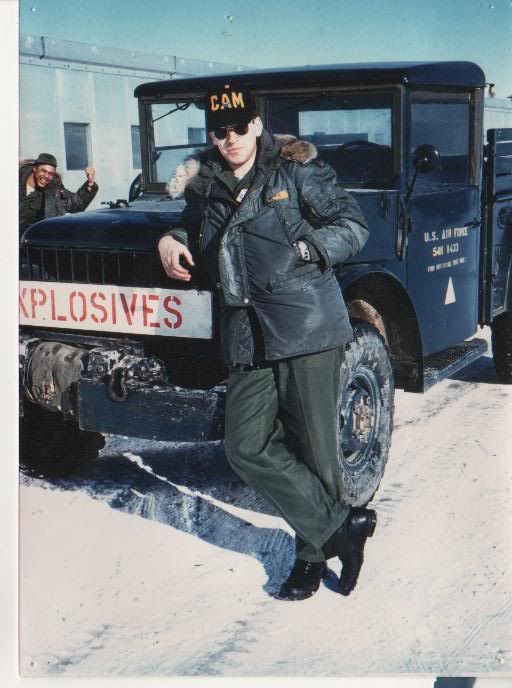
Our Dodge M-37 EOD truck is dedicated to the EOD guys that lost their lives in 1965.

http://www.vspa.com/bh-b57-explosion-1965.htm

Re: water submerged ww 1 & 2 boom booms stability, how safe??

Fri Dec 24, 2010 4:32 pm

Degrading munitions are now, and going to be a very large problem in the years to come. If you think it's scary about the underwater stuff, you need to check out this site:

http://www.greatwar.nl/

Scroll down on the left side and click on:

Poison Gas: The Abomination of Houthulst

If this is true......

Bill

Re: water submerged ww 1 & 2 boom booms stability, how safe??

Fri Dec 24, 2010 7:59 pm

this past year a civil war collector tried to disarm a live cannon ball he bought with predictable results.

Re: water submerged ww 1 & 2 boom booms stability, how safe??

Fri Dec 24, 2010 9:19 pm

tom d. friedman wrote:this past year a civil war collector tried to disarm a live cannon ball he bought with predictable results.


that collector also had been doing it for years!!!!

Re: water submerged ww 1 & 2 boom booms stability, how safe??

Fri Dec 24, 2010 9:37 pm

50 Years of EOD

Image


Dad today with our M37

Image

Re: water submerged ww 1 & 2 boom booms stability, how safe??

Sat Dec 25, 2010 3:32 am

excellent deja vu pics!!

Re: water submerged ww 1 & 2 boom booms stability, how safe??

Sat Dec 25, 2010 8:30 am

NOTE: I do not advocate amateurs doing any kind of disarmament of WWII ordnance or ammunition. This is not advice on how to disarm WWII or other ordnance. If you attempt to disarm these types of armaments there is a high probability that you will be injured, sickened, or killed.

WWII explosives are as far back as my small bit of experience goes. The major constituents of bombs/torpedo's are RDX and TNT. Both are pretty stable when made and shipped- that is why they were used. If you have a device which is armed, meaning it has been detonator-equipped and dropped toward a target, you still have a pretty stable arrangement underwater as long as it is not disturbed. When working with them, you can't assume this; but if it didn't go off, then chances are the detonator was not armed during the drop process. The detonators, if they haven't been activated by the dropping process, are a little less stable than the RDX/TNT. So a fused/detonator equipped armed bomb in an underwater environment is pretty stable as long as you don't mess with it. KEY WORD- DON'T MESS WITH IT!

The detonators have an arrangement of several types of explosives, starting with a small amount of a very sensitive one and subsequently detonating 1-3 larger but more stable types of explosives to detonate the whole bomb. These are the pieces which have to be removed from a bomb to make it safe to disarm. Safe is a relative term. What this means is that you have removed the part which was originally intended to detonate the bomb. In several cases, these detonators have activated and burned/exploded after removal from ordnance buried below ground.

Working with 65 year old explosives, there are more "gotcha's." Starting with the explosive, you still have relatively high danger with the original compounds; they are still potent after this long, meaning they can still be made to explode. Added to that, those original explosive compounds can crystalize, meaning they re-arrange themselves in a crystal pattern. Crystalized explosive compounds, in some cases, can be more likely to detonate than in their original form for many reasons. Added to that, the explosives degrade into other products. TNT degrades into several compounds. These other compounds can be more volatile and sensitive to pressure than TNT.

Underwater, what you have is one big chemical equation. Between salinity, pH changes, and temperature changes, you have a wonderful chemistry experiment going on between the environment and the ordnance. Eventually, at various times, these will reach equilibrium. If the ordnance was placed without detonators, and you don't disturb it, you will probably be okay and it will not explode. If it is detonator-equipped and was armed, you are probably still okay, as long as you stay away from it. KEY WORDS- STAY AWAY FROM IT!

So with this information, here are my thoughts:

1. Aircraft-dropped, detonator-equipped ordnance is probably ready to explode. Leave it alone until the stuff decays/rusts/explodes
2. Ordnance which was not detonator-equipped, not dropped from aircraft, not fired from a cannon, and thrown overboard to dispose of it is probably stable in place until it decays/rusts/explodes.

Here in Maryland, the whole of the western shore, from the Susquehanna River Mouth south to Martin State Airport and all around Patuxent River, is littered with bombs, torpedoes, and everything else. The real estate developers would sell their souls to get hold of this property for development purposes. The US Army and US Navy are in constant work cleaning up what they have placed into the Chesapeake Bay region. And from everything I have read, no one had put a price tag or time frame on that clean up. It would be nearly impossible to do so. The US Army owns 779,000 acres of property, 1/3 of it shore front, in Maryland alone. At Fort Meade, where I used to work, there was an EOD detachment which had to fire stuff found on and near post, which hasn't been a live fire post since the 1980's. The EOD det had to detonate stuff nearly once a month. And this stuff consisted of things like WWI 75 mm shells, fired 2.36 inch rockets, grenades, and other mostly hand-held crew served light weight stuff. And this was AFTER the post was cleaned up by a contractor.

The logistics of cleaning up large quantities of WWII expended and surplus ordnance are immense. The costs and personnel involved could be a bottomless pit. Add an underwater environment to that, and it gets mind-boggling expensive. It makes more sense financially to do sampling of what is present at any given site, figure out how long it takes to degrade to a safe level, then wait until it is safe. And I think this is what is being done except in areas with high economic activity where people disregard sensible advice and go ahead and build anyway.

Merry Christmas, and don't touch the ordnance...
Post a reply