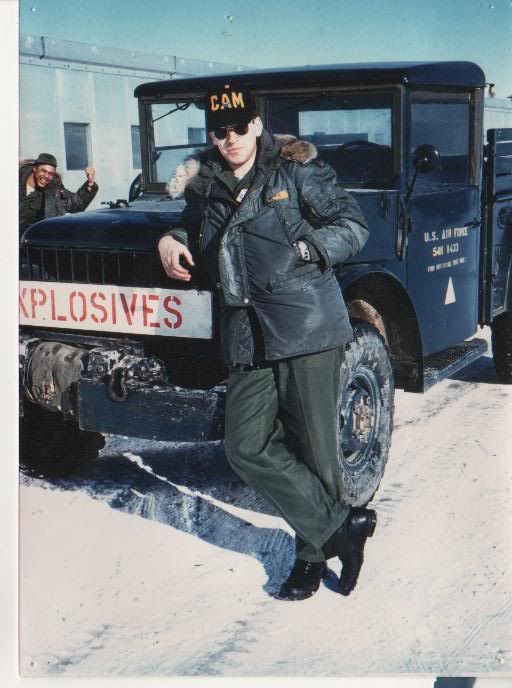
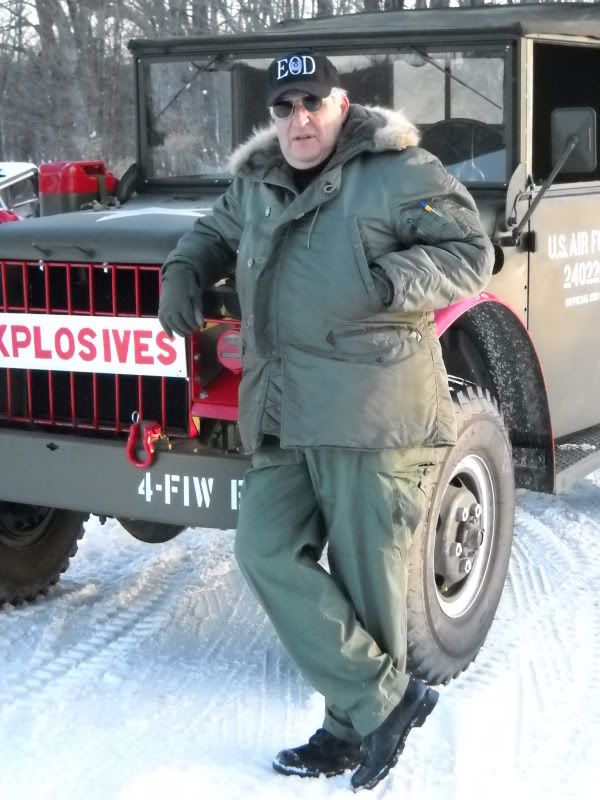
|
NOTE: I do not advocate amateurs doing any kind of disarmament of WWII ordnance or ammunition. This is not advice on how to disarm WWII or other ordnance. If you attempt to disarm these types of armaments there is a high probability that you will be injured, sickened, or killed.
WWII explosives are as far back as my small bit of experience goes. The major constituents of bombs/torpedo's are RDX and TNT. Both are pretty stable when made and shipped- that is why they were used. If you have a device which is armed, meaning it has been detonator-equipped and dropped toward a target, you still have a pretty stable arrangement underwater as long as it is not disturbed. When working with them, you can't assume this; but if it didn't go off, then chances are the detonator was not armed during the drop process. The detonators, if they haven't been activated by the dropping process, are a little less stable than the RDX/TNT. So a fused/detonator equipped armed bomb in an underwater environment is pretty stable as long as you don't mess with it. KEY WORD- DON'T MESS WITH IT!
The detonators have an arrangement of several types of explosives, starting with a small amount of a very sensitive one and subsequently detonating 1-3 larger but more stable types of explosives to detonate the whole bomb. These are the pieces which have to be removed from a bomb to make it safe to disarm. Safe is a relative term. What this means is that you have removed the part which was originally intended to detonate the bomb. In several cases, these detonators have activated and burned/exploded after removal from ordnance buried below ground.
Working with 65 year old explosives, there are more "gotcha's." Starting with the explosive, you still have relatively high danger with the original compounds; they are still potent after this long, meaning they can still be made to explode. Added to that, those original explosive compounds can crystalize, meaning they re-arrange themselves in a crystal pattern. Crystalized explosive compounds, in some cases, can be more likely to detonate than in their original form for many reasons. Added to that, the explosives degrade into other products. TNT degrades into several compounds. These other compounds can be more volatile and sensitive to pressure than TNT.
Underwater, what you have is one big chemical equation. Between salinity, pH changes, and temperature changes, you have a wonderful chemistry experiment going on between the environment and the ordnance. Eventually, at various times, these will reach equilibrium. If the ordnance was placed without detonators, and you don't disturb it, you will probably be okay and it will not explode. If it is detonator-equipped and was armed, you are probably still okay, as long as you stay away from it. KEY WORDS- STAY AWAY FROM IT!
So with this information, here are my thoughts:
1. Aircraft-dropped, detonator-equipped ordnance is probably ready to explode. Leave it alone until the stuff decays/rusts/explodes
2. Ordnance which was not detonator-equipped, not dropped from aircraft, not fired from a cannon, and thrown overboard to dispose of it is probably stable in place until it decays/rusts/explodes.
Here in Maryland, the whole of the western shore, from the Susquehanna River Mouth south to Martin State Airport and all around Patuxent River, is littered with bombs, torpedoes, and everything else. The real estate developers would sell their souls to get hold of this property for development purposes. The US Army and US Navy are in constant work cleaning up what they have placed into the Chesapeake Bay region. And from everything I have read, no one had put a price tag or time frame on that clean up. It would be nearly impossible to do so. The US Army owns 779,000 acres of property, 1/3 of it shore front, in Maryland alone. At Fort Meade, where I used to work, there was an EOD detachment which had to fire stuff found on and near post, which hasn't been a live fire post since the 1980's. The EOD det had to detonate stuff nearly once a month. And this stuff consisted of things like WWI 75 mm shells, fired 2.36 inch rockets, grenades, and other mostly hand-held crew served light weight stuff. And this was AFTER the post was cleaned up by a contractor.
The logistics of cleaning up large quantities of WWII expended and surplus ordnance are immense. The costs and personnel involved could be a bottomless pit. Add an underwater environment to that, and it gets mind-boggling expensive. It makes more sense financially to do sampling of what is present at any given site, figure out how long it takes to degrade to a safe level, then wait until it is safe. And I think this is what is being done except in areas with high economic activity where people disregard sensible advice and go ahead and build anyway.
Merry Christmas, and don't touch the ordnance...
_________________
REMEMBER THE SERGEANT PILOTS!
|



 Login
Login Register
 FAQ
FAQ Search