John Dupre wrote:
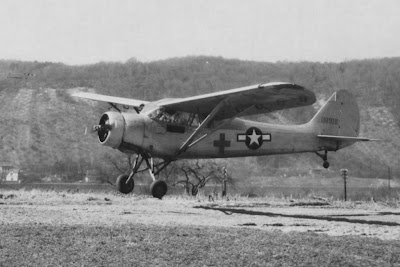
My understanding is that during the Louisiana manuevers of 1940-41 the Army learned that the small O (later L) types from Piper, Stinson, Aeronca etc. could do a much better job than the larger types like the O-52 with a smaller footprint on the ground and for a lot less money.
The British also found out the hard way in France in May 1940 that this size and performance aircraft had a hard time just surviving in a modern battle, unless they had air superiority. The French found the same with their ANF Les Mureaux 113 and 115, the equivalent types. The Germans were able to use the Henschel Hs126 for much longer. Essentially these experiences, as John touches on, were the end of this size of aircraft in the artillery and observation roles.
Mureaux:
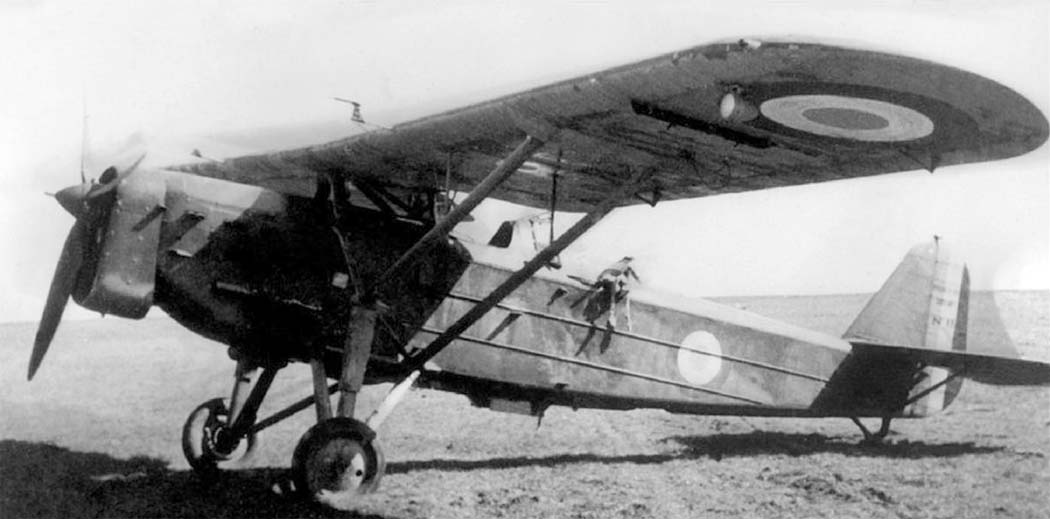 http://www.airwar.ru/enc/other1/mureaux115.html
Hs 126
 http://en.wikipedia.org/wiki/Henschel_Hs_126
It's of interest that pre-war the RAF didn't want to know about 'light' aircraft to do the job, despite British Army attempts to trial them - even at a cost saving. However after May 1940 and subsequent exercises in the UK, the Lysander was phased out from the role, tactical artillery spotting was taken over by Taylorcraft-derived Austers AOPs (Air Oberservation Posts) and tactical reconnaissance by, initially, Curtiss Kittyhawks and then early Mustangs.
On the Owl, the nice Air Force Museum website says this:
Quote:
CURTISS O-52 OWL
In 1940 the U.S. Army Air Corps ordered 203 Curtiss O-52s for observation duties -- signified by the designation "O" -- and used them for military maneuvers within the continental United States. Upon America's entry into World War II, however, the U.S. Army Air Forces realized that the airplane lacked the performance necessary for combat operations overseas. As a result, the Army relegated the O-52 to stateside courier duties and short-range submarine patrols off the coasts of the United States.
The O-52 was the last "O" type airplane procured in quantity for the Army. Following the attack on Pearl Harbor, the Army Air Forces cancelled the "O" designation and adopted "L" for the liaison type airplanes that replaced it.
http://www.nationalmuseum.af.mil/factsh ... asp?id=346
Chimes is with what's been said, although the Sub patrols was a new one to me.


 Login
Login Register
 FAQ
FAQ Search