Steve wrote:
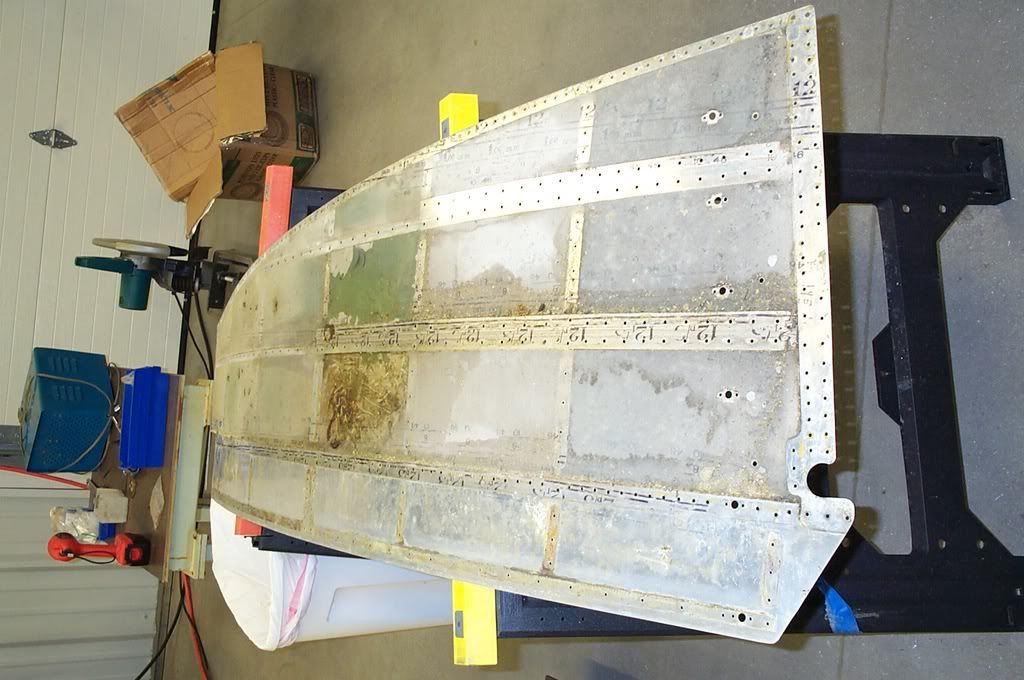
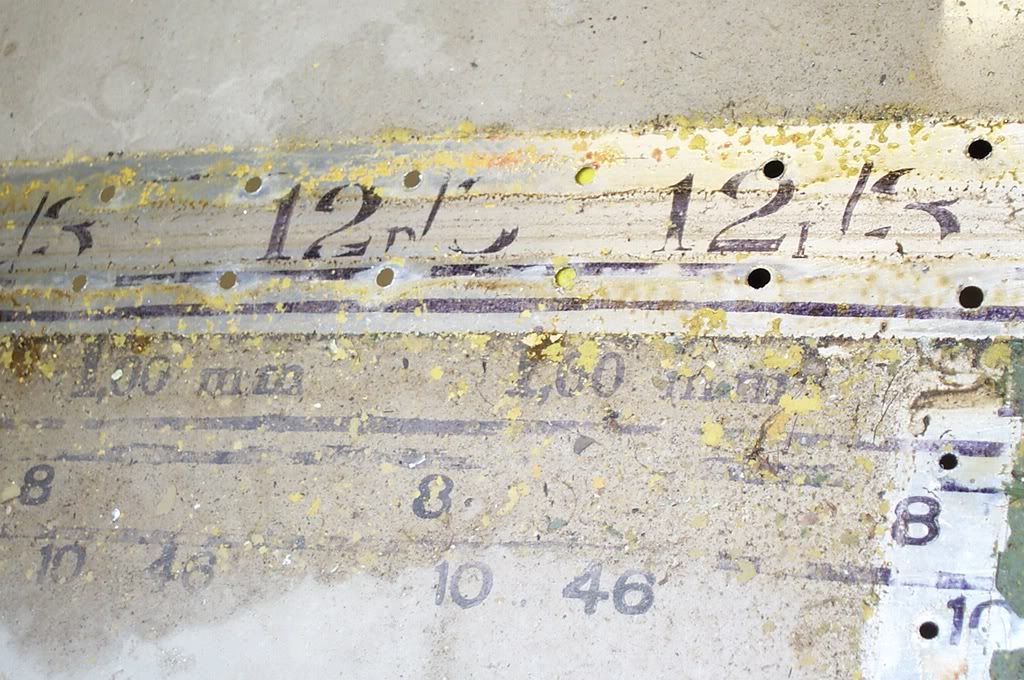
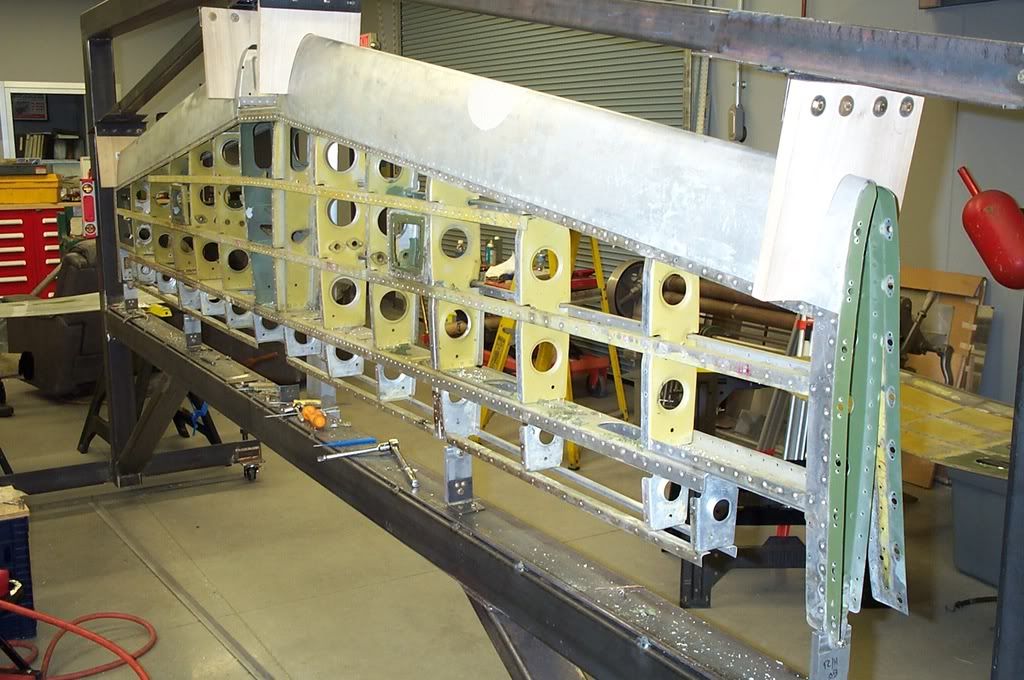
It's been a long time since I have worked with metals, but it apears the markings are, type markings, which sometimes show up on the top or bottom sheet of a pack. The marks usually show the strength and quality of the sheet
Steve
I am familiar with US sheet metal markings. WWII type markings would be 24ST .040 Alclad. The modern equivalent would be marked 2024-T3 .040 Alclad. Different alloys have different numbers in both systems as well as designations for the temper of the metal. The Alclad refers to a process where a few thousands of pure Alum is rolled onto each side of the base alloy (Strength of the metal is based on the alloy and it's temper as pure alum isn't very strong and can't be heat treated) to improve the corrosion resistance. Alloying Alum improves its strength but decreases its ability to resist corrosion. These markings are inked onto the metal sheets or shapes if we are talking about angles, rounds or Ts.
This is the 1st I have seen markings of this type. The date of 10/46 really puts this as early after the war. If the marks show a European source I don't think the Germans had rebuilt there industry by that point. Since the Swiss and Sweden operated P-51s at this point and had the high end of maintenance practices I surmised that a possibility would be that they Zinced bare areas internally to make them last longer.
There is the possibility that sheets of this batch of Alum sat around and ended up being used who knows where and who knows when.
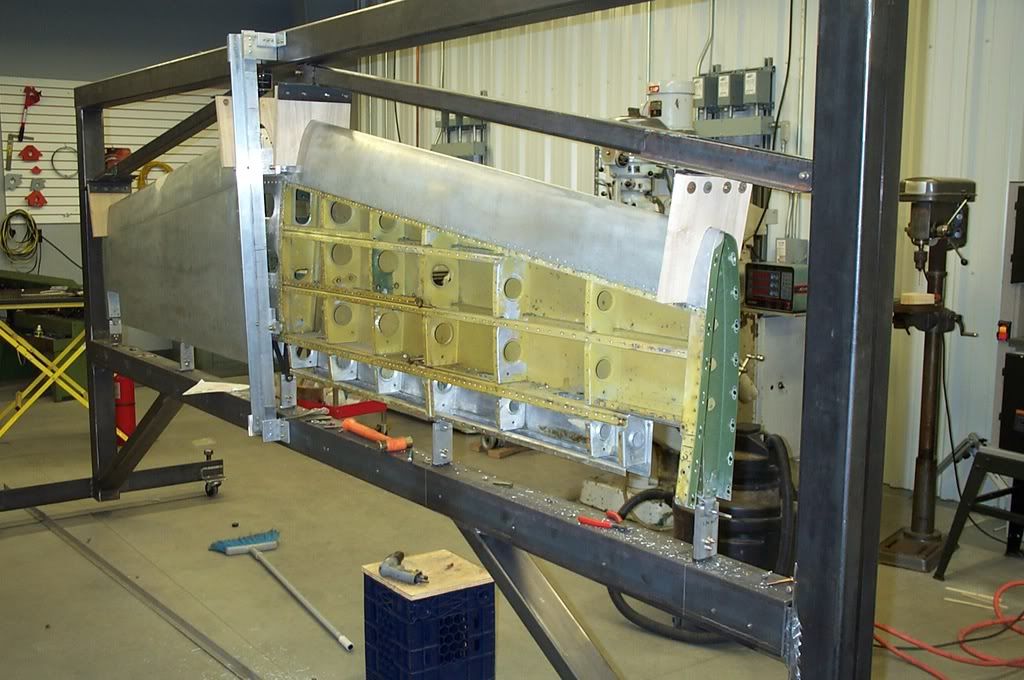
The aircraft served in the Dominican Republic. The airframe had been rebuilt a number of times so I can't say if any of the parts are native to the original or to any other airframe.
My original question still stands as far as what the markings on the metal mean.
Rich


 Login
Login Register
 FAQ
FAQ Search