T33driver wrote:
Ryan,
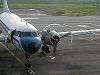
My T-33 is a little unusual in that it's avionics were upgraded by the Canadian Air Force in the late 1990s with the latest/greatest (expensive!!)electromechanical ADIs (attitude direction indicator or artificial horizon) and HSIs (horizontal situation indicator or compass card) i.e. no electronic flight instruments (EFIS) aka "glass"/flat-screen displays. Consequently the FAA was agreeable to license the aircraft for IFR in it's stock military configuration...kinda cool! I strap a hand-held Garmin GPS to my knee as a backup to my steam-driven avionics. Yes I do vault into the Class A (above 18,000') to save fuel for flights well over 200 nautical miles as a rule of thumb and the savings is significant. Besides the economics of fuel savings, we're always rationing fuel and recalculating fuel status in jets because of the high consumption especially if ATC delays the climb or descends you early it can significantly alter your fuel state. Flying to/from Sun 'n Fun non-stop from WI, I came close to diverting because of ATC delayed my climb and descended me early. Depending how busy the air traffic control environment is, especially on arrival, I'll modify the profile like I did for my arrival to Thunder where I cancelled the IFR flight plan on the enroute descent to avoid having to fly the ATC assigned standard terminal arrival (STAR) that would have taken sdennison and I into Willow Run in a very indirect, inefficient (from a fuel consumption perspective) manner. Flying VFR once below 18,000', we cancelled IFR and went direct to the field with ATC flight following. Plus it would have been way more work for me (ok that's the main reason) flying needle and ball, flying radials and intercepting courses, counting DME (slant range in miles) and I was already pretty thirsty and Dennison kept nagging me about having to pee and we're late for happy hour etc...I kid, I kid. Anyway, it's not that I relish flying IFR (I don't, it's more work, & there's no autopilot) but it's nice to have the option especially if the forecast ends up being out to lunch, it gives me an "out". Another example was departing the Thunder on the Lakeshore (Manitowoc WI) air show when the field was socked in with pea soup lake effect fog from that big ol' great lake nearby but it was clear VFR above 3500'. After hearing several pilot reports (PIREPs) to that effect, I filed an IFR flight plan, took off into the fog and was on top in seconds and cancelled IFR and flew the remaining 65 nautical miles dancing around the puffies. As far as maintaining currency, I fly for a living so that's a huge plus and keeps me IFR current and proficient. Hand flying single pilot IFR in these jets and other high performance warbirds can be like crisis management and you've gotta be very IFR current and proficient, plan thoroughly and stay ahead of the airplane to do it safely. Most jet warbirds I've seen are IFR equipped and I suspect it's because of the need for high altitude flying on cross-country sorties and the associated fuel savings for the longer flights. As for local flights where I'm just doing aerobatics or formation for a 30 or 40 minute sortie , I'm staying on the ground if I gotta worry about IFR conditions. It takes away from the fun anyway so why bother. If by chance I'm practicing instrument approaches in the T-33, it's on a clear day and it's as much to validate the avionics work as advertised as much as it is my instrument skills.
"having to pee"? Not likely. I feed on the energy altitude brings. Getting your sorry butt to happy hour to see how a real jet jockey perfoms, yup. Next time, don't delay the ETD by days so we get out qualified...



 Login
Login Register
 FAQ
FAQ Search