Warbird Information Exchange

DISCLAIMER: The views expressed on this site are the responsibility of the poster and do not reflect the views of the management.
It is currently Tue Apr 14, 2026 5:10 am

All times are UTC - 5 hours


Classic Wings Magazine WWII Naval Aviation Research Pacific Luftwaffe Resource Center
When Hollywood Ruled The Skies - Volumes 1 through 4 by Bruce Oriss


Post new topic Reply to topic  [ 4 posts ] 
Author Message
PostPosted: Wed Jan 30, 2008 6:38 pm 
Offline
User avatar

Joined: Thu Jan 03, 2008 6:36 pm
Posts: 654
Location: Scotland
[img][img]http://i257.photobucket.com/albums/hh211/wilfster/Bristol_Type_188_XF926_Front.jpg[/img]


[/img]Image

_________________
If the first casualty of war is innocence, the second is sobriety - Hawkeye.
Good people do not need laws to tell them to act responsibly, while bad people will find a way around the laws - Plato.
Lies get halfway round the world before the truth has a chance to get it's pants on - Churchill
If you are going through he11 - keep going - Churchill


Top
 Profile  
 
 Post subject:
PostPosted: Wed Jan 30, 2008 6:46 pm 
Offline
1000+ Posts!
1000+ Posts!
User avatar

Joined: Sat May 01, 2004 1:54 am
Posts: 1073
Location: UK
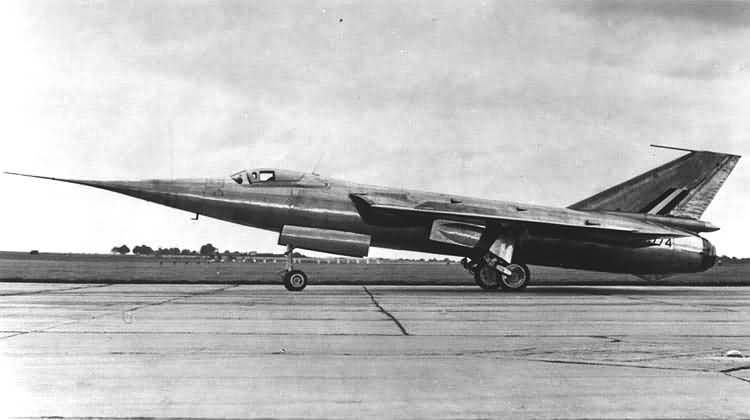
The second shot.

From Wiki:-

The first FD2 was aircraft WG774 which made its maiden flight on 6 October 1954, flown by Fairey test pilot Peter Twiss. On 10 March 1956, this aircraft broke the World Air Speed Record raising it to 1,132 mph (1811 km/h), an increase of some 300 mph (480 km/h) over the record set in August 1955 by an F-100 Super Sabre, and thus became the first aircraft to exceed 1,000 mph in level flight.


PeterA


Top
 Profile  
 
 Post subject:
PostPosted: Wed Jan 30, 2008 7:08 pm 
Offline
User avatar

Joined: Thu Jan 03, 2008 6:36 pm
Posts: 654
Location: Scotland
Those were the days!!!!!

_________________
If the first casualty of war is innocence, the second is sobriety - Hawkeye.
Good people do not need laws to tell them to act responsibly, while bad people will find a way around the laws - Plato.
Lies get halfway round the world before the truth has a chance to get it's pants on - Churchill
If you are going through he11 - keep going - Churchill


Top
 Profile  
 
 Post subject:
PostPosted: Wed Jan 30, 2008 7:58 pm 
Offline
Long Time Member
Long Time Member
User avatar

Joined: Tue May 11, 2004 5:42 pm
Posts: 6884
Location: The Goldfields, Victoria, Australia
One 'warm' rod, one 'ow-ow!' hot rod...

Bristol 188

Quote:
The advanced nature of the aircraft meant that 12% chromium stainless steel with a honeycomb centre was used for the construction of the outer skin, to which no paint was applied, but problems with the new Argon arc welding technique known as puddle welding caused long delays and was less than satisfactory. The W. G. Armstrong Whitworth company gave much technical help and support to Bristol during this period.

A quartz-lined windscreen and canopy and cockpit refrigeration system were designed and fitted but were never tested in the environment for which they had been designed.

Rolls-Royce engines were at first selected to power the 188, but five engine combinations were evaluated: two with Rolls Royce Avon 200s, two with the de Havilland Gyron Junior and one with an AJ.65, the latter disintegrating on test. But the final choice for the 188 were two 10,000 lbf (44 kN) thrust Gyron Junior DGJ10Rs developing 14,000 lbf (62 kN) of thrust on reheat at sea level and 20,000 lbf (89 kN) at Mach 2 at 36,000 ft (11 km). Unfortunately this choice of powerplant resulted in the 188 having an endurance of only 25 minutes, which was too little time for any serious high speed research. Test pilot Godfrey Auty reported that while the 188 transitioned smoothly from subsonic to supersonic flight, the Gyron Junior engines were prone to surging beyond that speed, causing the aircraft to pitch and yaw.

The project suffered a number of problems; the main being - as mentioned above - that the fuel consumption of the engines didn't allow the aircraft to fly at high speeds long enough to evaluate the "thermal soaking" of the airframe, which was one of the main research areas it was built to investigate. Also, the takeoff speed was nearly 300 mph.


http://en.wikipedia.org/wiki/Bristol_188

The FD-2 was a great aircraft though. The film of Twiss driving along the south coast at FD-2 'speed' (iirc) on show at the Fleet Air Arm Museum Yeovilton is a gem.

_________________
James K

"Switch on the underwater landing lights"
Emilio Largo, Thunderball.

www.VintageAeroWriter.com


Top
 Profile  
 
Display posts from previous:  Sort by  
Post new topic Reply to topic  [ 4 posts ] 

All times are UTC - 5 hours


Who is online

Users browsing this forum: Google [Bot] and 57 guests


You cannot post new topics in this forum
You cannot reply to topics in this forum
You cannot edit your posts in this forum
You cannot delete your posts in this forum
You cannot post attachments in this forum

Search for:
Jump to:  
Powered by phpBB® Forum Software © phpBB Group