bdk wrote:
I think the isolationists were putting their heads in the sand militarily and people in general were not looking for dramatically faster air travel as the US was pretty hard hit by the depression. GE was chosen to develop the I-16 for the P-59 due to their expertise with turbochargers. That probably explains why many engines of the era had a centrifugal flow compressor as those were more familiar to them and had many fewer parts.
All good points, bdk. I'm no jet expert, but IIRC, Ohan's first was a centrifugal flow, and all the early British research was on centrifugal - not sure if turbos were a driver, but it was Whittle's preferred parth. IIRC, there was one early British axial, but the Germans went for Axial asap, as they were more efficient, Ja?
As to the 'what iffery', someone not inventing something's a silly point to make in a way, yet it still seems odd to me despite your valid points. Jet research wasn't about speed, originally, it was because people invent things whatever, because they were more efficient that the trend with pistons, and thus could be argued as attractive if the money's short - longer down the road. Britain was a wasteland of technical innovation of this level when Whittle started, and the Nazis were only interested in short term Blitzkrieg tools; without private enterprise funding by Heinkel...
Another 'What if'. What if Britain hadn't shared it's jet experience with the US in W.W.II. When would the first American jet have flown?
bdk wrote:
JDK wrote:
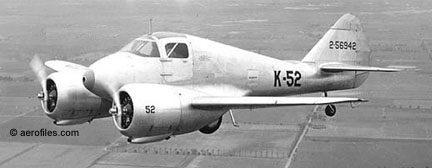
Incidentally, what's the connection with the GAF Jindavik, the Triton and the XP-59?
The connection between the three? All were cosmetically challenged!

At one time flew with British turbojets?
They all look beautiful, bdk.

As to the British jets , yes, but I was asking for a much more important point. Add the Fokker S-14, and TS-11 Iskra. Got it yet?



 Login
Login Register
 FAQ
FAQ Search






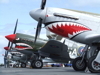





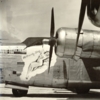
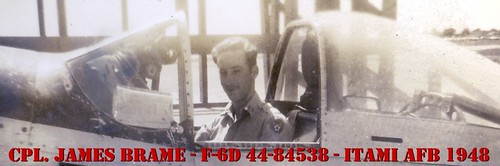
 This is one of the others, note the just visible nose intake.