B-36 videos from Youtube
Sat Aug 25, 2007 10:42 pm
Some pretty good color videos of B-36's I found on Youtube.
http://www.youtube.com/watch?v=tSvDe-51gFU
http://www.youtube.com/watch?v=p2IWZgW73zI
http://www.youtube.com/watch?v=YusCmROcqxI
http://www.youtube.com/watch?v=tSvDe-51gFU
http://www.youtube.com/watch?v=p2IWZgW73zI
http://www.youtube.com/watch?v=YusCmROcqxI
Sat Aug 25, 2007 11:18 pm
Deleted
Last edited by Former Member on Wed Aug 29, 2007 9:43 am, edited 1 time in total.
Mon Aug 27, 2007 5:26 am
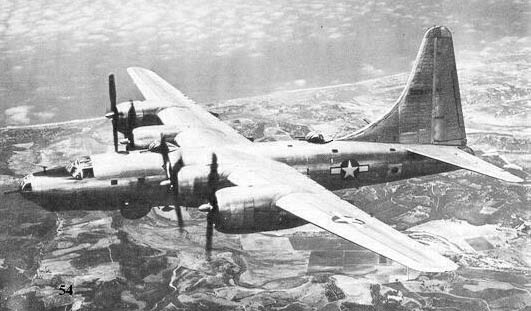
 after watching the video it just dawned on me..... did convair rip off the tail configuration of the b-36 from boeing's b-17 & b-29???
Mon Aug 27, 2007 8:37 am
tom d. friedman wrote::?:
Probably started with the B-32 and influence by the B-29
Mon Aug 27, 2007 11:25 am
"The second XB-32 continued to have stability problems. In an attempt to resolve this a B-29 style tail was fitted to the aircraft after its 25th flight but this did not resolve the problem and a Consolidated-designed 19.5 foot (5.9 m) vertical tail was added and first flown on the third XB-32, s/n 41-18336 on 3 November 1943. The first production aircraft was fitted with a B-29 vertical tail initially before a new tail was eventually substituted." http://en.wikipedia.org/wiki/B-32_Dominator
Seems that you may be on the right track...
kevin
Seems that you may be on the right track...
kevin
Wed Aug 29, 2007 9:36 pm
I hate to disagree with all of you, but
The B-36 was originally designed with twin tails.
It wasn't until the fall of 1943 when the USAAF Air Material Command did static tests of the twin configuration (this coming more than a year after initial wind tunnel tests at Langley, Ames, CALTECH and MIT) that it was decided to go with a single tail because of stress issues.
Considering the B-36 tail is much taller than the B-29 (a larger aspect ratio) and more like the taller tail that would eventually show up on B-50s & C-97, I don't think we can say Consolidated copied Boeing.
The fact that the B-32 eventually had a tall single tail may not be a copy case either. For the high atlitude missions for which the aircraft were designed, the single tail is the preferrable solution (after all, how many twin tail jet liners have you seen?).
The B-36 was originally designed with twin tails.
It wasn't until the fall of 1943 when the USAAF Air Material Command did static tests of the twin configuration (this coming more than a year after initial wind tunnel tests at Langley, Ames, CALTECH and MIT) that it was decided to go with a single tail because of stress issues.
Considering the B-36 tail is much taller than the B-29 (a larger aspect ratio) and more like the taller tail that would eventually show up on B-50s & C-97, I don't think we can say Consolidated copied Boeing.
The fact that the B-32 eventually had a tall single tail may not be a copy case either. For the high atlitude missions for which the aircraft were designed, the single tail is the preferrable solution (after all, how many twin tail jet liners have you seen?).
Thu Aug 30, 2007 9:00 am
The original B-32 had twin tails too. Regarding the high altitude pref, the Privateer was designed with a single tail & was intended for low altitude work...............
JBoyle wrote:I hate to disagree with all of you, but
The B-36 was originally designed with twin tails.
It wasn't until the fall of 1943 when the USAAF Air Material Command did static tests of the twin configuration (this coming more than a year after initial wind tunnel tests at Langley, Ames, CALTECH and MIT) that it was decided to go with a single tail because of stress issues.
Considering the B-36 tail is much taller than the B-29 (a larger aspect ratio) and more like the taller tail that would eventually show up on B-50s & C-97, I don't think we can say Consolidated copied Boeing.
The fact that the B-32 eventually had a tall single tail may not be a copy case either. For the high atlitude missions for which the aircraft were designed, the single tail is the preferrable solution (after all, how many twin tail jet liners have you seen?).
Thu Aug 30, 2007 7:31 pm
famvburg wrote:...Regarding the high altitude pref, the Privateer was designed with a single tail & was intended for low altitude work...............
I said that single tails were best for high altitude work.
I did NOT say that they were bad (or rare) for low altitude operations!
I can name plenty of single tailed low altitude aircraft:
all Single engine Beechcraft, Cessnas and Pipers; Aeroncas, Stearmans; Stinsons; Taylorcraft; WACOs....
