Sun Mar 11, 2007 9:39 pm
This is a closer photo of the nose paint on the PBY

This is before the restoration

Back in the old days

The real MANUTARA, Manutara mean "Good luck bird" in "Rapa Nui" language

This is what happen to the aircraft some years later

The only flying PBY in Chile.

and N3N


This is before the restoration
Back in the old days
The real MANUTARA, Manutara mean "Good luck bird" in "Rapa Nui" language
This is what happen to the aircraft some years later
The only flying PBY in Chile.
and N3N
Sun Mar 11, 2007 10:50 pm
k5083 wrote:
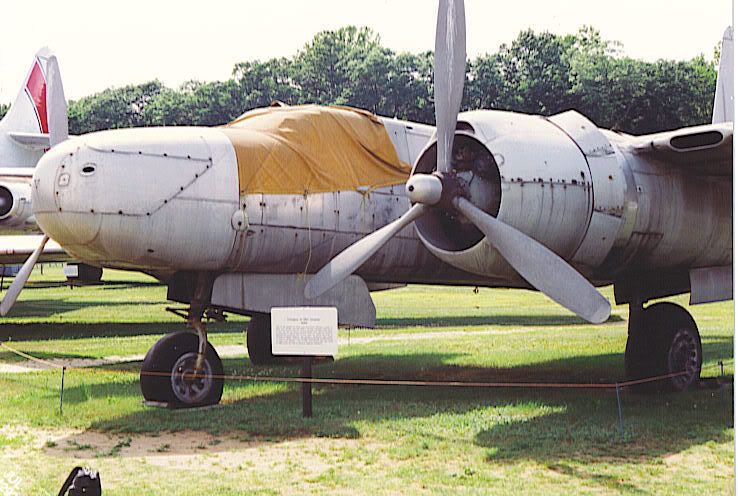
Unusual armament configuration on that A-26.
August
That's the same gun nose the New England Air Museum's A-26 has on it. Ours the glass nose replaced with teh hard nose sometime after WWII.
Jerry
Mon Mar 12, 2007 3:40 pm
Thanks for posting the pics of the N3N. You would not happen to have the Navy Bureau #?????? Glad to see that she still takes to the air. To bad she still does not retain the old Wright. I would love to see more pics of it too, any interior shots.
Museo Aeronáutico
Fri Mar 16, 2007 9:59 pm
Hi all,
I would like to add to Museo Aeronáutico's flyable aircraft list, the CASA 1131 (Bücker Jungmann), a Brazilian-built PT-19, and a Pitts S2S previously flown by Chilean AF 'Halcones' Aerobatic Team. They used to fly a Bristol M1C replica -powered by a Warner Scarab engine- and a Beech B45 Mentor, but sadly the latter crashed in 1998, killing the pilot. Since then the flight activities were performed in a rather sparse way; nowadays it is impossible to see these planes operating, because Los Cerrillos airfield -home to the Museo- was closed last year...
regards
I would like to add to Museo Aeronáutico's flyable aircraft list, the CASA 1131 (Bücker Jungmann), a Brazilian-built PT-19, and a Pitts S2S previously flown by Chilean AF 'Halcones' Aerobatic Team. They used to fly a Bristol M1C replica -powered by a Warner Scarab engine- and a Beech B45 Mentor, but sadly the latter crashed in 1998, killing the pilot. Since then the flight activities were performed in a rather sparse way; nowadays it is impossible to see these planes operating, because Los Cerrillos airfield -home to the Museo- was closed last year...
regards
anniversary
Sat Jul 14, 2007 11:05 pm
On July 13 it was officially incorporated to Museo Aeronáutico de Chile the Mirage M5M Elkan FACh 701, the restored -painted in the original colour scheme- Beechcraft D18S and the remains of the 'LAN tipo Fairchild N°18' in an arrangement that simulated the zone of Pampa Chiza -in Atacama's desert- where these wrecks were found. This took place during the anniversary 63 of the Museo; please click on the links -in Spanish, though-to see some images:
http://www.fach.cl/noticias/aniv_museo.htm
http://www.modocharlie.com/2007/07/a...utico-de-chile
http://www.museoaeronautico.cl/espan...ades.php?n=496
regards from Chile
http://www.fach.cl/noticias/aniv_museo.htm
http://www.modocharlie.com/2007/07/a...utico-de-chile
http://www.museoaeronautico.cl/espan...ades.php?n=496
regards from Chile
Sun Jul 15, 2007 8:43 am
A-26s were designed from the very beginning to have a quick change nose. 6 gun then 8 gun and of course the glass nose. Typically aircraft fitted with either hard nose from the factory was considered a "B" and the glass nose a "C" model. The really major difference was internal wing guns for the B and external wing gun packs for the C. Many of the Cs had a hard nose retrofitted during rework when they were pulled out of storage to be used in Korea.
Sun Jul 15, 2007 8:48 am
Is there any information available on the Primary Glider?
I've got a long standing thing for "stick aircraft".
Thanks for the look see.
I've got a long standing thing for "stick aircraft".
Thanks for the look see.
Mon Jul 23, 2007 1:05 pm
visaliaaviation wrote:Is there any information available on the Primary Glider?
As far as I remember it is a Grunau 9, that was flown in the 1940s in the early stages of the Civil aviation in this country.More details, as soon as I visit the Museo again-
Regards
Mon Jul 23, 2007 9:25 pm
As far as the glider, I think it is a Grunau "Baby Bowlus" or Bowlus variant design which I believe goes back to Germany, 1930's types. The gull wing is fairly distinctive.
My question on the photo of Chile's only flying PBY Catalina; what kind of propellor blades are those on those wrights? They look much fatter than any others I have seen on PBY's.
My question on the photo of Chile's only flying PBY Catalina; what kind of propellor blades are those on those wrights? They look much fatter than any others I have seen on PBY's.
Tue Jul 24, 2007 2:17 am
The A-26 at the N.E.A.M. that Jerry was talking about. This shot is from July of 1992.
I saw her 2 weeks ago,she is looking alot better. Phil
Phil
I saw her 2 weeks ago,she is looking alot better.
Phil
Tue Jul 24, 2007 7:34 am
That A-26 used to lurk around Stratford for many years.
My dad remembers seeing that one for many years. He even said he thought it might have been used for drug running but I think that maybe just a push to put this aircraft in the "myth" and "legendary" category.
My dad remembers seeing that one for many years. He even said he thought it might have been used for drug running but I think that maybe just a push to put this aircraft in the "myth" and "legendary" category.
Tue Jul 24, 2007 8:27 am
phil65 wrote:The A-26 at the N.E.A.M. that Jerry was talking about. This shot is from July of 1992.
I saw her 2 weeks ago,she is looking alot better.
Notice the semi-circular patch on the left engine cowl's leading edge. It's halfway beteen the 9:00 o'clock position and the top scoop. That's one of 14 flak holes on the aircraft that were patched during WWII. Most are on the fuselage and wings. A real WWII Vet and one of the pilots, Jack Buskirk, stated it probably flew over 100 missions because it had a glass nose. The group only had a 1-4 ratio of glass to hard nose A-26's, so the glass noses were always lead aircraft.
Jerry
Tue Jul 24, 2007 9:35 am
Cool stuff Jerry! You always bring to the table that cool, extra bit of info I never get enough of.
Where is the Invader going to be placed? I heard awhile back there going to build it's own hanger, like they did for Jack's Hack.
What I've always wondered is if there was a plan to re-organise the museum's collection? Like say a WWII exhibit hall? I dont know how this would exactly be done. I guess if you would build a new hanger that was attached to the B-29 facility, and house the WWII collection in there, then that would free up enough room in the "Military Hanger" for other aircraft. Namely, a few of those birds that are still outside.
Chris
Where is the Invader going to be placed? I heard awhile back there going to build it's own hanger, like they did for Jack's Hack.
What I've always wondered is if there was a plan to re-organise the museum's collection? Like say a WWII exhibit hall? I dont know how this would exactly be done. I guess if you would build a new hanger that was attached to the B-29 facility, and house the WWII collection in there, then that would free up enough room in the "Military Hanger" for other aircraft. Namely, a few of those birds that are still outside.
Chris
Thu Nov 27, 2008 12:21 am
Anyone on Wix affiliated with this museum????
Thu Nov 27, 2008 9:17 pm
Back in the early 80's, the CAF, through one of the original Yellow Rose sponsors, Jack Skipper, arranged for Chile to donate an A-26 to us. I don't recall who went with Jack to look at, and pick it up. He told me that they had been down for a while, and it was estimated that it would take at least three months of work to get one in shape to make the flight back to Texas. At this time they were phasing out the HU-16, and offered one of them instead. They even offered to loan one of their flight engineers for the trip. They gladly accepted the offer! The HU-16 made one final active duty mission, looking for subs with it's MAD boom, landed and refueled, then Jack and another CAF member flew it to Texas with the flight engineer who had just flown on it's last mission.
Jack, and a few others, got their seaplane ratings in the HU-16 on Canyon Lake, as I recall. A couple of years later the CAF sold the plane, needing money and citing the limited amount of spar life left. The sponsors, in this case, were allowed to request their sponsorship money be transferred to other CAF planes.
Jack, and a few others, got their seaplane ratings in the HU-16 on Canyon Lake, as I recall. A couple of years later the CAF sold the plane, needing money and citing the limited amount of spar life left. The sponsors, in this case, were allowed to request their sponsorship money be transferred to other CAF planes.