Flying Tigers with John Wayne...WhatIsIt ?
Mon Jul 13, 2009 7:07 pm
Flying Tigers with John Wayne...WhatIsIt ?
At the end twin engine type
Very strange tail arrangement


At the end twin engine type
Very strange tail arrangement
Mon Jul 13, 2009 7:11 pm
Better not be French.............last time I said something about their wonderfull airplanes I got chewed out , so this jewel is on it's own. Wasn't there a Curtiss Condor in the begining of the film?
Mon Jul 13, 2009 7:36 pm
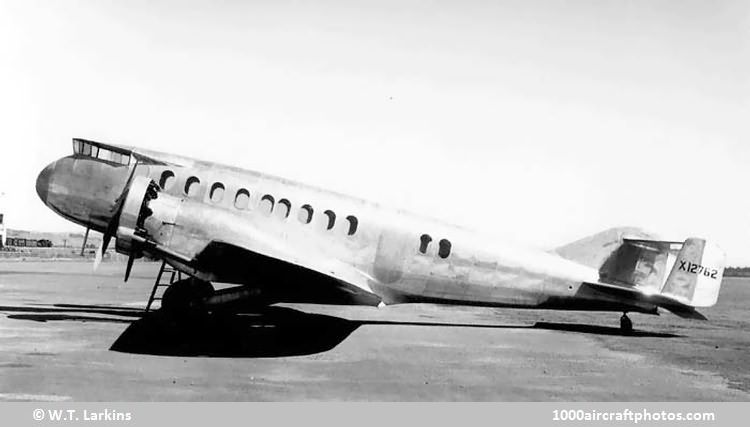
From Celluloid Wings by James H Farmer, it was a Capelis XC-12 (NX-12762)
http://sfahistory.org/CapelisXC12side.jpg
http://sfahistory.org/CapelisXC12side.jpg

Mon Jul 13, 2009 7:48 pm
Per Aerofiles....Tom
Safety Airplane Corp, Oakland Airport and El Cerrito CA.
Capelis XC-12 [X12762] getting prepped for a motion picture; that's Mr Capelis holding a yardstick (for unknown reasons). Site is Grand Central Air Terminal, Glendale CA (RKO via Paul Mantz coll)
Capelis XC-12 Revised cockpit and windows (Frank Rezich coll)
Capelis XC-12 Oakland Airport (William T Larkins)
XC-12 1933 = 12pClwM rg*; two 525hp Wright Cyclone; span: 55'0" length: 42'0" load: 3000# v: 220/190/65. Dr John E Younger; POP: 1 [X12762]. All-metal; triple biplane tail; *partly-retracting gear, which extended automatically when the throttle was closed. Funded by local Greek restaurateurs as a promotional aircraft, and constructed with help from University of California students. US patent #1,745,600 issued to Socrates H Capelis, of El Cerrito, in 1930 (a modified application for patent of the design with a half-span dorsal wing and two more engines appears in 1932). The main spar was bolted together, and much of the skin attached with P-K screws rather than rivets. These tended to vibrate loose, requiring tightening or replacing every few flights. Promotional tours were soon abandoned, and its career ended as a movie prop, appearing in ground roles* in several motion pictures ("Five Came Back" 1939, "Flying Tigers" 1942, others) before reportedly being scrapped c.1943. * Flying shots in films were of a model; the plane itself was grounded by the studio's insurance company.
You have Capelis XC-12 as scrapped c. 1943. I've seen this elsewhere, so I was surprised when I watched the Columbia 1950 release "On the Isle of Samoa" on TCM, which featured both the model and the full-scale ship. So it appears the old bird lasted longer than has been suggested! (— William Villan 4/7/07)
Safety Airplane Corp, Oakland Airport and El Cerrito CA.
Capelis XC-12 [X12762] getting prepped for a motion picture; that's Mr Capelis holding a yardstick (for unknown reasons). Site is Grand Central Air Terminal, Glendale CA (RKO via Paul Mantz coll)
Capelis XC-12 Revised cockpit and windows (Frank Rezich coll)
Capelis XC-12 Oakland Airport (William T Larkins)
XC-12 1933 = 12pClwM rg*; two 525hp Wright Cyclone; span: 55'0" length: 42'0" load: 3000# v: 220/190/65. Dr John E Younger; POP: 1 [X12762]. All-metal; triple biplane tail; *partly-retracting gear, which extended automatically when the throttle was closed. Funded by local Greek restaurateurs as a promotional aircraft, and constructed with help from University of California students. US patent #1,745,600 issued to Socrates H Capelis, of El Cerrito, in 1930 (a modified application for patent of the design with a half-span dorsal wing and two more engines appears in 1932). The main spar was bolted together, and much of the skin attached with P-K screws rather than rivets. These tended to vibrate loose, requiring tightening or replacing every few flights. Promotional tours were soon abandoned, and its career ended as a movie prop, appearing in ground roles* in several motion pictures ("Five Came Back" 1939, "Flying Tigers" 1942, others) before reportedly being scrapped c.1943. * Flying shots in films were of a model; the plane itself was grounded by the studio's insurance company.
You have Capelis XC-12 as scrapped c. 1943. I've seen this elsewhere, so I was surprised when I watched the Columbia 1950 release "On the Isle of Samoa" on TCM, which featured both the model and the full-scale ship. So it appears the old bird lasted longer than has been suggested! (— William Villan 4/7/07)
Mon Jul 13, 2009 7:51 pm
As ugly as it is it should be French!
Mon Jul 13, 2009 8:16 pm
It's a P.O.S.! 
Jerry
Jerry
Mon Jul 13, 2009 10:00 pm
Anyone know anything about the P-40 replicas?
Mon Jul 13, 2009 10:22 pm
Well I do know this; it for sure isn't a Termite!
Mon Jul 13, 2009 10:23 pm
PbyCat-Guy wrote:Well I do know this; it for sure isn't a Termite!
I love that line
Mon Jul 13, 2009 10:35 pm
mustangdriver wrote:Anyone know anything about the P-40 replicas?
Can't tell you much about the replicas except that they were horrible looking
 ) but much of the actual flying in real P40's was done by a friend of mine, Herb Fisher. There were two other pilots borrowed from Wright Pat test center to work on the picture as well. They were Dan Reid and Dick Griffin.
Herb was a charter member of the IFPF and a very good guy. He also did the high mach dive testing at Wright Pat in the Jug with just about every type of propeller shape you could imagine.
Dudley Henriques
Mon Jul 13, 2009 11:16 pm
That is awesome. I would love to see some behind the scenes pics of them. They did look bad, but interesting. Looks like they had a small motor to turn the prop
Tue Jul 14, 2009 1:51 am
We covered parts of this about a year ago, I said then that I'd read that the ARMY refused to loan any P-40's to REPUBLIC STUDIOS for some reason, so the REPUBLIC air force marched out to the wilds of Simi Valley and the P-faurties were canvas and steel framing using 6 cylinder Chevrolet engines to turn the props, this at a time when P-40's were rapidly going second line of defense status and they were all over Southern Californicate. 
The Junkers G-1 used a biplane horizontal tail arrangement with pretty fair success (enough to fly and entire gold mine operation into Borneo with 3 of them), saw that again this morning on Wings of the Luftwaffe on History Channel the program about the JU-52.
And everyone knows what the best done, closest to the real truth aviation movie ever made was............
AIRPLANE
The Junkers G-1 used a biplane horizontal tail arrangement with pretty fair success (enough to fly and entire gold mine operation into Borneo with 3 of them), saw that again this morning on Wings of the Luftwaffe on History Channel the program about the JU-52.
And everyone knows what the best done, closest to the real truth aviation movie ever made was............
AIRPLANE
Tue Jul 14, 2009 6:02 am
Airplane
Impressive to say the least about the knowledge to be found here
From, the Bill Larkin collection on 1000aircraftphotos.com
Man....what an ungly duckling !!!!
Now here is another one. Why the reverse slanted glass on the cockpit ?
Others of the days did the same ( Boeing 247, Vultee & Stinson to name a few )
Better against reflection & glare ?
Impressive to say the least about the knowledge to be found here
From, the Bill Larkin collection on 1000aircraftphotos.com
Man....what an ungly duckling !!!!
Now here is another one. Why the reverse slanted glass on the cockpit ?
Others of the days did the same ( Boeing 247, Vultee & Stinson to name a few )
Better against reflection & glare ?
Tue Jul 14, 2009 7:32 am
Michel Lemieux wrote:Airplane
Impressive to say the least about the knowledge to be found here
From, the Bill Larkin collection on 1000aircraftphotos.com
Man....what an ungly duckling !!!!
Now here is another one. Why the reverse slanted glass on the cockpit ?
Others of the days did the same ( Boeing 247, Vultee & Stinson to name a few )
Better against reflection & glare ?
Some Ford Trimotors had the angled windshield also.
Jerry
Tue Jul 14, 2009 9:18 am
'Reversed' windscreens...
The prototype Lockheed 10 had a reverse angled windcreen at first, as did some Miles types. I think there was a fashion for them, briefly, and some argument for different water shedding and glare properties - how real as against 'we think it looks different / distinctive / nice' you takes your choice.
Think you mean the G-31 in New Guinea? (Yeah, I looked it up to check. )
http://en.wikipedia.org/wiki/Junkers_G_31
The Junkers G-38 and the Handley Page HP 42 (among others) also had biplane tails and made it into W.W.II.
The prototype Lockheed 10 had a reverse angled windcreen at first, as did some Miles types. I think there was a fashion for them, briefly, and some argument for different water shedding and glare properties - how real as against 'we think it looks different / distinctive / nice' you takes your choice.
The Junkers G-1 used a biplane horizontal tail arrangement with pretty fair success (enough to fly and entire gold mine operation into Borneo with 3 of them), saw that again this morning on Wings of the Luftwaffe on History Channel the program about the JU-52.
Think you mean the G-31 in New Guinea? (Yeah, I looked it up to check.
)
http://en.wikipedia.org/wiki/Junkers_G_31
The Junkers G-38 and the Handley Page HP 42 (among others) also had biplane tails and made it into W.W.II.