Manchester Bomber Cutaway
Thu Dec 18, 2008 9:35 pm
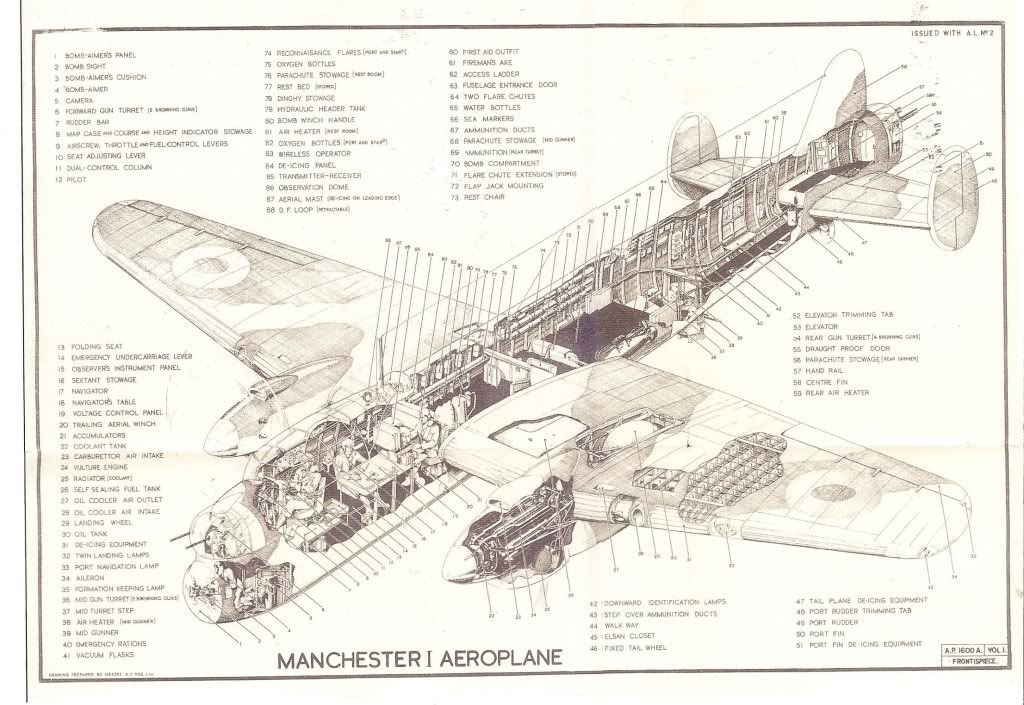
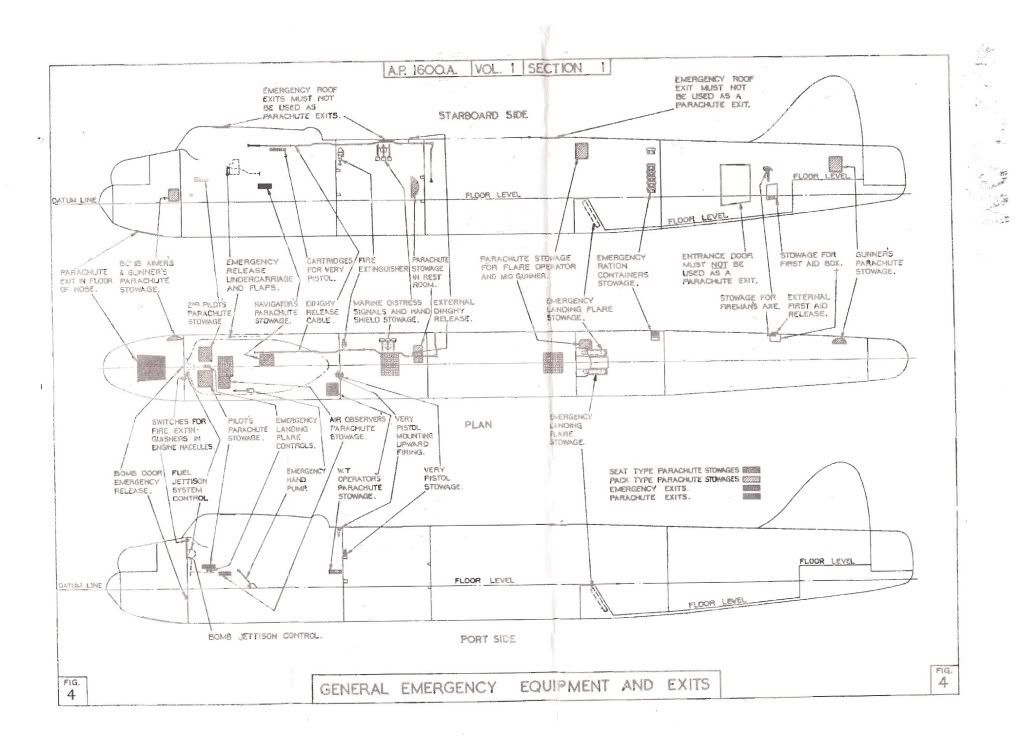
I bought some flight manuals the other day from Flight manuals on CD.com in New Zealand.I bought the Pilot's Notes for the Lancaster and as part of the package,they included the Pilot's Notes for the Manchester.They make for some interesting reading.As in all RAF Pilot's Notes from the 1940's,they are quite brief,but they did include a good cutaway drawing of the Manchester.It certainly appears to be roomy compared to the Lancaster.I realize that the image is pretty small in this post,but if you are using a browser with a Zoom feature,it comes out just right with a 150% increase in size.
Fri Dec 19, 2008 2:59 am
This is excellent!
Fri Dec 19, 2008 3:03 am
They were essentially the same fuselage, just somewhat different wings and no center vertical stab-and far, far better engines
Fri Dec 19, 2008 5:27 am
Thanks for that Larry.
A vertical stab would only be used by a thug in England; it's a fin on a British aeroplane.
The fuselage of the Manchester was exactly the same as the Lanc, as The Inspector says - in fact IIRC, some early Lancs had Manchester fuselages. However, to be fair there was a bit less equipment in the Manchester, so there was probably a bit more room!
I've been through a couple of Lancs - it's a lot less compartmentalised than say a B-17 or B-24, but less space in most areas. The idea of trying to escape from any of them in combat, or deal with what the crews did deal with is truly awe-inspiring.
The Inspector wrote:They were essentially the same fuselage, just somewhat different wings and no center vertical stab-and far, far better engines
A vertical stab would only be used by a thug in England; it's a fin on a British aeroplane.
The fuselage of the Manchester was exactly the same as the Lanc, as The Inspector says - in fact IIRC, some early Lancs had Manchester fuselages. However, to be fair there was a bit less equipment in the Manchester, so there was probably a bit more room!
I've been through a couple of Lancs - it's a lot less compartmentalised than say a B-17 or B-24, but less space in most areas. The idea of trying to escape from any of them in combat, or deal with what the crews did deal with is truly awe-inspiring.
Fri Dec 19, 2008 10:45 am
There is a great book written by a tailgunner in a Manchester. It's called "Gunner's Moon".
http://www.amazon.com/Gunners-moon-memo ... 475&sr=8-1
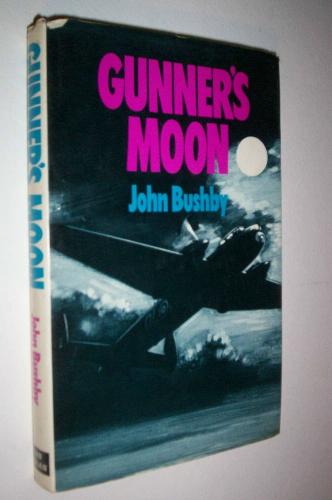
http://www.amazon.com/Gunners-moon-memo ... 475&sr=8-1
Re: Manchester Bomber Cutaway
Fri Dec 19, 2008 1:37 pm
[quote="Larry Kraus"]I bought some flight manuals the other day from Flight manuals on CD.com in New Zealand.I bought the Pilot's Notes for the Lancaster and as part of the package,they included the Pilot's Notes for the Manchester.
Usual disclaimers, but I must agree with Larry. Flight-Manuals-on-CD.com is a splendid outfit to deal with. You always get more than you expect to, the resolution is superb and they are prompt. I have several from that source, and fully intend to get more.
Usual disclaimers, but I must agree with Larry. Flight-Manuals-on-CD.com is a splendid outfit to deal with. You always get more than you expect to, the resolution is superb and they are prompt. I have several from that source, and fully intend to get more.
Fri Dec 19, 2008 2:02 pm
JDK,
As usual, the only thing that separates us is a common language innit?
As usual, the only thing that separates us is a common language innit?
Manchester Bomber Cutaway
Fri Dec 19, 2008 4:17 pm
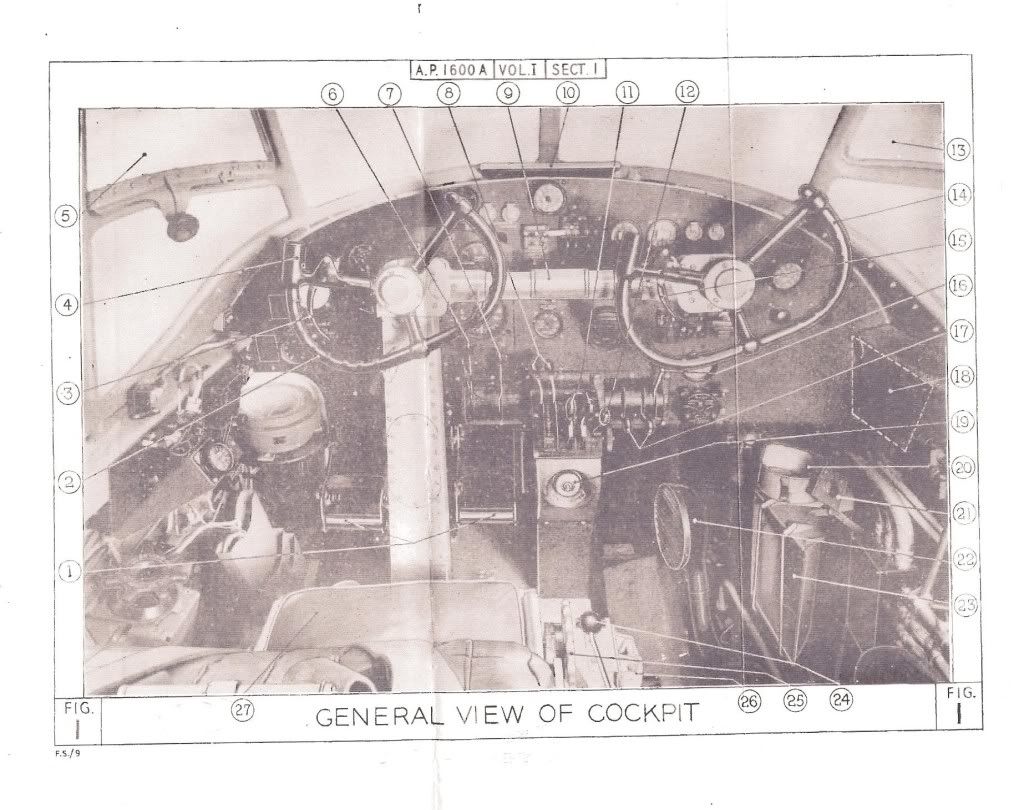
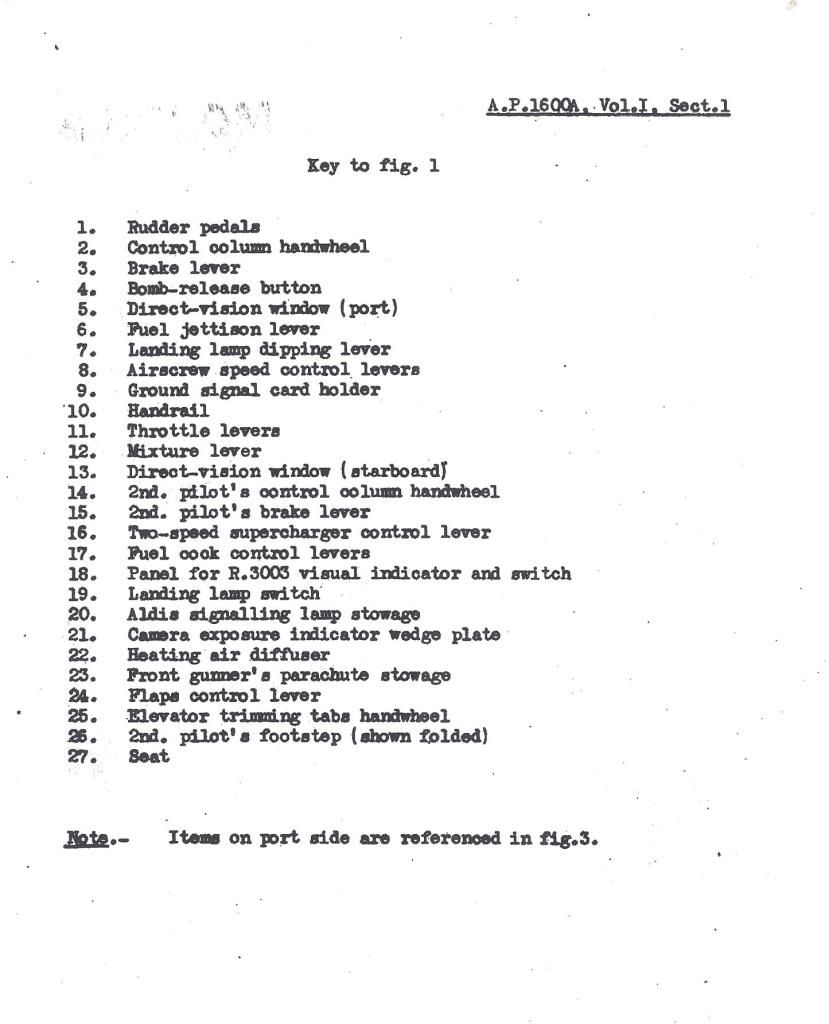
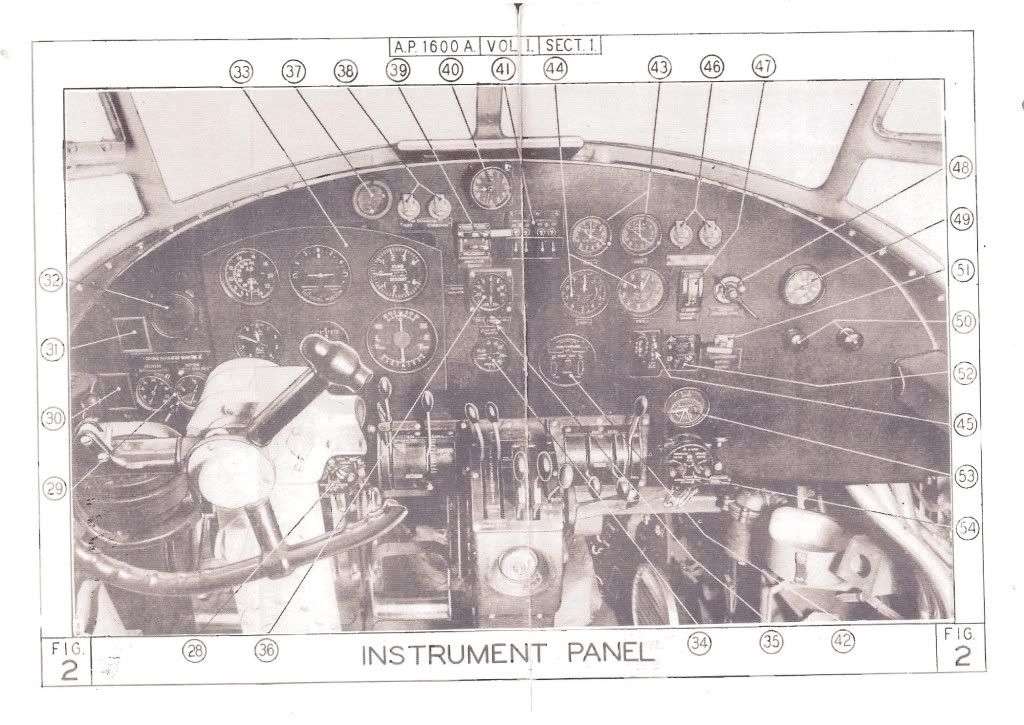
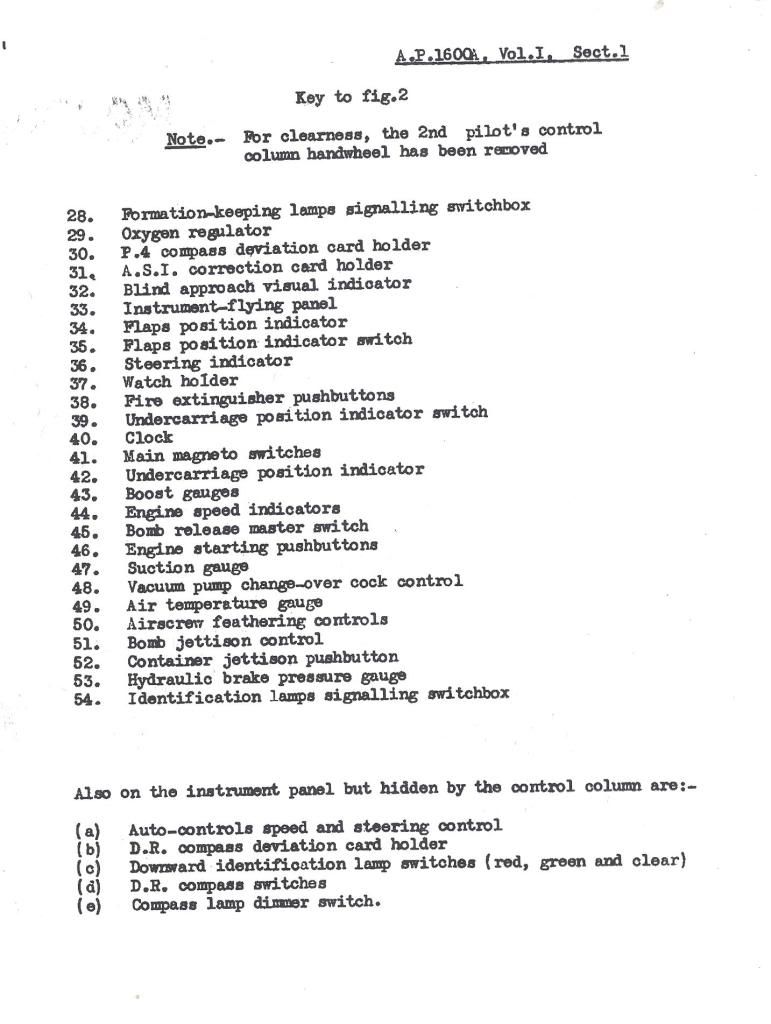
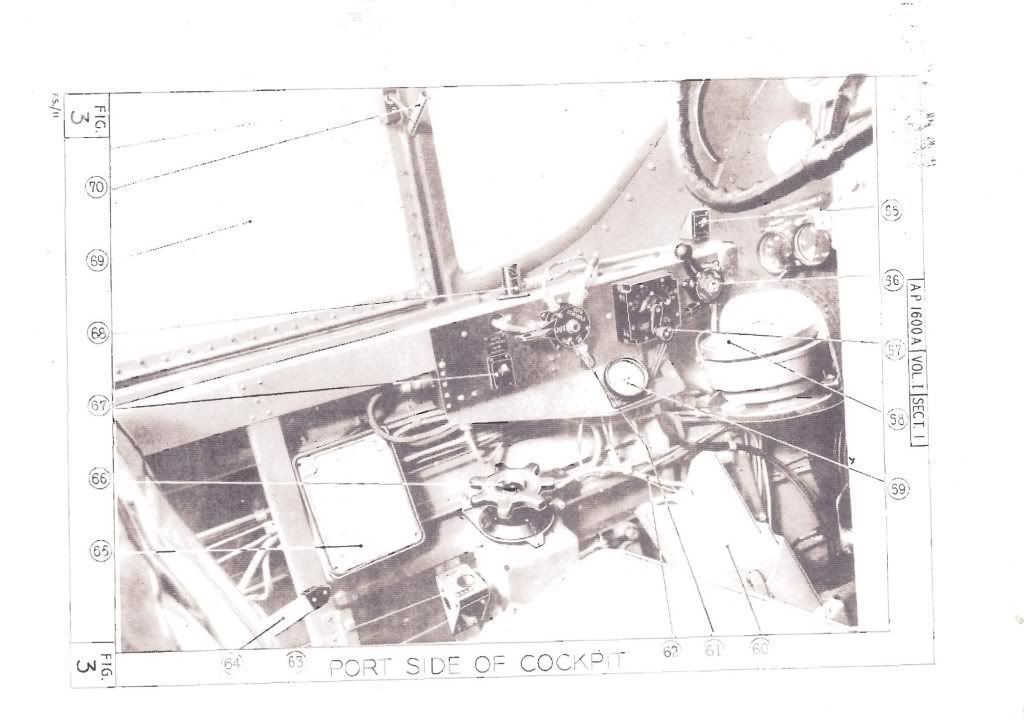
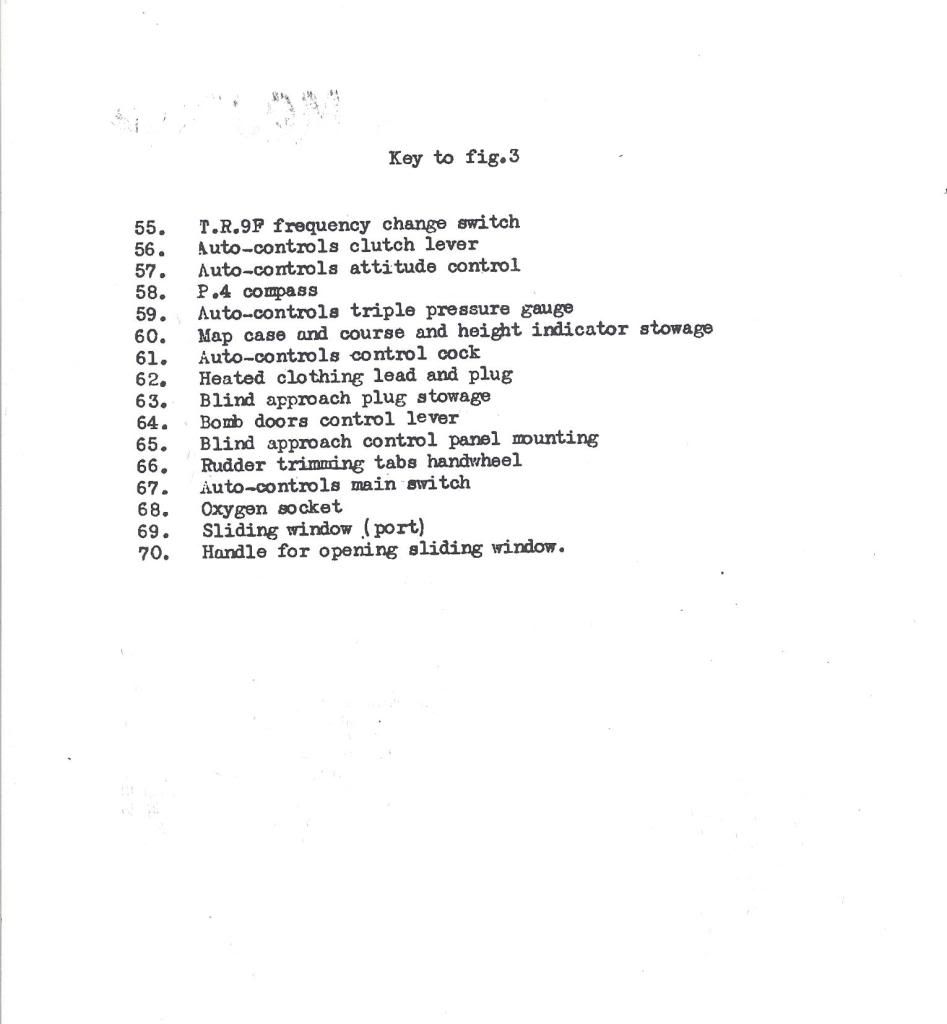
I'll post a few more pictures here that do a good job of illustrating the cockpit differences of the Manchester when compared to the Lancaster.I'm assuming that most people reading this post are familiar with the Lancaster cockpit arrangements.The most obvious differences being two engine controls vs. four and the second pilot provisions.By the way,I did ask the Flight Manuals on CD folks for permission to post a few pages from their manuals on this site.
Sat Dec 20, 2008 12:34 am
Having urgent work to do, I decided to try and find out about the dual control on the Manchester, instead. 
As usual, I wasn't able to find the main answer. Interestingly, though while I didn't, I did find the original spec. had only four crew, including only one pilot.
This was from the book "Avro Manchester: The Legend Behind the Lancaster" by Robert Kirby -excellent, and recommended.
The original spec required that the aircraft was able to carry torpedoes, be catapult launched at full load (a Manchester was tested with an arrestor hook later), and carry troops as well! All that explains the long, low open bomb bay and unobstructed fuselage area. The kicker was a requirement as well for dive bombing (withdrawn after the design was frozen) with the flaps to act as dive brakes!
As is well known, the Lancaster was 'a Manchester with four Merlins'; however what I was reminded of was that the Manchester shook out a lot of airframe design bugs, such as the turret, nose configuration (bomb-aimer and front gunner positions) tail structure and a lot more. So the Lancaster was a proven, debugged airframe brought to a set of proven, debugged set of engines - a valuable 'gift' from the Manchester, designers and crews to the Lancaster's success.
Kirby makes an interesting comparison that I'm sure our US readers might find illuminating:
Thought that would be of interest.
As usual, I wasn't able to find the main answer. Interestingly, though while I didn't, I did find the original spec. had only four crew, including only one pilot.
This was from the book "Avro Manchester: The Legend Behind the Lancaster" by Robert Kirby -excellent, and recommended.
The original spec required that the aircraft was able to carry torpedoes, be catapult launched at full load (a Manchester was tested with an arrestor hook later), and carry troops as well! All that explains the long, low open bomb bay and unobstructed fuselage area. The kicker was a requirement as well for dive bombing (withdrawn after the design was frozen) with the flaps to act as dive brakes!
As is well known, the Lancaster was 'a Manchester with four Merlins'; however what I was reminded of was that the Manchester shook out a lot of airframe design bugs, such as the turret, nose configuration (bomb-aimer and front gunner positions) tail structure and a lot more. So the Lancaster was a proven, debugged airframe brought to a set of proven, debugged set of engines - a valuable 'gift' from the Manchester, designers and crews to the Lancaster's success.
Kirby makes an interesting comparison that I'm sure our US readers might find illuminating:
Comparison with a near contemporary
American bomber, the Martin B-26 Marauder,
is also instructive.
While the Manchester specification was
issued in 1936 and that to which the Maraud-
er was designed as late as January 1939, the
two appeared in service at a similar time.
Manchester operations and delivery of the
first four Marauders to the USAAC both took
place in February 1941. The two aircraft had
comparable engine power in the two Rolls-
Royce Vulture engines at l,780hp each and
the Pratt & Whitney R-2400 Double Wasp at
1,850hp apiece.
As initially designed operating weights
were also similar at 26,043 Ib for the Man-
chester and 27,200 Ib for the Marauder. Here
the similarities end and these statistics hold
the key to the respective failure and success
of the two types in service. Whereas the Vul-
ture was underdeveloped and unreliable, the
Double Wasp was not only developed and
thoroughly reliable, but a robust radial.
The contrast in the aircraft is even more
stark. Whereas the Marauder was a compar-
atively diminutive aircraft with an initial span
of 65ft and length of 56ft, the Manchester was
much larger, spanning 90ft lin and having a
length of 69ft 4/i in. In keeping with their size
the Marauder initially operated at an all up
weight of only 27,200 Ib, whereas the RAF
were soon attempting to operate the Man-
Chester at 45,000 Ib. Even when latterly some
semblance of reliability was available in the
Vulture, the Manchester thus had a weight
penalty approaching 18,000 Ib in comparison
to its lighter near-contemporary.
Thought that would be of interest.
Sat Dec 20, 2008 9:20 am
There was, if I recall correctly ONE example of a Manchester losing an engine over Berlin - and making it back to dear old Blighty. The pilot deserved a medal the size of a frying pan!
Wed Dec 31, 2008 5:32 pm
Just to reafirm the Lanc's Fuselage and wing center section were basically Manchester as was the tailplane (Manchester II). However, the outer wing section was new - almost, as it used the same ribs as the Manchester but just spaced them further apart (the fins had the same treatment).
My Grandfather was responsible for altering the jig (assembly fixture) drawings that would be used to asssemble the new wings.
This work he did on his kitchen table at home after his 10 hour shift was over, and between air-raids as well.
My Grandfather was responsible for altering the jig (assembly fixture) drawings that would be used to asssemble the new wings.
This work he did on his kitchen table at home after his 10 hour shift was over, and between air-raids as well.
Wed Dec 31, 2008 6:44 pm
AERONUT;
Welcome aboard the WIX and thank you for bringing yet another bit of obscure but important piece of aeronautica to light, and with such a close and personal connection too!
Pull your belts tight and enjoy the ride!!
Welcome aboard the WIX and thank you for bringing yet another bit of obscure but important piece of aeronautica to light, and with such a close and personal connection too!
Pull your belts tight and enjoy the ride!!
Wed Dec 31, 2008 6:58 pm
Larry,
FM on CD are great aren't they? I've gotten several from them and will probably be sending off for another round before too long. Great price, and they do great work of making sure they stay in a printable fashion too.
For getting information on old and obscure types, these are the guys to go to.
I don't have it handy right now, but I got the manuals for the Airspeed Ambassador and it even included the printouts to make the Cruise Calculator (a round whiz-wheel design). I've considered having them printed on heavy paper or card stock to have a working one for Flight Sim use.
FM on CD are great aren't they? I've gotten several from them and will probably be sending off for another round before too long. Great price, and they do great work of making sure they stay in a printable fashion too.
For getting information on old and obscure types, these are the guys to go to.
I don't have it handy right now, but I got the manuals for the Airspeed Ambassador and it even included the printouts to make the Cruise Calculator (a round whiz-wheel design). I've considered having them printed on heavy paper or card stock to have a working one for Flight Sim use.