Italian 4 engine transport AC
Wed Sep 24, 2008 9:35 pm
Italian 4 engine transport AC
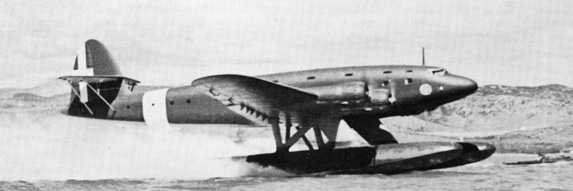
For the lover of the rare and obscure....
From Wiki:

And one from Rod Larsen amazing site again.
s.jpg)
For the lover of the rare and obscure....
From Wiki:
Design
The aircraft was of mixed construction, powered by four Alfa Romeo 128 RC.18 radial engines of 625 kW. It had a crew of four or five, and could carry up to 18 passengers. There was no cabin pressurization.
[edit] Operational history
It was proposed that a long-range version of this aircraft, the SM.95 GA (with a range of over 11,000 km / 6,840 mi) could be used to mount a bombing raid on New York City launched from Western France, but the presence of many Italian-Americans in the city meant that Mussolini would only authorize the dropping of propaganda pamphlets. The mission, with a 500 kg load, was still on preparation when Italy signed the Armistice in September 1943.
Several SM.95s remained in service into the post-war period, refitted with more powerful and reliable engines, such as the Pratt & Whitney Twin Wasp or the Bristol Pegasus.
And one from Rod Larsen amazing site again.
Last edited by Michel Lemieux on Wed Sep 24, 2008 9:41 pm, edited 1 time in total.
Wed Sep 24, 2008 9:40 pm
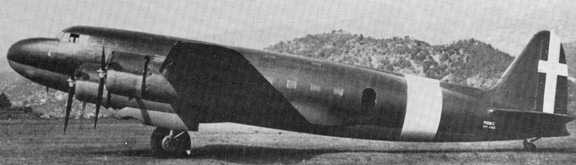
And another one.....I guess I ate too much pasta for dinner
Wiki quote again.
And again from Rod Larsen web site.
Not a bad looking bird. I am now convinced the Italians made the best looking seabirds of WW2. Reminds me a bit of a FW-200
s.jpg)
s.jpg)
1s.jpg)
Wiki quote again.
The CANT Z.511 was a four-engined long-range seaplane designed by Filippo Zappata of the "Cantieri Riuniti dell'Adriatico" (CRDA) company. Originally designed for the Central and South Atlantic passenger routes, it was later adapted as a military transport and special raider.
And again from Rod Larsen web site.
Not a bad looking bird. I am now convinced the Italians made the best looking seabirds of WW2. Reminds me a bit of a FW-200
Wed Sep 24, 2008 9:43 pm
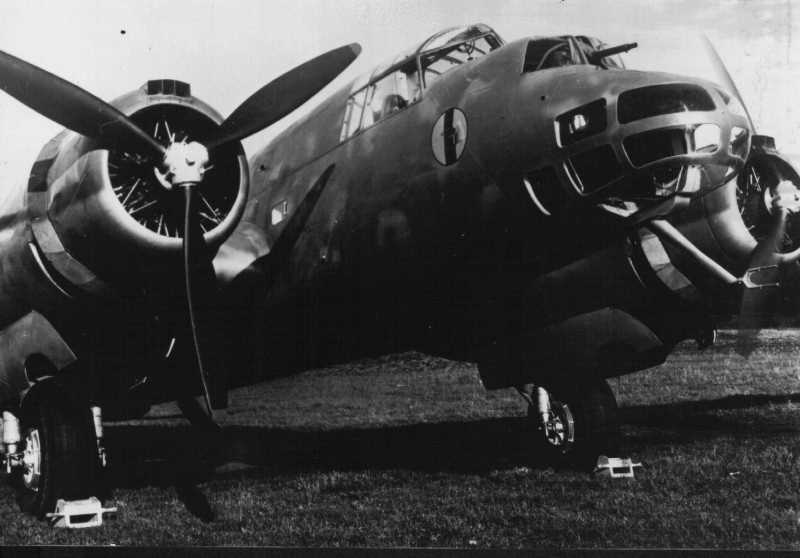
And I was under the impression only Piaggo has made a 4 prop thingy....
Now look at this a transport version..of the Piaggio P-108. Same source.
With a nice close up of a regular version
Now look at this a transport version..of the Piaggio P-108. Same source.
With a nice close up of a regular version
Wed Sep 24, 2008 10:39 pm
Wow, that machine when on floats looks awesome! I'd have to go and say that it's the biggest floatplane. Even bigger looking than the C-47 on Floats. Very cool.
Cheers,
David
Cheers,
David
Thu Sep 25, 2008 3:12 pm
Talk about right....
It`s about the size of a C-54 / DC-4...but on floats ???
Found a few others on the WEB, various sources:
Russian site with many pics:
http://www.airwar.ru/enc/sww2/z511.html
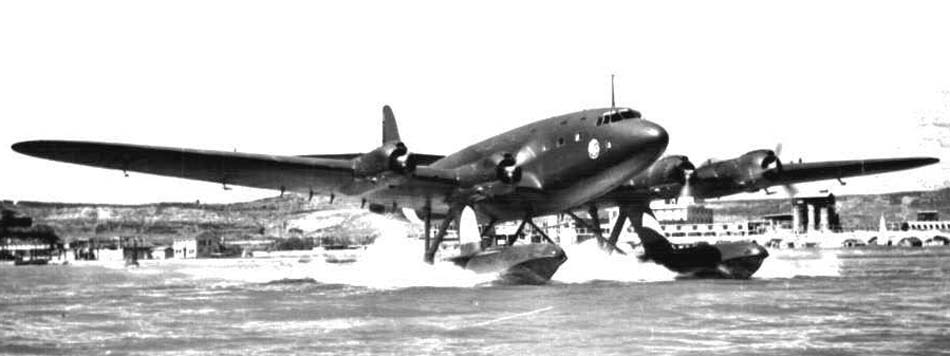
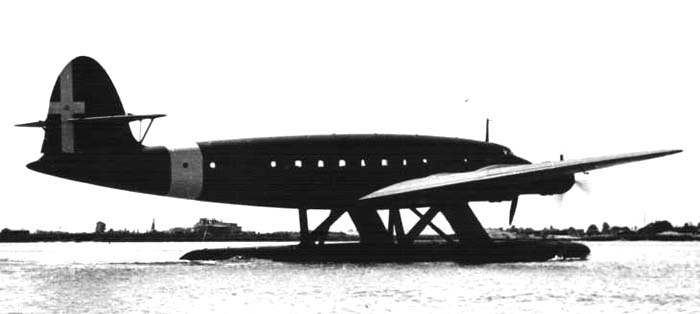

Man that thing must have been heavy to lift. I read over 34T dry...
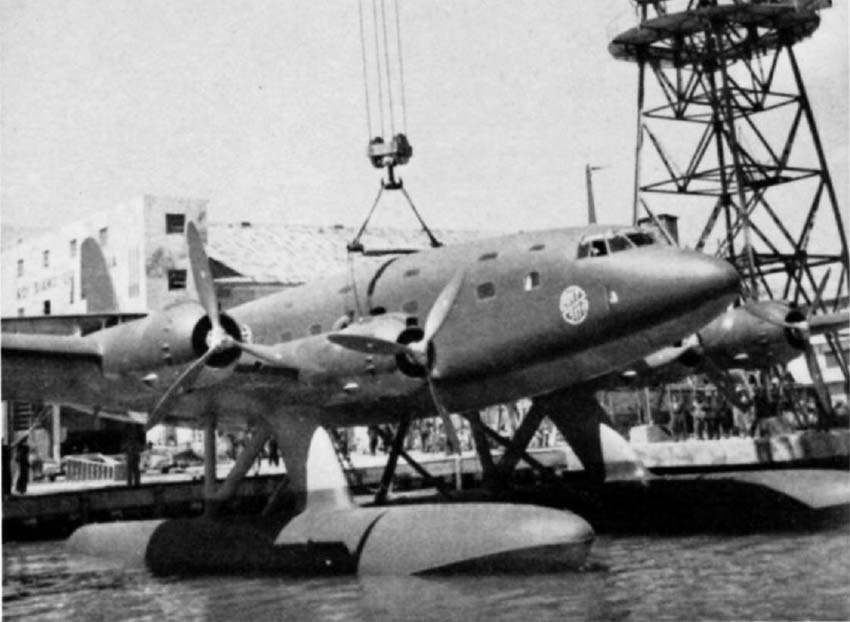
It`s about the size of a C-54 / DC-4...but on floats ???
Found a few others on the WEB, various sources:
Russian site with many pics:
http://www.airwar.ru/enc/sww2/z511.html
Man that thing must have been heavy to lift. I read over 34T dry...
Thu Sep 25, 2008 6:18 pm
the fuselage looks like a lockheed constellation..... minus 2 tails
Thu Sep 25, 2008 9:26 pm
Wanna see something that looks even more like a Connie & was build in the good old USA ?
From Wiki, enter the DC-4E
http://en.wikipedia.org/wiki/Douglas_DC-4E


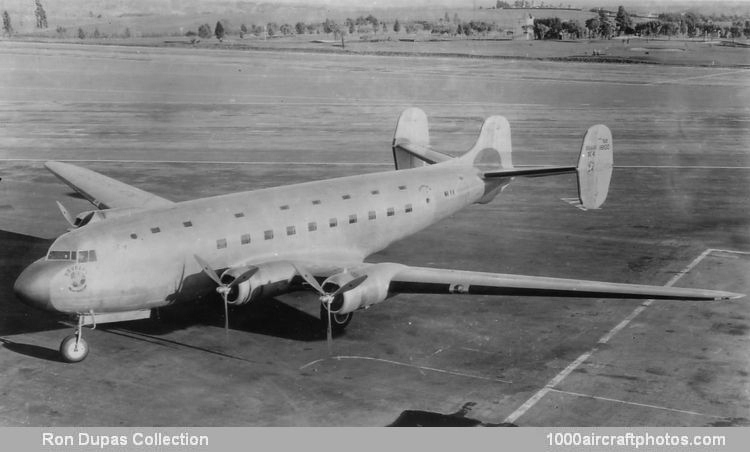

And again from this great source from a member: http://www.ruudleeuw.com/dc4_tec.htm
Larger pic on site.

From Wiki, enter the DC-4E
http://en.wikipedia.org/wiki/Douglas_DC-4E
The Douglas DC-4E was an American experimental airliner that was developed before World War II. The design originated in 1935 from a requirement by United Air Lines. The goal was to develop a much larger and more sophisticated replacement for the DC-3, before the first DC-3 had even flown. There was enough interest from other airlines, that American Airlines, Eastern Air Lines, Pan American Airways, and TWA joined United in providing $100,000 each toward the cost of developing the new aircraft. Pan American and TWA later withdrew their funds in favour of the Boeing 307 which was seen as being more economical.
With a planned capacity of 42 passengers, the DC-4 (as it was then known) would seat twice as many people as the DC-3. It would be the first large airplane with a nose wheel. Other innovations included auxiliary power units, power-boosted flight controls, alternating current electrical system, and air conditioning. Cabin pressurization was also planned for the production aircraft. The aircraft also featured a novel tail with three vertical stabilizers. This provided sufficient vertical stabilizer area to allow the aircraft to take-off with only two engines on one side operating while still allowing the plane to fit into existing hangars.
The prototype first flew on June 7, 1938 from Clover Field in Santa Monica, California. It was used by United Air Lines for in-service evaluation during 1939. Operating the aircraft was remarkably trouble-free. However, the complex systems proved to be expensive to maintain and the design was abandoned in favor of a less complex four-engined design. This newer design was designated DC-4, leading to the earlier design to be re-designated DC-4E (E for "experimental"). The DC-4E was sold to Japan, which was buying western aircraft for evaluation and technology transfer during this period. The design became the basis of the Nakajima G5N bomber.
And again from this great source from a member: http://www.ruudleeuw.com/dc4_tec.htm
Larger pic on site.
Thu Sep 25, 2008 10:06 pm
Mmm. Got to be one of the largest, if not the largest floatplanes ever.
There was also a pre-war British design by Fairey's IIRC for an airliner that also looked like a Connie, but also pre-dated it. Must've been the zeitgeist!
Cheers,
There was also a pre-war British design by Fairey's IIRC for an airliner that also looked like a Connie, but also pre-dated it. Must've been the zeitgeist!
Cheers,