Cool, OK, HOT jet engines
Sun Sep 07, 2008 9:53 am
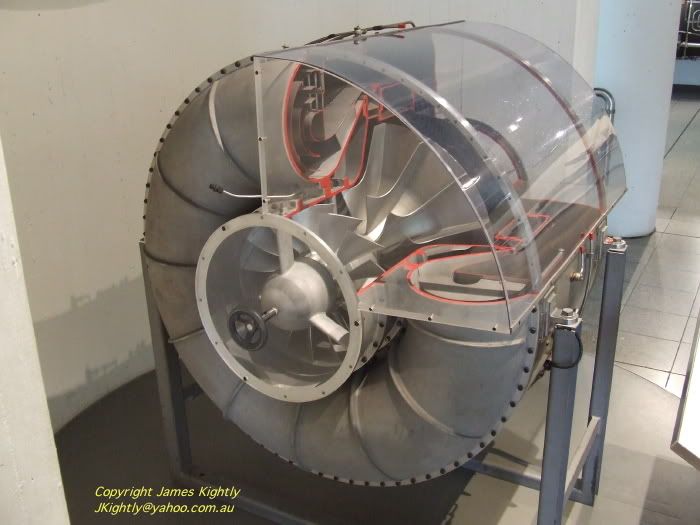
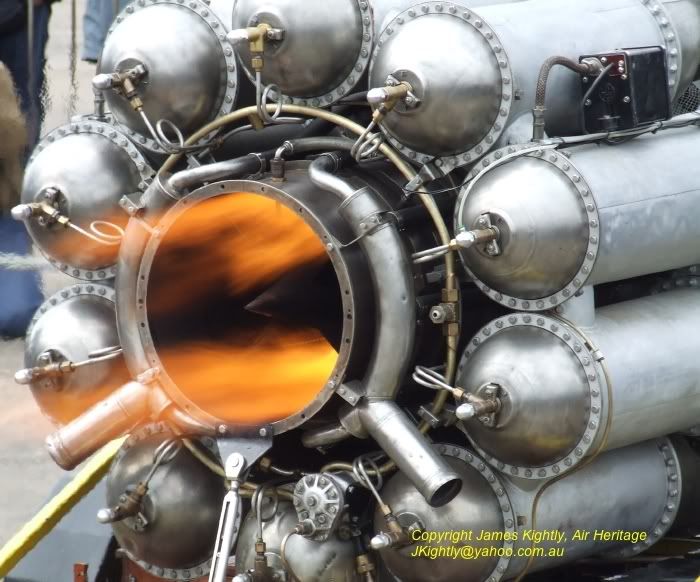
There's something special about all of these. Anyone?
Engine 1. Deutches Museum, Munich. von Ohan.
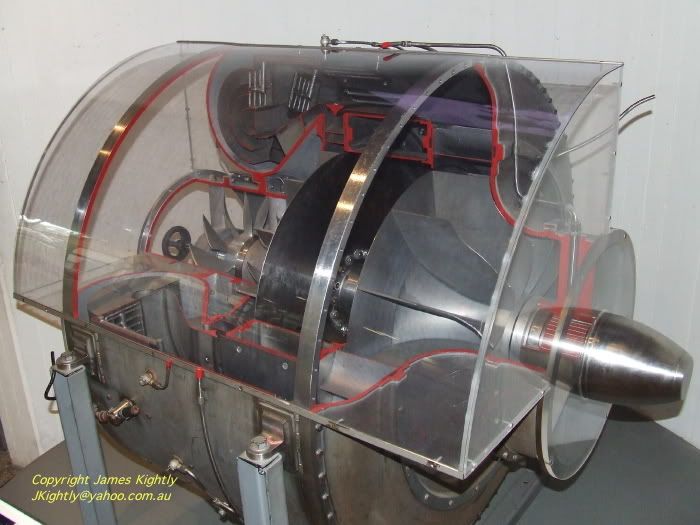
Engine 2. Science Museum London.
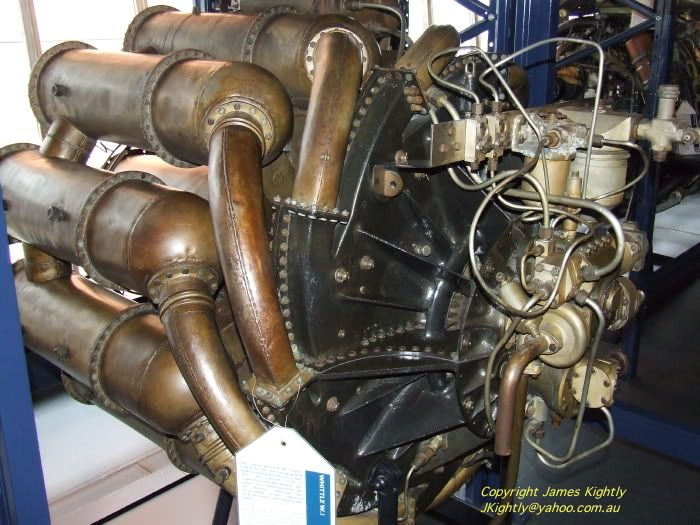
Clue:
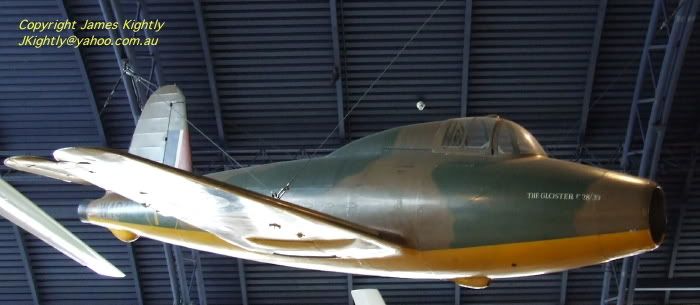
Engine 3. IWM Duxford (visiting) Flying Legends.
Engine 1. Deutches Museum, Munich. von Ohan.
Engine 2. Science Museum London.
Clue:
Engine 3. IWM Duxford (visiting) Flying Legends.
Sun Sep 07, 2008 10:35 am
They were all under powered. 
Sun Sep 07, 2008 10:37 am
mike furline wrote:They were all under powered.
Very good. Well, the alternative was no power, so, in another sense, no. 
Sun Sep 07, 2008 10:38 am
All early centrifugal flow compressor turbojets with reverse flow combustion chambers- and a plane one of them powered.
Do the ponies Downunder look the same as the ones in the US, or are the legs on the top?
P.S. The General Electric I-16 engines in the Planes of Fame P-59 (which should be flying this year) were copies of the Whittle W.1 engine.
Do the ponies Downunder look the same as the ones in the US, or are the legs on the top?
P.S. The General Electric I-16 engines in the Planes of Fame P-59 (which should be flying this year) were copies of the Whittle W.1 engine.
Sun Sep 07, 2008 2:31 pm
Dam Whittle, if it was not for him, we would still be traveling by 3350's!!!
Sun Sep 07, 2008 3:52 pm
N3Njeff wrote:Dam Whittle, if it was not for him, we would still be traveling by 3350's!!!
I disagree. I think we'd probably have the 4360 sorted out by now...
Sun Sep 07, 2008 4:43 pm
Kyleb wrote:N3Njeff wrote:Dam Whittle, if it was not for him, we would still be traveling by 3350's!!!
I disagree. I think we'd probably have the 4360 sorted out by now...
With any luck maybe a fuel efficient XR-7755.
http://www.pilotfriend.com/aero_engines/aero_xr7755.htm
Sun Sep 07, 2008 7:45 pm
If it wasn't for the last one, (and I know what it is 'cos I was there so I'll keep quiet) I would have guessed they were the first engines to actually aviate.
Mon Sep 08, 2008 7:18 am
dhfan wrote:If it wasn't for the last one, (and I know what it is 'cos I was there so I'll keep quiet) I would have guessed they were the first engines to actually aviate.
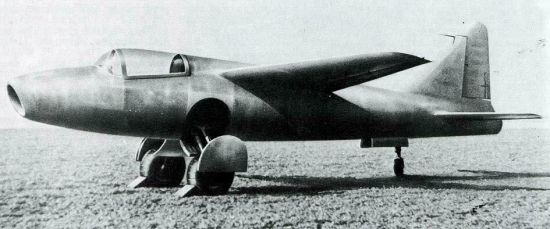
Yup. I believe the Ohan engine was actually used in the He 178, while the Whittle type there is from the Gloster E28/39. Very historic.
With any luck maybe a fuel efficient XR-7755.
Jokes aside, had Whittle not pioneered [edit] the jet someone else would've - in fact they did - von Ohan in Germany. It's often overlooked that Heinkel flew the first ever successful [edit] jet aircraft in 1939. Thankfully the RLM had the attitude of some WIXers here, too, and didn't want it, otherwise all that Luft 46 stuff could have been Luft 42...
And there were others in even Spain (generally forgotten) the Italian dead-end and more. It was going to happen. Give it long enough, even the Yanks would've got it!
The last photo is in the same group because it's the oldest jet engine in the world capable of running. When Planes of Fame get the P-59 running, it'll be the oldest airworthy Jet type, and presumably airworthy jet engines too?
Honourable mention to Mr bdk, for technical excellence. Have a pony with no legs, silly boy.
Last edited by JDK on Tue Sep 09, 2008 7:41 am, edited 2 times in total.
Mon Sep 08, 2008 4:50 pm
All those stinking jets belong in museums. Bring back the recips now. Much better fuel economy, and just plain sound better. And since we all know that with proper design a piston plane can pretty much cruise with a jet, look at the P51, and thats old school.
Tue Sep 09, 2008 1:59 am
James,
You know I'm a big fan of your work, but I have to question the statement that Whittle invented the jet engine. That's a bit like saying that James Cook discovered Australia. Each claimed credit, but both were just adding to the knowledge discovered by others.
To my mind, the inventor of the jet engine was Romanian Henri Coanda, who exhibited his jet-powered aeroplane at the Paris Exposition in 1910. Yes, that's right, only seven years after the Wright Brothers, and a long time before Whittle. His "air-reactive" engine powered an unmanned aircraft on one flight in October 1910.
Coanda also framed one of the two main principles of flight that explain the production of lift.
Walrus
You know I'm a big fan of your work, but I have to question the statement that Whittle invented the jet engine. That's a bit like saying that James Cook discovered Australia. Each claimed credit, but both were just adding to the knowledge discovered by others.
To my mind, the inventor of the jet engine was Romanian Henri Coanda, who exhibited his jet-powered aeroplane at the Paris Exposition in 1910. Yes, that's right, only seven years after the Wright Brothers, and a long time before Whittle. His "air-reactive" engine powered an unmanned aircraft on one flight in October 1910.
Coanda also framed one of the two main principles of flight that explain the production of lift.
Walrus
Tue Sep 09, 2008 3:34 am
engguy wrote:All those stinking jets belong in museums. Bring back the recips now. Much better fuel economy, and just plain sound better. And since we all know that with proper design a piston plane can pretty much cruise with a jet, look at the P51, and thats old school.
It was so much easier when the world was flat, and there were just believers and heritics, wasn't it?
Walrus 7 wrote:You know I'm a big fan of your work, but I have to question the statement that Whittle invented the jet engine. That's a bit like saying that James Cook discovered Australia. Each claimed credit, but both were just adding to the knowledge discovered by others.
To my mind, the inventor of the jet engine was Romanian Henri Coanda, who exhibited his jet-powered aeroplane at the Paris Exposition in 1910. Yes, that's right, only seven years after the Wright Brothers, and a long time before Whittle. His "air-reactive" engine powered an unmanned aircraft on one flight in October 1910.
Coanda also framed one of the two main principles of flight that explain the production of lift.
Hi Walrus,
Thanks for the polite correction. I absolutely agree that it was most slack of me to say that Whittle 'invented' the jet. He was indeed developing ideas in part based on other work as he would have said; but the critical point was that he (and von Ohan) developed the idea and prototypes to successful working engines. Coandă deserves much credit (and the Deutsches Museum has a model of his aircraft) but Coandă's aircraft did not result in any further work - one may as well credit Hero.
Coandă also developed a piston engine powered reaction motor not a 'pure' jet engine of any type, but a hybrid - regarded today generally as a dead end concept; only used in prototype form, by him, and Caproni, primarily.
Whittle deserves his fame not just because of his work, but the fact that he persisted in the face of enormous discouragement and multiple obstacles. As far as Whittle knew, if he gave up, we'd still have been messing about with the piston engines discussed above! We now know about the German work, so we also know that the jet was an inevitable invention where the time had come, but it was not Greece, Rumania, Spain or Italy (all with 'jet reaction pioneers') where the first successful jet aircraft were developed to mass use - but Germany and Britain.
As to Cook, he mapped a previously disputed continent - good enough for me, couple with him being called 'James' too.
(He's generally regarded as one of the greatest cartographers and map makers in history. It was RAAF Seagulls which 'added to' Cooks' maps and work exploring the previously uncharted coast of Australia in the 1920s and 30s.)
It's important to recognise pioneers - but what matters is who converts that pioneering into success.
Just my view!
Tue Sep 09, 2008 7:57 am
PS; Walrus I've been looking and all the references I have say that Coandă's piston-driven jet aircraft had him aboard, it caught fire and crashed, and was abandoned as a project. I've an open mind, but that's a long way from successful and a lot closer to a firework, IMHO! Can you clarify?
Tue Sep 09, 2008 9:53 am
James could possibly be guilty of over-simplification, but it's fair to say Whittle did invent the turbojet engine.
Von Ohain independently came up with the same idea up to 5 years later depending on where you read about it.
I'd always confidently thought Whittle was the first to run a turbojet but Wiki says von Ohain beat him by a month, although running on hydrogen and basically wrecking it.
Von Ohain independently came up with the same idea up to 5 years later depending on where you read about it.
I'd always confidently thought Whittle was the first to run a turbojet but Wiki says von Ohain beat him by a month, although running on hydrogen and basically wrecking it.
Tue Sep 09, 2008 1:13 pm
This history stuff is mighty interesting fellas, but my pony still doesn't have any legs. Does that make him a taildragger?