End of an Era --- IL ANG
Sat Sep 06, 2008 3:30 pm
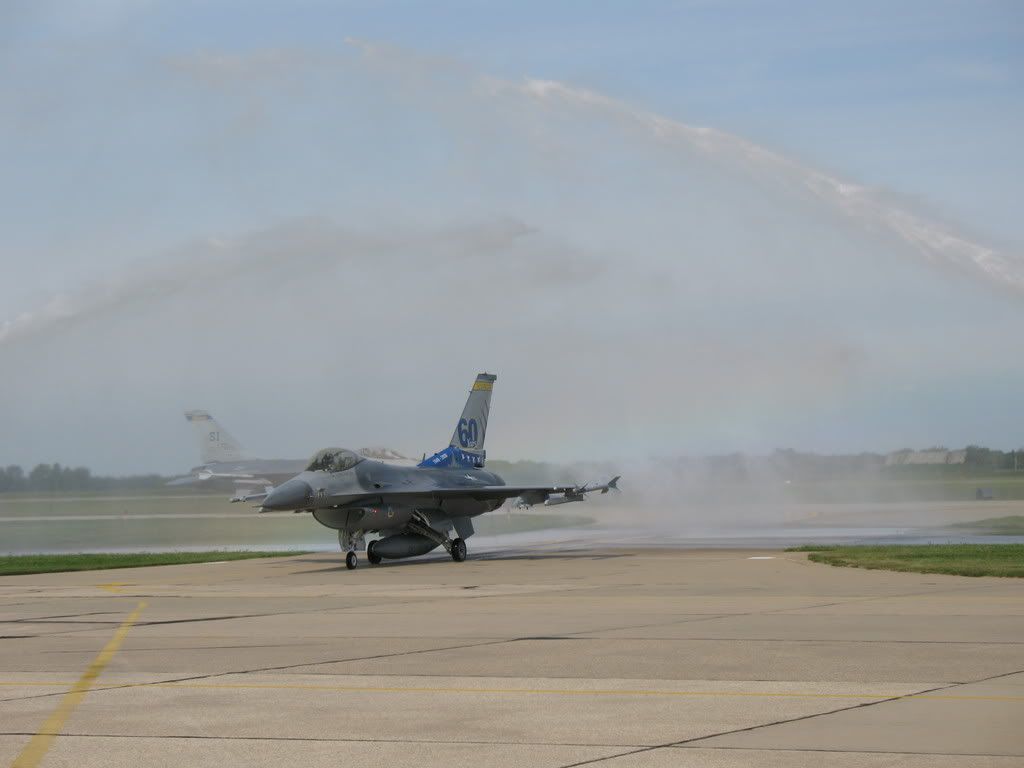
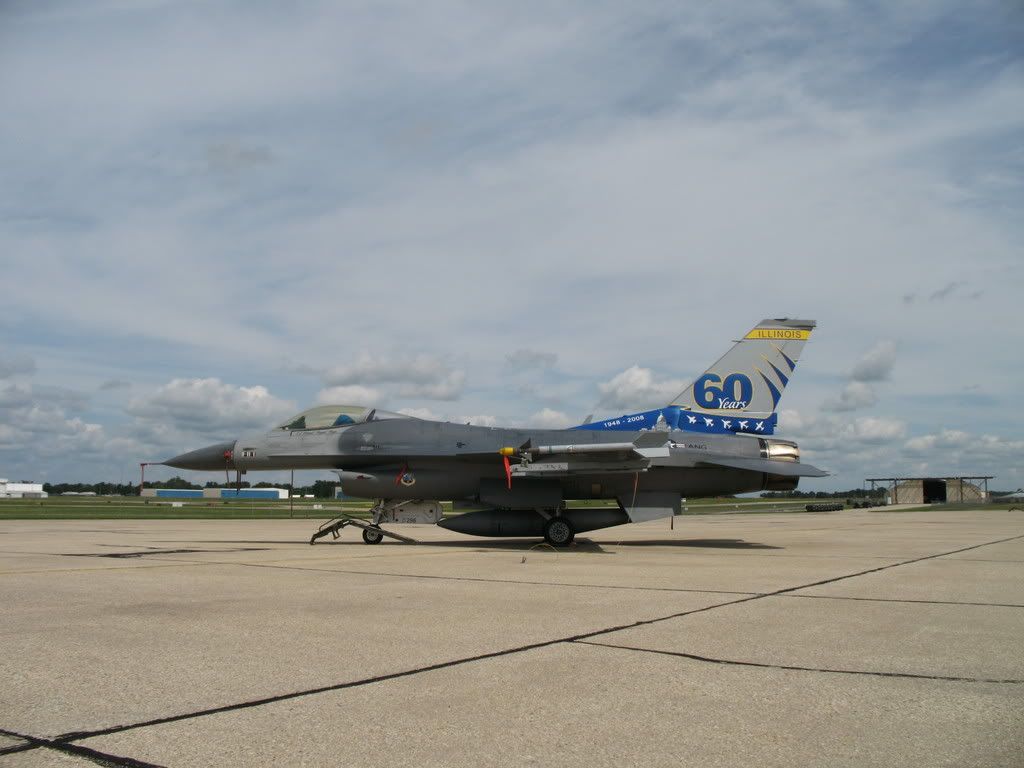
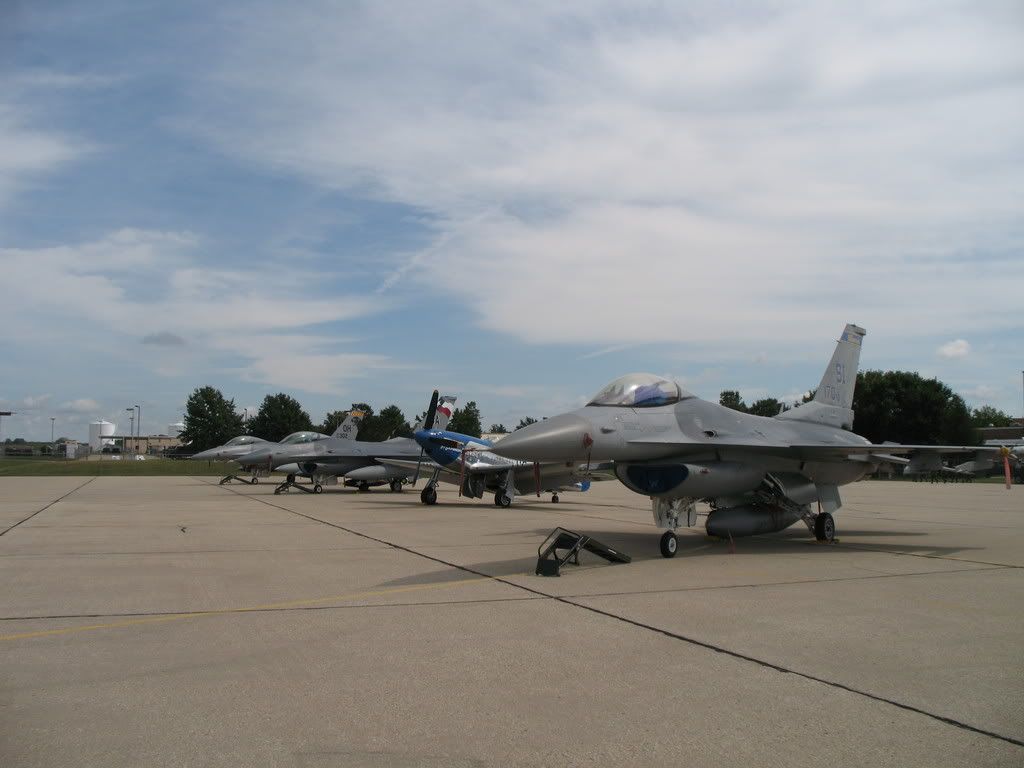
The 183rd FW of the IL ANG stood down today with closing ceremonies marking the end of 60 years of flying. Their operational aircraft included F-51, F-86, F-84, F-4 and F-16. Worry Bird & Moonbeam participated in today's events at the guard unit in Springfield, IL.
VL
VL
Sat Sep 06, 2008 7:03 pm
pretty sad state of our national military budget when another historic fighter wing bites the economic weinie.
Sat Sep 06, 2008 8:57 pm
Very sad, I remember going to the state fair and stopping dead in my tracks a few times to watch the F-16's flying around down there.
Sat Sep 06, 2008 9:07 pm
In the one photo, I recognize the F-16 with the black tiger face painted on its vertical tail. This bird flies for the Springfield Ohio ANG out of Springfield, Ohio. I often see them doing touch and goes at Wright Patterson AFB in Dayton all the time. Everytime they buzz Patterson Field I have to grab my ear protectors in the hanger. Sorry to hear that another guard base is closing. Sad times we live in.
Jim
Jim
Sat Sep 06, 2008 9:16 pm
They will still have an aviation mission as they will if
i remember the engine shopill be enlarged to rebuild jet engines for other air guard units
i remember the engine shopill be enlarged to rebuild jet engines for other air guard units
Sat Sep 06, 2008 9:16 pm
tom d. friedman wrote:pretty sad state of our national military budget when another historic fighter wing bites the economic weinie.
Tom, the problem is that most every unit in the US Air Force can trace its roots back to WWII and before in some cases. The USAF has tried to keep "war veteran" wings and squadrons running at least semi-continuously for its entire existence. In fact, many of the transport wings and squadrons that are now active in the USAF flew fighters or bombers during WWII, not transports.
While it's sad to see a wing with 60 years of continuous history inactivated and/or disbanded, the thing to consider as well is that the closures are not due to the military budget being lean as much as it's due to trying to ensure that what we do have is spread as best possible to the areas which can create the best "bang for the buck". Look at Mountain Home. It's a perfect example as it went from being one of the premier fighter wings, to a Electronic Countermeasures wing (flying the EF-111) to the USAF's first Expeditionary Wing, to now the only base to operate both the F-15C/D and F-15E. The reason for the changes? The EF-111 was retired and Mountain Home was to be closed, but the USAF decided to buy some more F-15Es. As such, they decided as well to use Mountain Home, with its large ramp, to test out the Expeditionary Wing concept. It worked well, but it was expensive supporting 7 airframes (F-15C, F-15D, F-15E, F-16C, F-16D, KC-135R, and B-1B) at one location when each airframe equipped only one squadron, thus you had a lot of duplication in the back shop and other areas where consolidating to just 3 airframes (F-15C/D/E) was much more cost effective. As such, the idea of a co-based Expeditionary Wing turned into the current concept where the EW is mainly the HQ & Planning elements and the aircraft are "gained" as needed from various wings.
In addition, if you read through the "current" BRAC list, you'll find about half of the proposals that were made were rejected by the BRAC committee and in fact, in several cases, the BRAC committee demanded an expansion of the role of various units when the USAF wanted to disband. But it wasn't because of the history of the unit, it was because of the location and the ability of that location to handle more than it was.
I guess in the end, the point is that no matter how large or small the budget is, BRAC will still be run (remember, BRAC was initiated in 1990 prior to the massive defense spending cuts that occurred several years later after Desert Storm) because it's job is to ensure that the DoD has its assets allocated for maximum operational capability without wasting money.
Sat Sep 06, 2008 11:13 pm
Yep, CAP, that's why the 147th here in Houston lost it's F-16s that were sitting alert. They shipped in 4 birds from Tulsa to sit alert, along with their own maintenance crews, gave the 147th Predators that can't fly over here and built a control building for 50 million. Now they are looking to build a local satellite facility so they can at least fly the Predators over the Gulf.
This all happened in spite of some of the BRAC committee members wanting to leave the 147th with its original mission. When Gen "Fig" Newton said "we're covering Houston with additional aircraft in San Antonio and Ft Worth", even though they are 30 minutes out, the rest of the committee voted to pull the plug !
They really saved a bunch of money on this one !

This all happened in spite of some of the BRAC committee members wanting to leave the 147th with its original mission. When Gen "Fig" Newton said "we're covering Houston with additional aircraft in San Antonio and Ft Worth", even though they are 30 minutes out, the rest of the committee voted to pull the plug !
They really saved a bunch of money on this one !
Sun Sep 07, 2008 1:34 am
Hey Rick one of the 147th guys came into Kroger, FAA said they CAN use EFD just have to go over Clear Lake, Galveston Bay down the Ship Channel over Gulf. So we will see them BUT wont be as exciting as the F-16. Well till we get the MQ-9s instead of the MQ-1s LOL.
Sun Sep 07, 2008 7:58 am
Rick,
The biggest death knell for Ellington is the amount of developed area and sensitive facilities within proximity of the field. This really caused a lot of headaches for the TX ANG, especially when they wanted to have fly days as they got a ton of noise complaints. In addition, the USAF's been trying for the last 2 cycles to start reducing the number of F-16s in the ANG inventory for several reasons. Essentially they've been trying to eliminate the F-16C/D completely or convert them into CG/DG or CJ/DJ configuration as they are more capable (and useful in the current environment) than a "bog standard" F-16C/D. Ellington fell into that category of having a lot of problems that could be alleviated (or at least minimized) by doing what they did.
As for the UAV's, I expect the issue will be resolved within the year. The USAF and FAA are working hard to get the procedures for nationwide UAV operations in the National Airspace System, and I think that once they get it worked out, most of the problems they're having now will be resolved.
The biggest death knell for Ellington is the amount of developed area and sensitive facilities within proximity of the field. This really caused a lot of headaches for the TX ANG, especially when they wanted to have fly days as they got a ton of noise complaints. In addition, the USAF's been trying for the last 2 cycles to start reducing the number of F-16s in the ANG inventory for several reasons. Essentially they've been trying to eliminate the F-16C/D completely or convert them into CG/DG or CJ/DJ configuration as they are more capable (and useful in the current environment) than a "bog standard" F-16C/D. Ellington fell into that category of having a lot of problems that could be alleviated (or at least minimized) by doing what they did.
As for the UAV's, I expect the issue will be resolved within the year. The USAF and FAA are working hard to get the procedures for nationwide UAV operations in the National Airspace System, and I think that once they get it worked out, most of the problems they're having now will be resolved.