Lake Michigan F4F-3 Wildcats
Sat Dec 15, 2007 9:06 pm
This is an offshoot from the thread on flying original aircraft.
Hello Ashley,
There were two F4F-3's that came out of Lake Michigan that were sold and went off to two different restorers. I think the one that you all built the wings for, and was restored by Blackhawk, was the other one not the one pictures above.
Here is the story that I was told:
The Naval Aviation Museum in Pensacola had a contract with a civilian firm to recover a bunch of aircraft from Lake Michigan. Instead of direct payment for the recovery effort the salvage company was given title to two of the recovered Wildcats. The salvage company sold them through Mark Clark and Courtesy Aircraft. Mark called several of his friends and said that he had two Wildcat projects available and he gave them the price and said first one to arrive got first pick. The race was on and the first party arrived shortly before the second. The mechanic went in to inspect the two aircraft and quickly went past the first one as the wings were real rough. I believe these are the wings Ashley was referring to. There was speculation later that the wings on one wildcat had deteriorated more extensively than the other Wildcats wings because they had been fabricated under subcontract by Spartan. Maybe Spartan used different corrosion control methods. Any comments on the condition of the wings that you all rebuilt Ashley?
The wings on the other Wildcat were immaculate.
The story goes that after the mechanic had finished a long pre purchase inspection he went back to the prospective buyer and said 'I don't understand it, I can't find anything wrong with it'. Needless to say they bought it and the other folks, Dick Hansen as I recall, bought the one with the problem wing.
Hansen's Wildcat was restored showed up at Oshkosh before the one pictured above. They were not able to find an original engine so they used one from a DC-3 and re fabricated a custom induction system to solve the updraft/downdraft differences. They also used a Hamilton Standard prop as they could not find a Curtis Electric to use.
I remember Dick Hansen had the original aircraft battery on display at OSH and they had poured the Lake Michigan water out of it and put in fresh electrolyte and had it wired through an original switch and light bulb that were in the Wildcat on the bottom of the lake. The battery would light the bulb! What a cool display.
When 12260 showed up at OSH the next year she was even more impressive as she still had her original engine, Curtis Electric prop, original paint in many areas and lots more.
I think she has been through a few owners since and she is a real treasure.
The original post can be found here and below the link is a copy:
http://warbirdinformationexchange.org/phpBB2/viewtopic.php?t=18031
One of my favorites in the fighter category is Grumman F4F-3 Wildcat N12260 which is also her Bureau Number 12260.
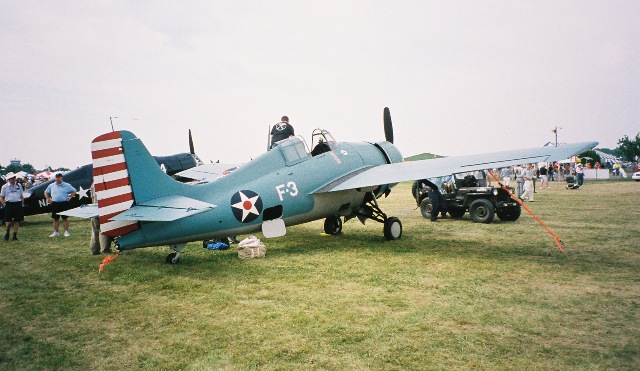
She was one of the Wildcats that sat on the bottom of Lake Michigan for 50 years or so. After her recovery she had been restored but still retained a lot of originality. I remember hearing someone complain about the dirty looking paint inside the rear fuselage. I guess they didn't realize that what they were looking at was original WWII paint that was still in good enough condition that it was left intact. How rare is that?
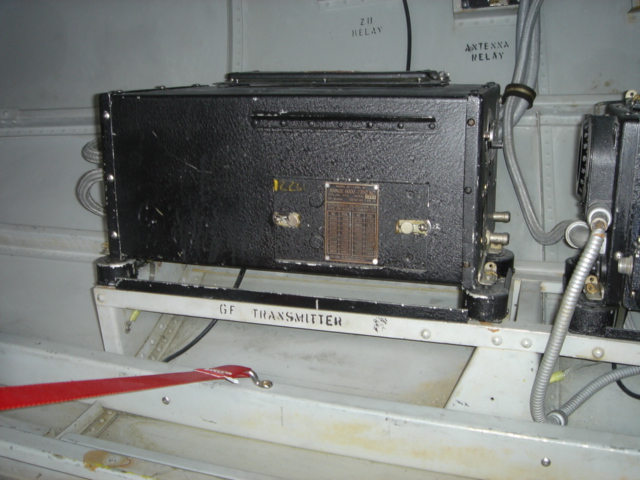
She even has her original radios with the black wrinkle finish intact. You can even see her Bureau Number hand painted on one of the tuning coils.
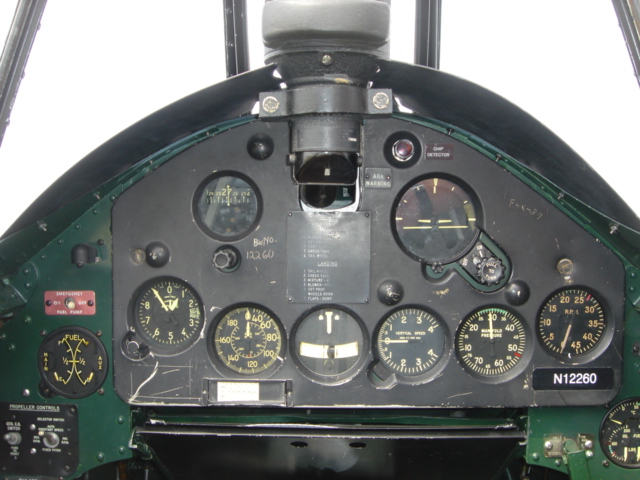
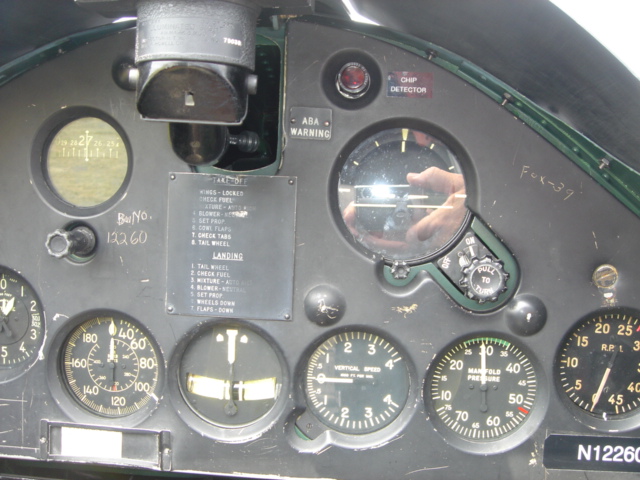
Here is her instrument panel. The crash pad also retains factory WWII paint and is complete with the Bureau Number and call sign scratched into it by some aviator back in WWII.
She also flys with the same engine that she had when she was on the bottom of the lake. For the most part anyway as many parts were replaced at overhaul. I remember that the engine builder, Ray Anderson, said that the connecting rods looked to be factory new with all of the rubber stamped part numbers as fresh as the day they were made.
She has a lot of inaccurate things from the restoration but to me these pale in comparison to the big picture. I think she is very special because of her original condition and configuration. You do not see a lot of chrome, polish or gloss paint. No over restoration on this rare bird.
To the guys who restored her; well done! I apologize that I do not have their names available right now so I could give them credit as they sure did a fantastic job.
Hello Ashley,
There were two F4F-3's that came out of Lake Michigan that were sold and went off to two different restorers. I think the one that you all built the wings for, and was restored by Blackhawk, was the other one not the one pictures above.
Here is the story that I was told:
The Naval Aviation Museum in Pensacola had a contract with a civilian firm to recover a bunch of aircraft from Lake Michigan. Instead of direct payment for the recovery effort the salvage company was given title to two of the recovered Wildcats. The salvage company sold them through Mark Clark and Courtesy Aircraft. Mark called several of his friends and said that he had two Wildcat projects available and he gave them the price and said first one to arrive got first pick. The race was on and the first party arrived shortly before the second. The mechanic went in to inspect the two aircraft and quickly went past the first one as the wings were real rough. I believe these are the wings Ashley was referring to. There was speculation later that the wings on one wildcat had deteriorated more extensively than the other Wildcats wings because they had been fabricated under subcontract by Spartan. Maybe Spartan used different corrosion control methods. Any comments on the condition of the wings that you all rebuilt Ashley?
The wings on the other Wildcat were immaculate.
The story goes that after the mechanic had finished a long pre purchase inspection he went back to the prospective buyer and said 'I don't understand it, I can't find anything wrong with it'. Needless to say they bought it and the other folks, Dick Hansen as I recall, bought the one with the problem wing.
Hansen's Wildcat was restored showed up at Oshkosh before the one pictured above. They were not able to find an original engine so they used one from a DC-3 and re fabricated a custom induction system to solve the updraft/downdraft differences. They also used a Hamilton Standard prop as they could not find a Curtis Electric to use.
I remember Dick Hansen had the original aircraft battery on display at OSH and they had poured the Lake Michigan water out of it and put in fresh electrolyte and had it wired through an original switch and light bulb that were in the Wildcat on the bottom of the lake. The battery would light the bulb! What a cool display.
When 12260 showed up at OSH the next year she was even more impressive as she still had her original engine, Curtis Electric prop, original paint in many areas and lots more.
I think she has been through a few owners since and she is a real treasure.
The original post can be found here and below the link is a copy:
http://warbirdinformationexchange.org/phpBB2/viewtopic.php?t=18031
One of my favorites in the fighter category is Grumman F4F-3 Wildcat N12260 which is also her Bureau Number 12260.
She was one of the Wildcats that sat on the bottom of Lake Michigan for 50 years or so. After her recovery she had been restored but still retained a lot of originality. I remember hearing someone complain about the dirty looking paint inside the rear fuselage. I guess they didn't realize that what they were looking at was original WWII paint that was still in good enough condition that it was left intact. How rare is that?
She even has her original radios with the black wrinkle finish intact. You can even see her Bureau Number hand painted on one of the tuning coils.
Here is her instrument panel. The crash pad also retains factory WWII paint and is complete with the Bureau Number and call sign scratched into it by some aviator back in WWII.
She also flys with the same engine that she had when she was on the bottom of the lake. For the most part anyway as many parts were replaced at overhaul. I remember that the engine builder, Ray Anderson, said that the connecting rods looked to be factory new with all of the rubber stamped part numbers as fresh as the day they were made.
She has a lot of inaccurate things from the restoration but to me these pale in comparison to the big picture. I think she is very special because of her original condition and configuration. You do not see a lot of chrome, polish or gloss paint. No over restoration on this rare bird.
To the guys who restored her; well done! I apologize that I do not have their names available right now so I could give them credit as they sure did a fantastic job.
Sun Dec 16, 2007 12:58 pm
Any pics of either pre-restoration?
????
Sun Dec 16, 2007 1:12 pm
http://www.warbirdregistry.org/f4fregistry/f4f-12296.html
John Dimmer's is grounded for good in Hawaii. It was cool seeing John in the FM-2 and Ray Chalker in the -3 flying together
John Dimmer's is grounded for good in Hawaii. It was cool seeing John in the FM-2 and Ray Chalker in the -3 flying together
Sun Dec 16, 2007 2:05 pm
Here are some photos from the recovery company's web site. sorry, I didn't want to alter the original photo's file size so it’s darn big.


Check out some of the amazing shots of other aircraft they recovered here:
http://www.atrecovery.com/Images/Board1/index.htm
Here is a fascinating archeological report by the Navy History Center on SBD-2 BuNo 2106 also recovered by A&T Recoveries:
http://www.atrecovery.com/Images/2106/DAUNTLESSreport2106.pdf
Check out some of the amazing shots of other aircraft they recovered here:
http://www.atrecovery.com/Images/Board1/index.htm
Here is a fascinating archeological report by the Navy History Center on SBD-2 BuNo 2106 also recovered by A&T Recoveries:
http://www.atrecovery.com/Images/2106/DAUNTLESSreport2106.pdf
Sun Dec 16, 2007 2:35 pm
Thanks Taigh,
That second pic is a FM-2, would that be 55052?
That second pic is a FM-2, would that be 55052?
Sun Dec 16, 2007 2:58 pm
Hello Rogue,
I do not know which aircraft these were as they are not identified on their web site.
They sure were in good condition after having been on the bottom of the lake for so long.
I do not know which aircraft these were as they are not identified on their web site.
They sure were in good condition after having been on the bottom of the lake for so long.
amazing pics
Sun Dec 16, 2007 4:27 pm
Have their been any of the recovered aircraft preserved in their original paint? That last one looks amazing! I can even see what looks like the original exhaust staining!
Mon Dec 17, 2007 10:22 am
How about they get the remainder of the aircraft in Lake Michigan!
Mon Dec 17, 2007 10:29 am
I believe that several of the aircraft are now being preserved as they were recovered. Take a look at that document by the Navy Historical folks at mentions this. It is about 170 pages and goes into quite a lot of detail about Navy history and that specific Dauntless.
The recovery company's web site said that they had recovered 33 aircraft from Lake Michigan.
The recovery company's web site said that they had recovered 33 aircraft from Lake Michigan.
Mon Dec 17, 2007 11:48 am
The wings were in pretty rough shape. The Right wing exhibited the obvious damage from ditching, but both wings ended up with new spars. I can't remember exact details, but a substantial amount of structure was replaced in each wing along with total reskinning. The ailerons had to be rebuilt with all new parts as well.
AE
AE
Mon Dec 17, 2007 12:28 pm
Lake Michigan seems like a fruitful resource for recovering aircraft. A&T Recoveries has recovered 33 aircraft so far.
Anyone know how recent their last recovery was?
Also is there a listing of recovered airframes?
I found this list of Lost aircraft: 41 TBM/TBF Avengers, one F4U Corsair, 38 SBD Dauntless, four F6F Hellcats, 17 SNJ Texans, two SB2U Vindicators, 37 FM/F4F Wildcats and three experimental drones known as TDNs.
I thought I had heard of e disagreement between A&T and the Navy. I imagine regarding the NHC policy:
found here: http://www.history.navy.mil/branches/org12-7f.htm
The NHC makes comment of the USAF policy regarding aircraft wrecks:
Has any of this been resolved? Also what are salvage laws with in the Great Lakes?
Is there pressident or statue of limitations set for the abandonment for these aircraft?
Shay
______________
Semper Fortis
Anyone know how recent their last recovery was?
Also is there a listing of recovered airframes?
I found this list of Lost aircraft: 41 TBM/TBF Avengers, one F4U Corsair, 38 SBD Dauntless, four F6F Hellcats, 17 SNJ Texans, two SB2U Vindicators, 37 FM/F4F Wildcats and three experimental drones known as TDNs.
I thought I had heard of e disagreement between A&T and the Navy. I imagine regarding the NHC policy:
found here: http://www.history.navy.mil/branches/org12-7f.htm
The Navy maintains ownership of its historic aircraft in order to preserve the nation's heritage in naval aviation. In a letter from the Advisory Council on Historic Preservation, Deputy Executive Director John M. Fowler, commented on Navy policy:
By continuing to claim ownership we believe that the Navy is in a good position to advance the causes of preservation of those aircraft that are historic, i.e., that meet the criteria for inclusion in the National Register of Historic Places. We believe the Navy's ownership position is consistent with the stated goals of the National Historic Preservation Act (16 U.S.C. 470 as amended). Sections 110(a)(1) and (d) of the Act require that Federal agencies assume responsibility for the preservation of their historic properties, and carry out programs which further the purposes of this Act. By maintaining jurisdiction over their downed aircraft, and by supporting the restoration, education, and display of those historic properties significant to the Navy in particular and the history of aviation in general, the Navy is taking a reasonable and responsible role in the field of aircraft historic preservation. (Fowler 1994).
The NHC makes comment of the USAF policy regarding aircraft wrecks:
The Air Force's policy differs strikingly from that of the Navy. The Air Force policy is provided in a 1994 Air Force manual (United States Air Force [USF] 1994).
Aircraft that crashed before 19 November 1961, when a fire destroyed the pertinent Air Force records, and that remain wholly or partially unrecovered are considered formally abandoned. The Air Force neither maintains title to, nor has property interest in these aircraft. The authority for access to, and recovery of these aircraft, as well as liability for damages associated with their recovery, are matters to be resolved between persons seeking recovery and landowners of the wreckage sites.
In 1996, the Air Force added the caveat, "if any human remains are discovered at the site, recovery personnel should immediately contact the nearest United States Embassy or United States military installation. To assist in proper identification of remains, recovery personnel should refrain from further operations at the site pending removal of the remains by United States experts. (USF 1996)."
Interestingly, the Air Force records claimed to have been lost in a fire can be found elsewhere. According to the web site for the Air Force Historical Research Agency (AFHRA), (http://www.airforcehistorv.hq.af.mil/faq/index/html), their agency, "maintains individual records for all aircraft once or presently in the United States Air Force inventory. These records begin in 1924 and continue to July 1990 and appear to be about 98 percent complete (USF 1998)." Aircraft salvors have expressed amusement at the Air Force's claim that the records were lost. One career aircraft salvor created his private database from approximately 67,000 individual Army Air Corps and Air Force accident records (Hoffman 1997:29). Perhaps as many as 44,000 of these records represent accidents that resulted in the loss of the aircraft. Potential wreck sites represent possibly half this number. Air Force abandonment was the basis for attempting to get the Navy to also abandon their aircraft in the recently proposed Warbird Act. The Navy has not disputed the Air Force's claim of abandonment, but other agencies have not recognized the Air Force's assertion as legitimate abandonment (Pelkofer 1998).
Has any of this been resolved? Also what are salvage laws with in the Great Lakes?
Is there pressident or statue of limitations set for the abandonment for these aircraft?
Shay
______________
Semper Fortis
Mon Dec 17, 2007 9:08 pm
I haven't heard this mentioned before, but on the list of lost airframes, were any of them fatal crashes and may still have remains of the pilots/crew aboard? Also, how many from the list have been confirmed as located?