Final NTSB report on Guilford's Hunter crash in Oregon out.
Wed Dec 12, 2007 9:31 am
Here it is:
http://ntsb.gov/ntsb/brief2.asp?ev_id=2 ... 142&akey=1
I thought the report could have been a lot better and left out a lot of essential information. It raises more questions than it solves. For example:
1) Did this particular aircraft have a "hot seat" or was it deactivated? If it was hot, why didn't the pilot try to eject? There is no discussion whatsoever on anything regarding ejection, parameters, if it was attempted, etc. I assume from the report that the seat was deactivated or "cold". If it had "hot" seats, why does the report not mention any attempt at ejection? What was the position of the ejection handles, what was the condition of the ejection seat, at the time of the crash? Lots of questions, but no answers.
2) Video of the event showed that the aircraft "oscillated left and right" right after takeoff. There was no further information on this in the rest of the report. Was it due to gusty winds? Was it due to jet wash or wake turbulence? Was this a normal characteristic of the Hunter? Did the Hunter have some kind of yaw stability system or damper? NONE of these issues were addressed in the report.
3) One witness stated the gear appeared to remain in the extended position after it turned onto downwind. There was no mention of this again in the report, nor any kind of explanation. The report even failed to mention whether the gear was extended or retracted when it crashed. Unless the airplane was doing a high speed dive straight into the ground when it crashed, the gear would definitely have survived a crash and allow an investigator to determine whether it was retracted or not upon impact. The Hunter crashed at a "relatively" slow speed, so much of the wing and/or gear should have easily survived. Again, NONE of this is talked about in the report. What could have caused the gear to not retract - a loss of the engine which drives the gearbox and hence hydraulic pump, perhaps a loss of all hydraulics due to a failed pump or massive leak? None of this is discussed or brought up. Perhaps the crash was caused by a complete loss of aircraft control due to loss of all hydraulics? Could the gear being down have been related to the crash? Lots of questions, but no answers in the report regarding any of this.
4) Was there a pilot disorientation or incapacitation? The only thing on the medical side that was mentioned was "negative results for controlled substances and alcohol." No mention was made of the possibility of a brain aneurysm, heart attack, G induced loss of consciousness, etc. NONE of these issues are addressed or even acknowledged as not being able to be identified.
5) One witness stated that the "airplane appeared to 'wallow' nose high before it descended ". Why does the report not delve further into this? On every single jet aircraft equipped with an upward firing ejection seat, it is standard operating procedure in a controlled ejection, especially down at low altitude, to arrest any sink rate with a momentary level off or climb. This will maximize the chances for a good chute. This "wallowing" with a nose up attitude is consistent with a pre-ejection aircraft attitude. How come this is not discussed?
6) The pilot only had 25 hours in the previous 6 months and only 161 hours in the Hunter. That is hardly enough to be proficient. One could consider him relatively inexperienced in this aircraft. Could lack of proficiency and experience in type have contributed to this accident? Did the pilot have more recent experience in other types of aircraft? Could he have developed "negative learning" from habit patterns associated with other non jet and/or non-ejection seat aircraft because of his inexperience in the Hunter? How come none of this is discussed or even mentioned as a causal factor?
7) The final probable cause for this accident was determined to be: "Loss of aircraft control for undetermined reasons during the takeoff sequence."
This is a really vague determination. By reading the report they show no supporting evidence that there was a loss of aircraft control. Was it really a loss of aircraft control or was it a loss of thrust? How come there is no evidence which backs up this assertion? Is there really any information here that definitively shows that the pilot actually lost aircraft control as opposed to just a loss of thrust, but still had aircraft control?
To me, at least, this last statement is basically a cop-out for the investigators saying that they have no clue what happened. If they did indeed do all of their homework and accomplished an in depth investigation, they sure didn't articulate that in this report. If that was the case, this report was written extremely poorly.
I'm really disappointed in this report because of it's lack of a lot of information and the many issues it fails to discuss. Does anybody have any more information which might shed some light on all of the previous questions I've raised?
How are pilots supposed to prevent future accidents like this from happening when the investigators don't even discuss a lot of MAJOR items!
Sorry for the rant, but I find this report pretty pathetic.
http://ntsb.gov/ntsb/brief2.asp?ev_id=2 ... 142&akey=1
I thought the report could have been a lot better and left out a lot of essential information. It raises more questions than it solves. For example:
1) Did this particular aircraft have a "hot seat" or was it deactivated? If it was hot, why didn't the pilot try to eject? There is no discussion whatsoever on anything regarding ejection, parameters, if it was attempted, etc. I assume from the report that the seat was deactivated or "cold". If it had "hot" seats, why does the report not mention any attempt at ejection? What was the position of the ejection handles, what was the condition of the ejection seat, at the time of the crash? Lots of questions, but no answers.
2) Video of the event showed that the aircraft "oscillated left and right" right after takeoff. There was no further information on this in the rest of the report. Was it due to gusty winds? Was it due to jet wash or wake turbulence? Was this a normal characteristic of the Hunter? Did the Hunter have some kind of yaw stability system or damper? NONE of these issues were addressed in the report.
3) One witness stated the gear appeared to remain in the extended position after it turned onto downwind. There was no mention of this again in the report, nor any kind of explanation. The report even failed to mention whether the gear was extended or retracted when it crashed. Unless the airplane was doing a high speed dive straight into the ground when it crashed, the gear would definitely have survived a crash and allow an investigator to determine whether it was retracted or not upon impact. The Hunter crashed at a "relatively" slow speed, so much of the wing and/or gear should have easily survived. Again, NONE of this is talked about in the report. What could have caused the gear to not retract - a loss of the engine which drives the gearbox and hence hydraulic pump, perhaps a loss of all hydraulics due to a failed pump or massive leak? None of this is discussed or brought up. Perhaps the crash was caused by a complete loss of aircraft control due to loss of all hydraulics? Could the gear being down have been related to the crash? Lots of questions, but no answers in the report regarding any of this.
4) Was there a pilot disorientation or incapacitation? The only thing on the medical side that was mentioned was "negative results for controlled substances and alcohol." No mention was made of the possibility of a brain aneurysm, heart attack, G induced loss of consciousness, etc. NONE of these issues are addressed or even acknowledged as not being able to be identified.
5) One witness stated that the "airplane appeared to 'wallow' nose high before it descended ". Why does the report not delve further into this? On every single jet aircraft equipped with an upward firing ejection seat, it is standard operating procedure in a controlled ejection, especially down at low altitude, to arrest any sink rate with a momentary level off or climb. This will maximize the chances for a good chute. This "wallowing" with a nose up attitude is consistent with a pre-ejection aircraft attitude. How come this is not discussed?
6) The pilot only had 25 hours in the previous 6 months and only 161 hours in the Hunter. That is hardly enough to be proficient. One could consider him relatively inexperienced in this aircraft. Could lack of proficiency and experience in type have contributed to this accident? Did the pilot have more recent experience in other types of aircraft? Could he have developed "negative learning" from habit patterns associated with other non jet and/or non-ejection seat aircraft because of his inexperience in the Hunter? How come none of this is discussed or even mentioned as a causal factor?
7) The final probable cause for this accident was determined to be: "Loss of aircraft control for undetermined reasons during the takeoff sequence."
This is a really vague determination. By reading the report they show no supporting evidence that there was a loss of aircraft control. Was it really a loss of aircraft control or was it a loss of thrust? How come there is no evidence which backs up this assertion? Is there really any information here that definitively shows that the pilot actually lost aircraft control as opposed to just a loss of thrust, but still had aircraft control?
To me, at least, this last statement is basically a cop-out for the investigators saying that they have no clue what happened. If they did indeed do all of their homework and accomplished an in depth investigation, they sure didn't articulate that in this report. If that was the case, this report was written extremely poorly.
I'm really disappointed in this report because of it's lack of a lot of information and the many issues it fails to discuss. Does anybody have any more information which might shed some light on all of the previous questions I've raised?
How are pilots supposed to prevent future accidents like this from happening when the investigators don't even discuss a lot of MAJOR items!
Sorry for the rant, but I find this report pretty pathetic.
Re: Final NTSB report on Guilford's Hunter crash in Oregon o
Wed Dec 12, 2007 10:08 am
warbird1 wrote:Here it is:
http://ntsb.gov/ntsb/brief2.asp?ev_id=2 ... 142&akey=1
I thought the report could have been a lot better and left out a lot of essential information. It raises more questions than it solves. For example:
1) Did this particular aircraft have a "hot seat" or was it deactivated? If it was hot, why didn't the pilot try to eject? There is no discussion whatsoever on anything regarding ejection, parameters, if it was attempted, etc. I assume from the report that the seat was deactivated or "cold". If it had "hot" seats, why does the report not mention any attempt at ejection? What was the position of the ejection handles, what was the condition of the ejection seat, at the time of the crash? Lots of questions, but no answers.
2) Video of the event showed that the aircraft "oscillated left and right" right after takeoff. There was no further information on this in the rest of the report. Was it due to gusty winds? Was it due to jet wash or wake turbulence? Was this a normal characteristic of the Hunter? Did the Hunter have some kind of yaw stability system or damper? NONE of these issues were addressed in the report.
3) One witness stated the gear appeared to remain in the extended position after it turned onto downwind. There was no mention of this again in the report, nor any kind of explanation. The report even failed to mention whether the gear was extended or retracted when it crashed. Unless the airplane was doing a high speed dive straight into the ground when it crashed, the gear would definitely have survived a crash and allow an investigator to determine whether it was retracted or not upon impact. The Hunter crashed at a "relatively" slow speed, so much of the wing and/or gear should have easily survived. Again, NONE of this is talked about in the report. What could have caused the gear to not retract - a loss of the engine which drives the gearbox and hence hydraulic pump, perhaps a loss of all hydraulics due to a failed pump or massive leak? None of this is discussed or brought up. Perhaps the crash was caused by a complete loss of aircraft control due to loss of all hydraulics? Could the gear being down have been related to the crash? Lots of questions, but no answers in the report regarding any of this.
4) Was there a pilot disorientation or incapacitation? The only thing on the medical side that was mentioned was "negative results for controlled substances and alcohol." No mention was made of the possibility of a brain aneurysm, heart attack, G induced loss of consciousness, etc. NONE of these issues are addressed or even acknowledged as not being able to be identified.
5) One witness stated that the "airplane appeared to 'wallow' nose high before it descended ". Why does the report not delve further into this? On every single jet aircraft equipped with an upward firing ejection seat, it is standard operating procedure in a controlled ejection, especially down at low altitude, to arrest any sink rate with a momentary level off or climb. This will maximize the chances for a good chute. This "wallowing" with a nose up attitude is consistent with a pre-ejection aircraft attitude. How come this is not discussed?
6) The pilot only had 25 hours in the previous 6 months and only 161 hours in the Hunter. That is hardly enough to be proficient. One could consider him relatively inexperienced in this aircraft. Could lack of proficiency and experience in type have contributed to this accident? Did the pilot have more recent experience in other types of aircraft? Could he have developed "negative learning" from habit patterns associated with other non jet and/or non-ejection seat aircraft because of his inexperience in the Hunter? How come none of this is discussed or even mentioned as a causal factor?
7) The final probable cause for this accident was determined to be: "Loss of aircraft control for undetermined reasons during the takeoff sequence."
This is a really vague determination. By reading the report they show no supporting evidence that there was a loss of aircraft control. Was it really a loss of aircraft control or was it a loss of thrust? How come there is no evidence which backs up this assertion? Is there really any information here that definitively shows that the pilot actually lost aircraft control as opposed to just a loss of thrust, but still had aircraft control?
To me, at least, this last statement is basically a cop-out for the investigators saying that they have no clue what happened. If they did indeed do all of their homework and accomplished an in depth investigation, they sure didn't articulate that in this report. If that was the case, this report was written extremely poorly.
I'm really disappointed in this report because of it's lack of a lot of information and the many issues it fails to discuss. Does anybody have any more information which might shed some light on all of the previous questions I've raised?
How are pilots supposed to prevent future accidents like this from happening when the investigators don't even discuss a lot of MAJOR items!
Sorry for the rant, but I find this report pretty pathetic.
For proficiency one also needs to look at other types of aircraft flown that are similar. He had tons of high performance time. He had time in other jets. He had time in other British fighters. It wasn't as though this is his only fighter experience.
From the engine condition it is hard to say but if there is deposits on alum melted on the turbine blades the engine could have suffered a FOD event and been coming apart as the flight continued. Other Hunter crashes have been caused by fuel pump issues as I recall so that to could have been issue. It does create problems to find a cause when much of what you look for has been destroyed by a fire.
With these reports they will include things that are out of the ordinary. If they didn't mention gear position I would assume it was up. They mentioned damage to the engine that is consistent with running when it impacted. It also mentions what could be deposits from internal damage. Are those deposits normal? So it seems the engine was running but was it making power?
In short if they can't confirm something they don't say it. That doesn't mean the insurance co or some lawyers won't investigate it further.
Rich
Wed Dec 12, 2007 12:19 pm
I am almost 100% certain this is not the full report. I would submit a request for the docket and it would most likely contain all the information you are looking for. The NTSB doesn't take fatal accidents lightly, especially ones that involve "high performance" aircraft (not in the regulatory sense, but in the "fast jet" sense), and do a very thorough investigation and the report is just as thorough, although most of the details are not in the synopsis (which is what this is) but in the attached reports that detail each part of the investigation (like the video, each of the major systems, etc).
Re: Final NTSB report on Guilford's Hunter crash in Oregon o
Wed Dec 12, 2007 4:55 pm
51fixer wrote:For proficiency one also needs to look at other types of aircraft flown that are similar. He had tons of high performance time. He had time in other jets. He had time in other British fighters. It wasn't as though this is his only fighter experience.
I realize that he was a very experienced pilot in OTHER aircraft, but it doesn't make any statements regarding his experience in jet aircraft. If proficiency/experience wasn't a factor, then it should state so. To not mention that very critical point, leaves the door wide open on interpretation.
51fixer wrote:From the engine condition it is hard to say but if there is deposits on alum melted on the turbine blades the engine could have suffered a FOD event and been coming apart as the flight continued. Other Hunter crashes have been caused by fuel pump issues as I recall so that to could have been issue. It does create problems to find a cause when much of what you look for has been destroyed by a fire.
I gathered that from the report, but they still need to mention the factors that they CAN rule out. They haven't done that here. There is still ZERO evidence shown in the report that the pilot actually lost aircraft control.
Wed Dec 12, 2007 4:59 pm
CAPFlyer wrote:I am almost 100% certain this is not the full report. I would submit a request for the docket and it would most likely contain all the information you are looking for. The NTSB doesn't take fatal accidents lightly, especially ones that involve "high performance" aircraft (not in the regulatory sense, but in the "fast jet" sense), and do a very thorough investigation and the report is just as thorough, although most of the details are not in the synopsis (which is what this is) but in the attached reports that detail each part of the investigation (like the video, each of the major systems, etc).
I realize that this is not the full report, but it is the full public report and the one that is released on the internet. What's the point of releasing that information to the public if you can't even back up your final conclusion? If this is a very abbreviated version, then the NTSB did an absolutely horrible job of leaving out a TON of salient issues that need to be addressed. Why even put NTSB reports on line for pilots to learn from others' mistakes if the reports are so brief in nature that the most important lessons to be learned are not even covered or addressed?
Wed Dec 12, 2007 5:37 pm
If you read between the lines - there isn't much to be going on. The aircraft appears to be pretty much destroyed. As for the pilot's health pre accident - the injuries he sustained in the crash sound like it would be difficult to determine post or pre crash brain injuries.
Regards yaw - the aircraft doesn't have any of the modern stability systems which pilots have now . He would be relying on electrical trim .
Regards yaw - the aircraft doesn't have any of the modern stability systems which pilots have now . He would be relying on electrical trim .
Wed Dec 12, 2007 6:05 pm
Like many govt organizations, the NTSB is overloaded and underfunded. I can tell you from experience with a bad crash that they really only care about detailing the cause of an accident if 1) someone other than the pilot gets killed, and/or 2) the aircraft type involved is commonly used for carrying passengers. In fact, most non-fatal accidents are now handed off to the local FAA/FSDO for investigation.
Sadly, a guy who is killed flying a older, foreign ex-military jet doesn't rank that high on their list of priorities, and I'm guessing they put a commensurate amount of effort into the investigation. That's unfortunate, but if the NTSB has limited resources, would you rather have them allocate time to this accident or an incident involving smoke in the cockpit of a 737? (personal connections to the accident aside)
I would take exception to the implication that Guilford wasn't an experienced Hunter pilot - I think I read he was the only authorized Hunter instructed in the US. Considered that his average flight was probably 45 minutes or less, 25 hours in the last six months would be more than enough for an experienced pilot to remain current in a type like the Hunter.
Sadly, a guy who is killed flying a older, foreign ex-military jet doesn't rank that high on their list of priorities, and I'm guessing they put a commensurate amount of effort into the investigation. That's unfortunate, but if the NTSB has limited resources, would you rather have them allocate time to this accident or an incident involving smoke in the cockpit of a 737? (personal connections to the accident aside)
I would take exception to the implication that Guilford wasn't an experienced Hunter pilot - I think I read he was the only authorized Hunter instructed in the US. Considered that his average flight was probably 45 minutes or less, 25 hours in the last six months would be more than enough for an experienced pilot to remain current in a type like the Hunter.
Re: Final NTSB report on Guilford's Hunter crash in Oregon o
Wed Dec 12, 2007 7:01 pm
I guess I should chime in here...
Yes. Worked on recently during the annual, in April, prior to the accident. My father's Soko Jet also had hot seats. He couldn't release the safety at the hold short line but I could, being more flexible; so he would remove the safety just prior to startup.
The plane was heavy w/ four full flight bags slung under the wings. I've seen the tapes. My opinion is the takeoff performance was somehow compromised therefore the wallow on liftoff. But, the initial climb-out after that sequence seemed normal. I haven't seen any tape showing flight characteristics after the initial climb-out until the airplane was seen to be in distress.
I asked Hoover about that. He just shook his head and said my father was probably too busy to notice. Notwithstanding that expert opinion, anything could have happened there. I've seen photo's showing the gear extended as the flight ended.
Pops was pretty healthy with a quick wit and a sharp mind. I spoke with the medical examiner in Hillsboro and there was no evidence of any kind of advanced arterial sclerosis that would suggest heart problems; good news for me on the genetic front.
He was trying to extend his glide/descent to an open field which was about 200 yards from the crash site. I've been there. There was also a shopping center within blocks. My view is that he was trying to get to the open field and eject at that point. The local witnesses realized his actions and left notes to that effect at the crash site as you'll see from the attached photo's.
He would fly the bird regularly - on average of once every two weeks. Often his jaunt would consist of nothing more that blasting out of Van Nuys, shooting two engine out approaches at Mojave and flying back to base. Of course there was the regular trip to Wendover, El Centro, etc. etc.
My father first started flying jets in 1991 when he got the Soko. He got his first Hunter in '96 or thereabouts.
My father was also the only FAA certified instructor for the Hunter in the US. I believe he still held his LOAA for the Mustang, Corsair, Spitfire and Sea Fury. He also taught a well known warbird owner, collector & racer how to fly warbirds.
He also used to turn the pylons at Reno, Mojave etc. etc. but the lack of glory in his exploits leads me to downplay this aspect of his experience.
If that's not enough as far as qualifications, let me know, I'll dig some more up for you.
My view at this point, from a decidedly insider's perspective having been to the crash site, knowing the plane, pilot and mechanic, talking with witnesses, airshow staff, the FAA and NTSB is that somehow the engine's performance on takeoff was compromised. The engine cleared up briefly allowing him to climb out immediately post departure with a relatively normal attitude. My father tried to fly a low, close in pattern but the engine faltered on the downwind leg and he was left with no further options but to minimize the damage to individuals and structures on the ground.
Steve Guilford


warbird1 wrote:1) Did this particular aircraft have a "hot seat" or was it deactivated? If it was hot, why didn't the pilot try to eject?
Yes. Worked on recently during the annual, in April, prior to the accident. My father's Soko Jet also had hot seats. He couldn't release the safety at the hold short line but I could, being more flexible; so he would remove the safety just prior to startup.
2) Video of the event showed that the aircraft "oscillated left and right" right after takeoff.
The plane was heavy w/ four full flight bags slung under the wings. I've seen the tapes. My opinion is the takeoff performance was somehow compromised therefore the wallow on liftoff. But, the initial climb-out after that sequence seemed normal. I haven't seen any tape showing flight characteristics after the initial climb-out until the airplane was seen to be in distress.
3) One witness stated the gear appeared to remain in the extended position after it turned onto downwind.
I asked Hoover about that. He just shook his head and said my father was probably too busy to notice. Notwithstanding that expert opinion, anything could have happened there. I've seen photo's showing the gear extended as the flight ended.
4) Was there a pilot disorientation or incapacitation?
Pops was pretty healthy with a quick wit and a sharp mind. I spoke with the medical examiner in Hillsboro and there was no evidence of any kind of advanced arterial sclerosis that would suggest heart problems; good news for me on the genetic front.
One witness stated that the "airplane appeared to 'wallow' nose high before it descended
He was trying to extend his glide/descent to an open field which was about 200 yards from the crash site. I've been there. There was also a shopping center within blocks. My view is that he was trying to get to the open field and eject at that point. The local witnesses realized his actions and left notes to that effect at the crash site as you'll see from the attached photo's.
The pilot only had 25 hours in the previous 6 months and only 161 hours in the Hunter.
He would fly the bird regularly - on average of once every two weeks. Often his jaunt would consist of nothing more that blasting out of Van Nuys, shooting two engine out approaches at Mojave and flying back to base. Of course there was the regular trip to Wendover, El Centro, etc. etc.
My father first started flying jets in 1991 when he got the Soko. He got his first Hunter in '96 or thereabouts.
My father was also the only FAA certified instructor for the Hunter in the US. I believe he still held his LOAA for the Mustang, Corsair, Spitfire and Sea Fury. He also taught a well known warbird owner, collector & racer how to fly warbirds.
He also used to turn the pylons at Reno, Mojave etc. etc. but the lack of glory in his exploits leads me to downplay this aspect of his experience.
If that's not enough as far as qualifications, let me know, I'll dig some more up for you.
The final probable cause for this accident was determined to be: "Loss of aircraft control for undetermined reasons during the takeoff sequence."
My view at this point, from a decidedly insider's perspective having been to the crash site, knowing the plane, pilot and mechanic, talking with witnesses, airshow staff, the FAA and NTSB is that somehow the engine's performance on takeoff was compromised. The engine cleared up briefly allowing him to climb out immediately post departure with a relatively normal attitude. My father tried to fly a low, close in pattern but the engine faltered on the downwind leg and he was left with no further options but to minimize the damage to individuals and structures on the ground.
Steve Guilford
Last edited by F4U-7 on Fri Oct 24, 2008 10:29 pm, edited 2 times in total.
????
Wed Dec 12, 2007 8:01 pm
Right after the preliminary report came out a story on the local news said the there was possible FOD injestion on take-off and interviewed one of the FAA guys at Hillsboro. They also played the video of the crash which did seem to show the a/c overtaking a object right after take-off 


Re: Final NTSB report on Guilford's Hunter crash in Oregon o
Thu Dec 13, 2007 5:00 am
F4U-7 wrote:I guess I should chime in here..............
Steve Guilford
Finally, someone with some answers! Steve, thank you so very much for providing the answers to all of those questions. That is EXACTLY the kind of information I was seeking. It's really too bad that none of what you wrote here made it into the final report. Now, I have a different perspective of the accident based off of what you said. All I was seeking was information, and the final report did nothing to answer any of the questions. I still think that report was written extremely poorly. Whether they were underfunded, lacked manpower or resources, they failed to answer even the most basic questions regarding this accident. Those answers required no money, or resources, just somebody who could communicate effectively. To me, that is a real travesty, because some time in the ensuing years, there may be a future Hunter pilot who will go back through the NTSB data base and review the safety record to try to identify problem areas or trends in order to safely operate their Hunter. They may not have access to everything you've mentioned because it was left out of the NTSB final report. That is the whole point of why I brought this up. If the report is mere eyewash, and not really for professional pilots to use, then why bother posting it on the internet in the first place? Safety investigations are extremely useful to pilots and I would hate to have some of the hard lessons learned by those who gave their lives have to be relearned again.
Steve, I always did enjoy seeing your Dad's airplanes at various airshows and the Races over the last 30 years, and I am sorry for your loss. Thanks for piping in here at what must be a very hard thing to talk about.
One last question, then I won't bring this up again. What was the ejection envelope (altitude and airspeed) in level flight, no sink rate, of the ejection seat in the Hunter? Was the reason your Dad did not attempt an ejection due to being out of the envelope for the seat?
Thanks again!

time
Thu Dec 13, 2007 12:59 pm
This is in the form of opinion as I am not by any means a jet expert, I have one short flight in a trainer. But on the question of time, with Bob's 161 hours should be thought of as sufficient, especially in view of how much high performance experience he had in other types. He was a skilled pilot, I believe there was likely a plane problem he could not overcome. As a lawyer, he was likely detail oriented as for a checklist discipline and procedures.
If I wanted to check out in another type single engine piston fighter, say a P-40 or a Bearcat, I would expect an insurance company to require no more than 25 hours. That is normally considered sufficient, and Bob had that much in the previous 6 months alone. If one is able to find a dual control version of the same type that makes a good transition but many times it is not available. So you get a complete pilot's manual, spend lot's of time learning and sit in the cockpit and rehearse procedures, such as operating the gear, fuel selector, stall behavior, and especially emergencies like best glide speed, canopy jettison, any quirks tha could be dangerous, etc. And of course seek advice of pilots who have flown them, though this may entail some personal variation. If possible you watch them fly. If you have not flown over the winter you go through this again to some extent.
Each year at Osh or elsewhere, there will be some new type and usually a skilled pilot might not have 25 hours and certainly not 161 in type. In cases like that where skills and feel are not yet second nature, you add more awareness, planning, and judgement.
I don't think lack of skill or experience was the reason for Bob's loss, but lot's of people miss him. I can still recall him laughing at a lawyer joke someone told 15 years ago.
If I wanted to check out in another type single engine piston fighter, say a P-40 or a Bearcat, I would expect an insurance company to require no more than 25 hours. That is normally considered sufficient, and Bob had that much in the previous 6 months alone. If one is able to find a dual control version of the same type that makes a good transition but many times it is not available. So you get a complete pilot's manual, spend lot's of time learning and sit in the cockpit and rehearse procedures, such as operating the gear, fuel selector, stall behavior, and especially emergencies like best glide speed, canopy jettison, any quirks tha could be dangerous, etc. And of course seek advice of pilots who have flown them, though this may entail some personal variation. If possible you watch them fly. If you have not flown over the winter you go through this again to some extent.
Each year at Osh or elsewhere, there will be some new type and usually a skilled pilot might not have 25 hours and certainly not 161 in type. In cases like that where skills and feel are not yet second nature, you add more awareness, planning, and judgement.
I don't think lack of skill or experience was the reason for Bob's loss, but lot's of people miss him. I can still recall him laughing at a lawyer joke someone told 15 years ago.
Re: Final NTSB report on Guilford's Hunter crash in Oregon o
Tue Dec 18, 2007 1:24 pm
warbird1 wrote:One last question, then I won't bring this up again. What was the ejection envelope (altitude and airspeed) in level flight, no sink rate, of the ejection seat in the Hunter? Was the reason your Dad did not attempt an ejection due to being out of the envelope for the seat?
Thanks again!
The Hunter has a 50/50 seat. 50 ft. / 50 kts. Either or being a limit I believe. The local witnesses told me that it appeared as though my father was trying to maneuver to an open field - and then eject I suspect - but he ran out of time, altitude and airspeed.
Thanks for the kind words.
Steve Guilford...>>>
Tue Dec 18, 2007 7:21 pm
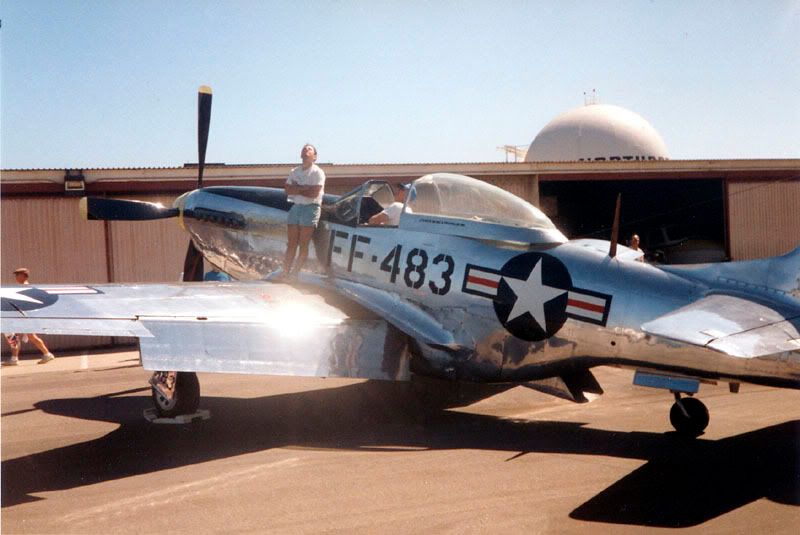
Hey Steve. Just looked through some photos and found this of your father (and you?) at the P-51D/ B-25 gathering in Hawthorne, CA in Aug. 1990. By the way, wonderful to see all the old photos you have uploaded in the albums.
T J
T J
Tue Dec 18, 2007 8:09 pm
I always thought he had the prettiest Corsair ever. He had a lot of experience. I may point out that the Hunter has a super aggressive swept wing with a very high mach number. (Not supersonic but transsonic) We had one run off the end of a 9,000 ft. runway in Nashville a few years ago.
I believe it was a very advanced, maybe unforgiving design. Maybe the engine just failed at a critical moment. He obviously could handle the aircraft. He did the best with the cards he was dealt.
I believe it was a very advanced, maybe unforgiving design. Maybe the engine just failed at a critical moment. He obviously could handle the aircraft. He did the best with the cards he was dealt.
Re: Final NTSB report on Guilford's Hunter crash in Oregon o
Tue Dec 18, 2007 8:38 pm
F4U-7 wrote:warbird1 wrote:One last question, then I won't bring this up again. What was the ejection envelope (altitude and airspeed) in level flight, no sink rate, of the ejection seat in the Hunter? Was the reason your Dad did not attempt an ejection due to being out of the envelope for the seat?
Thanks again!
The Hunter has a 50/50 seat. 50 ft. / 50 kts. Either or being a limit I believe. The local witnesses told me that it appeared as though my father was trying to maneuver to an open field - and then eject I suspect - but he ran out of time, altitude and airspeed.
Thanks for the kind words.
Steve Guilford...>>>
Thanks for the info, Steve, I appreciate it! I also enjoyed your father's photos you uploaded. All my questions are now answered.