40years ago in Vietnam, Aussies had a slight nusciane....
Sat Aug 18, 2007 3:59 am
40yrs ago in a far off place Vietnam a major battle occurred in which Australian forces and VC took part and fought.
A rock concert was blarring away at Nui Dat ( located as the main base for the Aussies in Phuoc Tuy proevienc - part of the 1st Australian Task Force) while some unlucky poor bastards were patrolling to keep the base security zone in the jungle clear of Charlie.... but it was not to be a easy day. That afternoon a fercious battle was to begin which would alter the Vietnam War.
The battle was started late in afternoon of August 18th 1966, and invovled D company 6 RAR - Royal Australian Regiment.. a mere 108 brave and strong willed Aussies.
Unknown to them at time as they were moving thru Long Tan plantation which was around 8-10km away from Nui Dat .....was lurking upwards of 2500 VC....
Around 2pm, a scout section ran into some VC and from there it developed into a " bloody nusciane" as some veterans have called it...
The VC began to engage very close and at times cut some of the 4 platoon off in D company. After a few hours of heavy fighting, strong rain.. sometimes making visbility less then a few metres, the situation became extremely critical.
Artillery was bursting nearly on top of the FEBA and incases on top of the D company. The VC were charging forward determined to annilhilate the aussies. VC lucky didnt know they were up agaisnt 108... but the aussies didnt know at that time they were facing 2500 potential enemies..
As light faded and bullets for the L1A1 SLR and M60s ran out , a resup was called for. This was to be supplied in heavy rain by 9 sqn Huey UH-1B helicopters. They were to hover over the D Company spot, find them somehow and shove the resupplies out and pray it hit the ground ok.
So thru the rain came 2 x UH-1Bs and after finding the location after some work, the helo gunners dropped the load and the resupplies were sent around.
After this the VC began to recharge but were kept forced back by the Aussie artillery which was coming from M102 105mm and some US army M109s at Nut Dat.
The firing began to slow down as the battle crawled into the night...
As the battle developed in the late afternoon, a rescue force from Nui Dat was made up and sent across the jungle in APCs.. M113s.
These arrived late in the evening after crossing streams and a hard drive. They managed to break thru at a critical time and cut to peices many reforcements, the enemy had still, which were staging to over run the aussies location.
So if the Hueys and APCs had not arrived in nick of time, the aussies would of been wiped out .
Luck was with 6 RAR that day and the Huey warbird was the saviour for it brought the bullets to fend of the "nusciane".
If i recall right one Long Tans Hueys was preserved after retiring in mid 1980s...
After APCs broke thru the position was secured and the troops rmeoved by daylight.
18 aussies all under 21 yrs age were killed and many more wounded. Hundreds of VC were killed...
This battle made the VC really wake up and become aware of the Aussie Task Force in Phuoc Tuy province and they very rarly after this engaged the aussies so hard and skirted aorund aussies control of the provience.
Overall this was a big battle for Aussies, small on US scale., but without the Huey warbirds it would of been lost.
Every year lately in Canberra, Australia capital, a Long Tan cermoney is held and ussually off in distance comes the woka wok of the last remaining active service Army UH-1H Hueys.. as they do a fly by to recreate the RAAF part of the battle.
It brings tears to many of veterans. It is also the main national day for remebering the Vietnam war for the aussie Vietnam vets, Long Tan Day.
Some more information here
http://www.dva.gov.au/commem/longtan06/ ... ongtan.htm
http://www.anzacday.org.au/history/vietnam/longtan.html
A rock concert was blarring away at Nui Dat ( located as the main base for the Aussies in Phuoc Tuy proevienc - part of the 1st Australian Task Force) while some unlucky poor bastards were patrolling to keep the base security zone in the jungle clear of Charlie.... but it was not to be a easy day. That afternoon a fercious battle was to begin which would alter the Vietnam War.
The battle was started late in afternoon of August 18th 1966, and invovled D company 6 RAR - Royal Australian Regiment.. a mere 108 brave and strong willed Aussies.
Unknown to them at time as they were moving thru Long Tan plantation which was around 8-10km away from Nui Dat .....was lurking upwards of 2500 VC....
Around 2pm, a scout section ran into some VC and from there it developed into a " bloody nusciane" as some veterans have called it...
The VC began to engage very close and at times cut some of the 4 platoon off in D company. After a few hours of heavy fighting, strong rain.. sometimes making visbility less then a few metres, the situation became extremely critical.
Artillery was bursting nearly on top of the FEBA and incases on top of the D company. The VC were charging forward determined to annilhilate the aussies. VC lucky didnt know they were up agaisnt 108... but the aussies didnt know at that time they were facing 2500 potential enemies..
As light faded and bullets for the L1A1 SLR and M60s ran out , a resup was called for. This was to be supplied in heavy rain by 9 sqn Huey UH-1B helicopters. They were to hover over the D Company spot, find them somehow and shove the resupplies out and pray it hit the ground ok.
So thru the rain came 2 x UH-1Bs and after finding the location after some work, the helo gunners dropped the load and the resupplies were sent around.
After this the VC began to recharge but were kept forced back by the Aussie artillery which was coming from M102 105mm and some US army M109s at Nut Dat.
The firing began to slow down as the battle crawled into the night...
As the battle developed in the late afternoon, a rescue force from Nui Dat was made up and sent across the jungle in APCs.. M113s.
These arrived late in the evening after crossing streams and a hard drive. They managed to break thru at a critical time and cut to peices many reforcements, the enemy had still, which were staging to over run the aussies location.
So if the Hueys and APCs had not arrived in nick of time, the aussies would of been wiped out .
Luck was with 6 RAR that day and the Huey warbird was the saviour for it brought the bullets to fend of the "nusciane".
If i recall right one Long Tans Hueys was preserved after retiring in mid 1980s...
After APCs broke thru the position was secured and the troops rmeoved by daylight.
18 aussies all under 21 yrs age were killed and many more wounded. Hundreds of VC were killed...
This battle made the VC really wake up and become aware of the Aussie Task Force in Phuoc Tuy province and they very rarly after this engaged the aussies so hard and skirted aorund aussies control of the provience.
Overall this was a big battle for Aussies, small on US scale., but without the Huey warbirds it would of been lost.
Every year lately in Canberra, Australia capital, a Long Tan cermoney is held and ussually off in distance comes the woka wok of the last remaining active service Army UH-1H Hueys.. as they do a fly by to recreate the RAAF part of the battle.
It brings tears to many of veterans. It is also the main national day for remebering the Vietnam war for the aussie Vietnam vets, Long Tan Day.
Some more information here
http://www.dva.gov.au/commem/longtan06/ ... ongtan.htm
http://www.anzacday.org.au/history/vietnam/longtan.html
Aussies
Sat Aug 18, 2007 9:42 am
Can you give the total number of Australians participating in the Vietnam War, also their casualties? I'd guess it was small as we don't read or hear much about this, and I have never seen Aussie POWs as an issue. Virtually every other country in the free world declined to follow LBJ and Nixon into this lunacy.
Sat Aug 18, 2007 10:09 am
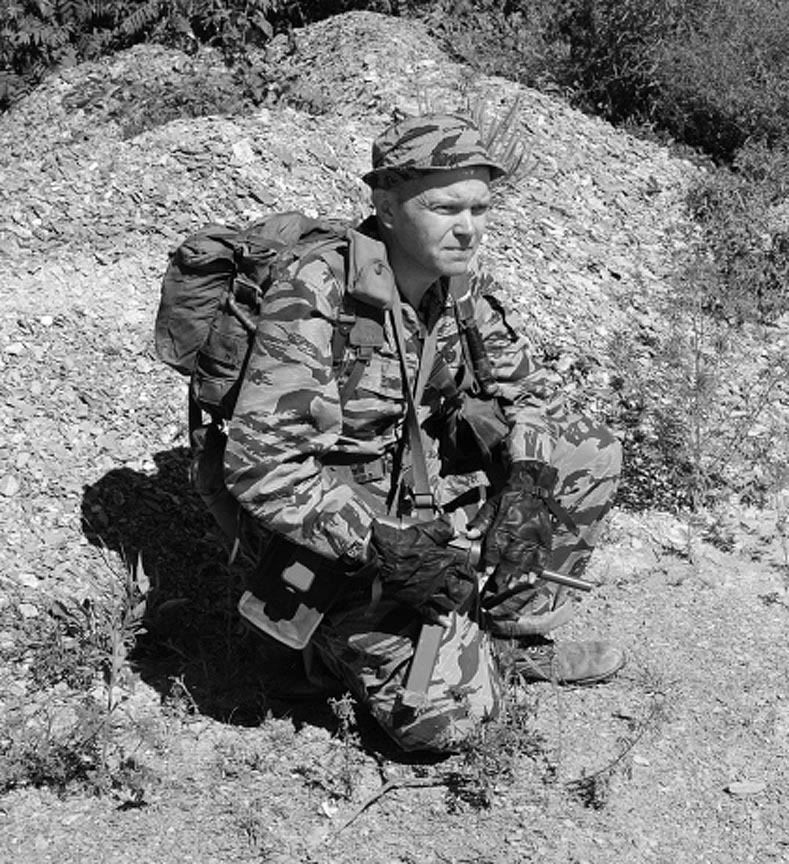
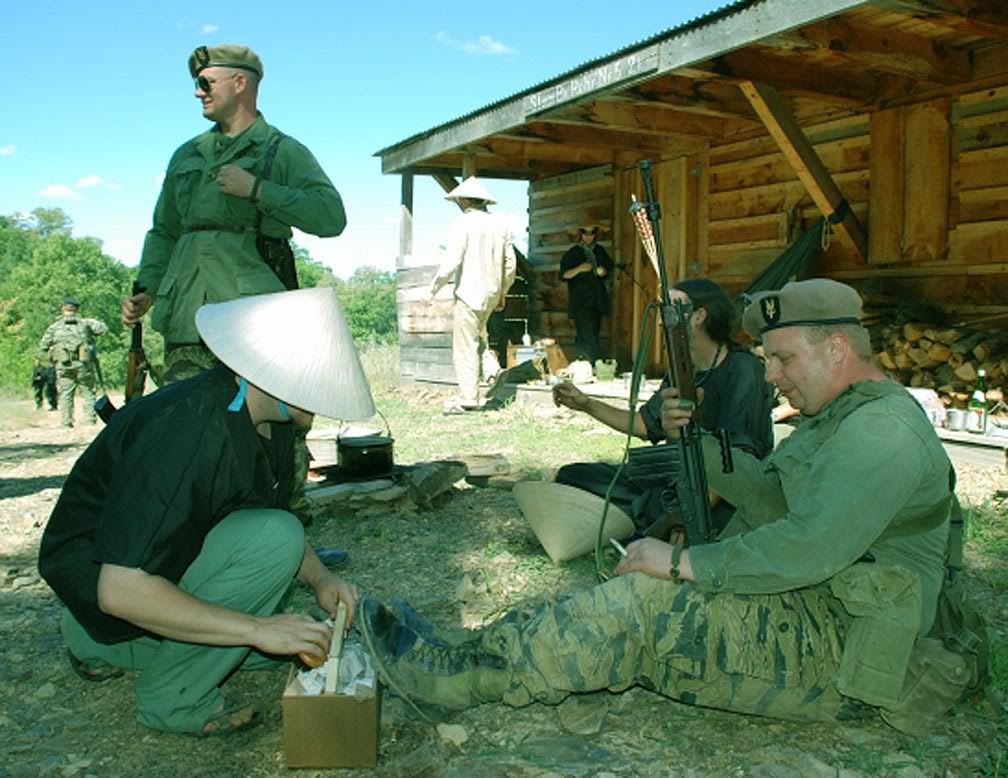
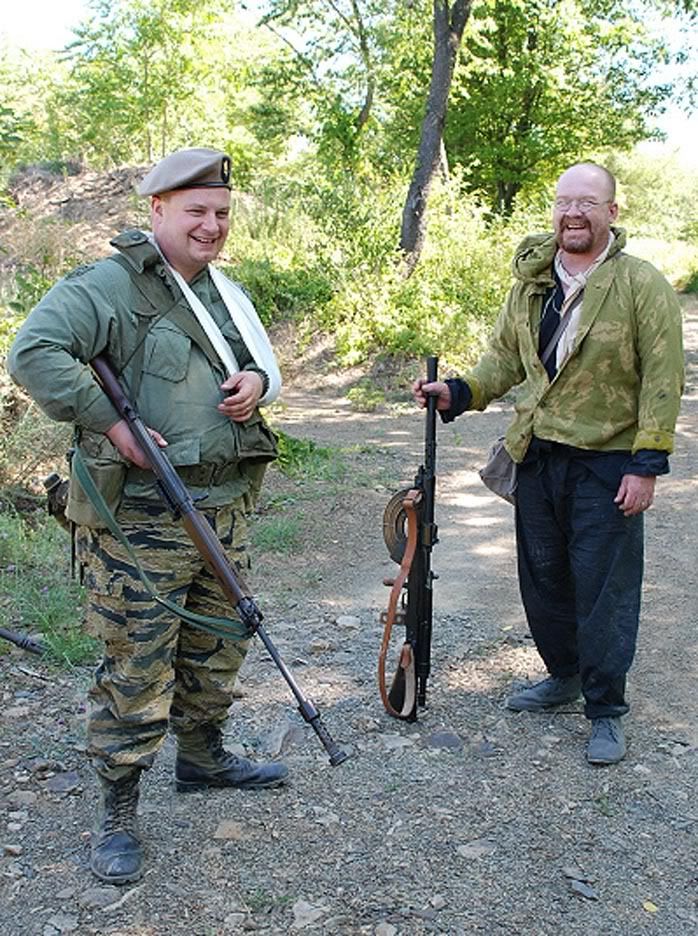
I'm a Vietnam Reenactor & went to a Nam Reenactment recently in Pa. There were several Vietnam Aussie Reenactors present.
Here's a photo of Me in My U.S. Special Forces LRRP (Long Range Recon Patrol) Vietnam impression:
http://img.photobucket.com/albums/v674/ ... AM0789.jpg
Here's a few of the Aussie Reenactors:
http://img.photobucket.com/albums/v674/ ... AM0776.jpg
http://img.photobucket.com/albums/v674/ ... AM0784.jpg
Here's the photos I shot. There's 7 pages of them. Be sure to Click Twice on the photos to enlarge them:
http://smg.photobucket.com/albums/v674/ ... NT%202007/
By the way, that VC Shoe Shine Guy was very friendly & became a regular around the U.S. base camp. Little did We know His Shoe Shine Box had a TIME BOMB in it!! Around Lunch Time BOOOOOM!! It went off & killed many G.I.'s. Now that's realism.... Digger
Here's a photo of Me in My U.S. Special Forces LRRP (Long Range Recon Patrol) Vietnam impression:
http://img.photobucket.com/albums/v674/ ... AM0789.jpg
Here's a few of the Aussie Reenactors:
http://img.photobucket.com/albums/v674/ ... AM0776.jpg
http://img.photobucket.com/albums/v674/ ... AM0784.jpg
Here's the photos I shot. There's 7 pages of them. Be sure to Click Twice on the photos to enlarge them:
http://smg.photobucket.com/albums/v674/ ... NT%202007/
By the way, that VC Shoe Shine Guy was very friendly & became a regular around the U.S. base camp. Little did We know His Shoe Shine Box had a TIME BOMB in it!! Around Lunch Time BOOOOOM!! It went off & killed many G.I.'s. Now that's realism.... Digger
Sat Aug 18, 2007 10:14 am
Bill,
See: http://www.awm.gov.au/atwar/vietnam.htm
The RAAF Museum has a display on Vietnam, and the museum has one of the two Bell Iroquois helicopters from the Long Tan battle on show.
http://www.defence.gov.au/Raaf/raafmuse ... age.htm#10
http://www.defence.gov.au/Raaf/raafmuse ... oquois.htm

The second Iroquois also survives (sort of):
http://www.adf-serials.com/
The political effect of Vietnam in Australia is out of all proportion to the losses. The remaining Iriquios (now with the Australian Army) are in the process of retirement.
Regards,
See: http://www.awm.gov.au/atwar/vietnam.htm
...From the time of the arrival of the first members of the Team in 1962 some 50,000 Australians, including ground troops and air force and navy personnel, served in Vietnam; 520 died as a result of the war and almost 2,400 were wounded. The war was the cause of the greatest social and political dissent in Australia since the conscription referendums of the First World War. Many draft resisters, conscientious objectors, and protesters were fined or gaoled, while soldiers met a hostile reception on their return home...
The RAAF Museum has a display on Vietnam, and the museum has one of the two Bell Iroquois helicopters from the Long Tan battle on show.
http://www.defence.gov.au/Raaf/raafmuse ... age.htm#10
http://www.defence.gov.au/Raaf/raafmuse ... oquois.htm
On 18 August 1966, A2-1020 was involved in the most significant Australian action of the Vietnam War. After a heavy mortar attack on the Australian Task Force Base at Nui Dat on 17-18 August, Army elements, including D Company of the 6th Royal Australian Regiment (6 RAR) were tasked with sweeping the surrounding area to locate this strong enemy force. Heading east towards the small derelict village of Long Tan just 4000 metres from the base, a small group of Viet Cong troops was pursued into the rubber plantation adjacent to the village. Soon after entering the plantation, 11 Platoon of D Company encountered heavy machine gun fire, taking up a defensive position and suffering heavy casualties. Soon over 2500 enemy troops had enveloped the 108 soldiers of D Company, and the Australians faced being over-run if they could be isolated overnight. Initial contacts were so fierce that the unit was critically low on ammunition, and only helicopters could effect a resupply. Two helicopters of No 9 Squadron (A2-1020 and A2-1022) were assigned to the task, and loaded 520 kg of ammunition at Nui Dat. Due to a severe tropical storm in the area, the two aircraft were forced to fly at treetop height over hundreds of enemy troops to locate the Australian position. After a smoke signal from the ground, the two aircraft were able to drop the ammunition right on target, enabling the force to defend their position. After the resupply, artillery barrages and an armoured vehicle convoy forced the enemy force to retreat from the battlefield, suffering 245 killed and hundreds more wounded, while the Australian force lost 18 killed and 21 wounded.
The second Iroquois also survives (sort of):
A2-1022 UH-1B 63-13590 Delivered 12/12/64. It had a destructive engine failure over Hornsby and crash landed onto a football oval in the late 70's possibly 1977. Pilot was F/L Kevin Barrington and they were carrying VIP pax at the time. There were no injuries and 2AD at Richmond eventually rebuilt the airframe. Crashed 29/05/84 in WA. Training Aid, Laverton VIC 19/08/94. It was rebuilt, using parts from many sources and is now located at Nyngen, it was gifted by the RAAF in recognition of the RAAF's work in support of the community during the Nyngen Floods.
http://www.adf-serials.com/
The political effect of Vietnam in Australia is out of all proportion to the losses. The remaining Iriquios (now with the Australian Army) are in the process of retirement.
Regards,
Re: Aussies
Sat Aug 18, 2007 10:44 am
Didn't we follow France in there? I don't think we started it, but I could be wrong.Bill Greenwood wrote:Virtually every other country in the free world declined to follow LBJ and Nixon into this lunacy.
Aussies
Sat Aug 18, 2007 3:59 pm
JDK, thanks for your good info, I was vagully aware that Australia fought in Vietnam, but had no idea of the number or of the casualties, and I bet most Americans aren't either. Our countries were good Allies in WWII, if we ever do it again I hope it is for a war that means something positive.
Sat Aug 18, 2007 7:13 pm
For the record, New Zealanders also participated in the Viet Nam War alongside the Australians and US troops.
http://www.nzhistory.net.nz/war/vietnam-war
http://www.nzhistory.net.nz/war/vietnam-war
Sat Aug 18, 2007 9:59 pm
The Royal Australian Air Force was very present in Vietnam... us aussies had -
Canberra CAC Mk 20 bombers at Phan Rang with 2 Sqn - mate of mine flew a lot of missions there in them,
DHC Caribous out of many spots all thru South Vietnam with 35sqn,
UH-1B and UH-1Ds of 9sqn also used for Aust Army support,
in Thailand 79sqn has Sabre Mk32 jet for USAF base security patrols,
aussie FACS in Cessna 180s and Bell 47s and
some other aussies also flew in back seats of F-4s, O-1 , 0-2 and OV-10 FACs jobs,
36 and 37 C-130A/Es tracking around the supplies,
and last of all rather oddly we had A-4G Skyhawks on the aircraft carrier HMAS Melbourne which were never used in action tho they came into service late 1960s.. very odd considering everything else was thrown at the Vietnam war...
Canberra CAC Mk 20 bombers at Phan Rang with 2 Sqn - mate of mine flew a lot of missions there in them,
DHC Caribous out of many spots all thru South Vietnam with 35sqn,
UH-1B and UH-1Ds of 9sqn also used for Aust Army support,
in Thailand 79sqn has Sabre Mk32 jet for USAF base security patrols,
aussie FACS in Cessna 180s and Bell 47s and
some other aussies also flew in back seats of F-4s, O-1 , 0-2 and OV-10 FACs jobs,
36 and 37 C-130A/Es tracking around the supplies,
and last of all rather oddly we had A-4G Skyhawks on the aircraft carrier HMAS Melbourne which were never used in action tho they came into service late 1960s.. very odd considering everything else was thrown at the Vietnam war...
Sat Aug 18, 2007 11:21 pm
sabredriver wrote:Canberra CAC Mk 20 bombers at Phan Rang with 2 Sqn - mate of mine flew a lot of missions there in them,
I don't want to be awkward, but please try a little harder to get it right - the Canberras were (licence-) built by thge Government Aircraft Factory, not Commonwealth Aircraft Corporation (GAF, not CAC) as your mate will tell you.
Incidentally, they did achieve a significant result; from my article on Temora Aviation Museum in Warbird Digest, No 6:
2 Squadron RAAF used this fast jet bomber in tactical strikes in support of the US forces in Vietnam. Australian determination meant that close support mean that many hits were taken by these aircraft while they would drop a single bomb per run, correcting (where required) to result in some of the most accurate bombing of the war. For once, the numbers tell the story best: operating from Phan Rang as part of the USAF 35th Tactical Fighter Wing, 2 Squadron RAAF spent as long as 90 minutes under Forward Air Control carrying 6 US 750-lb bombs, hitting within 65ft of aiming point, and although flying only five per cent of the wing's sorties, they achieved 16 percent of the damage.
The RAAF pilots who flew USAF FAC aircraft would be most unimpressed by your statement of them being 'backseaters' (same article as above):
Cessna O-2A VH-OII Military S/N: 67-21407
A familiar example of the civil aircraft converted to Military use, the O-2A was a type often "in harm's way" and this example took numerous hits during the Vietnam war. Bought from the US in 2000, it has been repainted in the colours of an Australian Forward Air Controller, Flying Officer David Robson, who worked over 240 missions in the type. Australians were seconded to the USAF as FACs and flew O1s, O-2A and OV-10 Broncos. (For instance Temora display pilot Bruce Wood was a Vietnam FAC flying OV-10s.)
And RAAF O-1 FAC Garry Cooper's story is an amazing one. Never mind the Medal of Honor debacle.
http://home.earthlink.net/~aircommando1 ... IETNAM.htm
Regards,
Sun Aug 19, 2007 8:47 am
There were several Aussie pilots that may have flown my plane as Jade FACs (USAF and RAAF pilots in that group) in the latter part of the war when it was based at Bien Hoa with 19 TASS after having been in Thailand with 23 TASS in early years. To the best of my knowledge, they were not "backseaters."
I have the honor to communicate with several by email and see at least one every couple of years at reunions.
I have the honor to communicate with several by email and see at least one every couple of years at reunions.
Sun Aug 19, 2007 9:29 am
What about the ROK forces? They certanly had a presence. I don't think they had any air assets or did they?