Think we can push the first APUs to pre-W.W.II. Thinking about it, you'd expect the large flying boats, having to operate independantly, to have them. So starting with the 1930s design the Short Sunderland - From Wiki:
Quote:
A small manually started auxiliary petrol engine, which was fitted into the leading edge of the right wing, powered a bilge and a fuel pump for clearing water and other fluids from the fuselage bilges and for refuelling. Generally, the aircraft were reasonably water tight, and two people manually operating a wobble pump could transfer fuel faster than the auxiliary pump.
Then going before that, I suspected the Shorts C Class 'Empire' 'boats would have them, and there's this neat link:
http://www.youtube.com/watch?v=s63hoxHlEx8With this (My emphasis):
Quote:
Finally another tiny engine, the Marconi-Stanley M5 the ID plate of which states that is was built by Stanley Engineering Co Ltd Egham for Marconi's Wireless Telegraph Company.
Again initial evidence for a likely application of this unit was circumstantial with a previous owner stating that it had been acquired by a relative when last of the Armstrong Whitworth Ensign airliner fleet was scrapped in Hamble. A report on Stanley Engineering's stand at the 1938 British Industries Fair in 'Flight' magazine confirms that the Ensign did indeed have a Stanley engine "for W/T", as did the Atalanta, Albatross and Shorts Empire flying boats, but does not give a description or type number.
Fortunately there exists on line 'Flying Empires', a meticulous history of the Empire flying boats which details the wireless equipment, leased from Marconi's WT Co., including a Marconi-Stanley 5M petrol motor with exhaust pipe and fuel tank self-contained in a fire proof box. The wireless equipment was normally driven by an electric motor-generator set (type FB/G1) but under emergency conditions (for example on the water with low batteries and no main engines running) the box would be opened, the motor-generator coupled to the engine by a hand operated clutch and the exhaust pipe dangled out of an opening panel in the windscreen -- perhaps not surprising the set was described as 'very noisy' in operation!
The flying boat and airliner installations don't seem to be the beginning of the Marconi-Stanley story, another Flight article from 1934 shows a similar unit employed as a GPU running the externally mounted 'windmill' generator of a Bristol Bulldog aircraft via a flexible 'speedo cable' type drive. How and when Stanley Engineering came to be involved with Marconi is not known -- the company was perhaps better known for producing a range of invalid carriages under the Argson brand name, motorised versions of which employed Villiers engines.
There we are heading into Wireless and Radio specific power units of the 1930s, rather than APUs that we'd expect today. However while none of these have APUs for things like air conditioning, the first air conditioning and cooling units I've found date to 1919 in the Vickers Commercial for cooling the cabin for ambulance work - earlier than we'd expect, I'd say.
Regards,


 Login
Login Register
 FAQ
FAQ Search









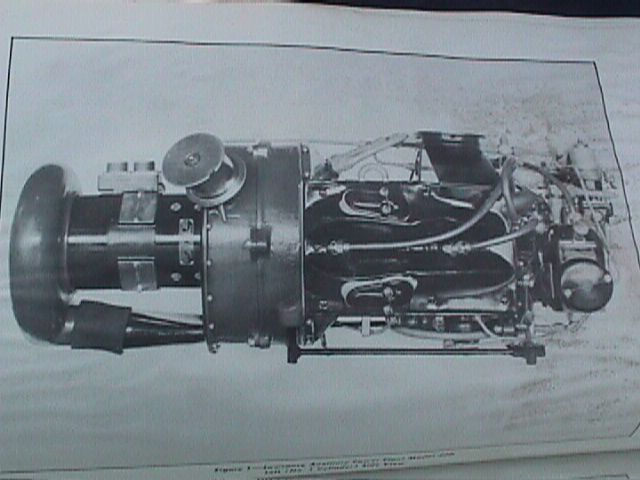
 ' And all this time I was under the impression that the radial WAS the APU on B-29's